Community Impact Reflections: Spring 2026
Authored By:
Studying abroad is often described as a journey of discovery: New places, new perspectives, and new connections. For students in CIEE Study Abroad’s spring 2026 programs, that journey also included a deeper commitment to engaging with local communities through meaningful service work. Through CIEE's Community Impact Initiative, 350+ students stepped beyond the classroom to contribute to projects in their host city during the spring 2026 semester, rooted in:
- Food Security (53 organizations)
- Community Development + Public Health (55 organizations)
- Youth Development + Education (55 organizations)
These experiences are about harnessing the power of community – listening, learning, and contributing in ways that align with real community priorities around the world. Whether supporting local food distribution efforts, collaborating with educators and youth programs, or working alongside sustainability initiatives, students became part of something bigger than themselves.
Spring 2026 Reflections
Here’s how a few students reflected on the impact of those experiences.
Understanding Community Needs Up Close
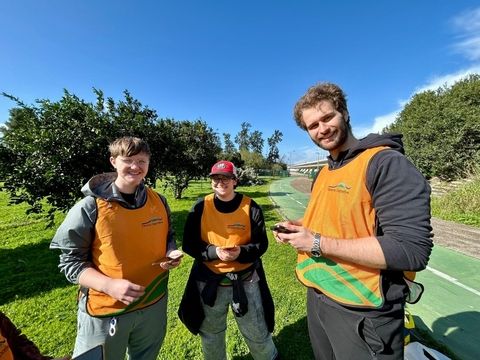
For many students, community impact began with simply gaining a clearer understanding of the places they were living abroad. Zachary F. (CIEE Singapore), an anthropology student from the University of Vermont, reflected on how his experience shaped that understanding:
“Impact is a way for me, as someone who is just studying here for a short time, to really get to know Singapore’s culture. I give back as a thank you for being able to be here and learn how the community works.”
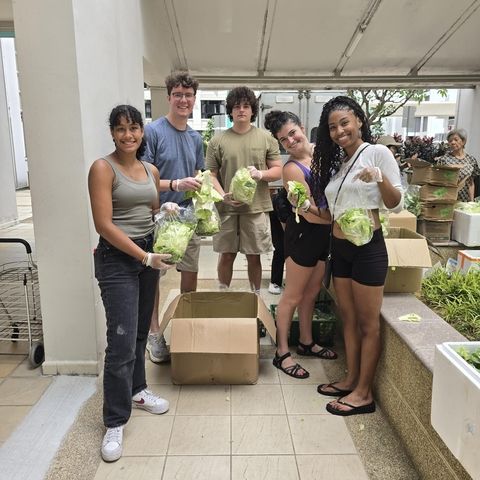
Through his work supporting food distribution efforts, Zachary also gained a clearer view of local realities:
“It gives me a better representation of what community needs are in Singapore. Even though Singapore is very affluent, there are still people who need help week to week with food security. I find it most meaningful to talk to people who are positively affected by the food distribution that we do. It’s really rewarding every time I give them food, or we have a conversation, and their mood just seems to get better. I’m happy because I’m helping them be happy.”
By building relationships with both organizers and community members, Zachary saw firsthand how global challenges – like access to food – transcend borders, connecting communities around the world in shared efforts toward stability and care.
Learning Through Connection
For Colin H. (CIEE Paris), one of his most meaningful community impact experiences began during a 2024 CIEE Study Abroad program in Prague, where he spent time at a local elementary school:
“One of my favorite experiences was visiting a Czech elementary school and helping the kids with their English. They might’ve ended up teaching me more Czech than I taught them, but it was such a fun experience bonding with them.”
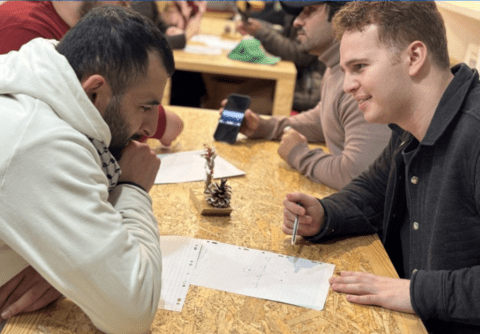
His previous experience shaped how he continues to engage with communities abroad today. While at CIEE Paris during the spring 2026 semester, Colin participated in an English language exchange, where he found a similar connection:
“I felt the same sense of intercultural connectedness I felt in Prague. The language exchange was an amazing experience because it allowed me to learn Farsi words while bonding over our shared love of the UFC. Since then, I have been back 3 times, and each time I’m so thankful I can be a part of it.”
Together, these moments reflect how youth development and language-based initiatives can foster mutual learning, cultural exchange, and lasting relationships across communities.
From Participation to Perspective
For Elijah L. (CIEE Seville), a University of Iowa student, community impact came to life through hands-on environmental work that transformed both the space around him and his perspective within it. While kayaking on a local river clean-up, he saw firsthand how small, collective efforts can restore and preserve the beauty of a shared environment:
“We were on the water in kayaks, picking up trash. It was actually pretty cool! We had a large trash bag full of trash from the river. Seeing how beautiful it looked afterwards, getting to enjoy it after doing this, it felt super rewarding.”
But beyond the immediate results, the experience deepened his understanding of what it means to be an active member of a community – especially as a guest abroad:
“It’s one thing to live in a community, but when you’re actively engaged in meeting new people and seeing how you can help out with that community, you can actually see what’s truly going on and how you can improve it.”
That sense of responsibility stayed with him. By contributing to a local initiative, Elijah not only supported environmental sustainability, but also reflected on the broader impact of showing up with intention and awareness:
“[It made me] want to think more about how I want to make my impact on my community and for the people I’m living with. They’ve welcomed me and treated me just like somebody in their family. And I think I want to bring that back to the states.”
His experience highlights how community development work – especially in environmental spaces – can spark both immediate change and long-term reflection, shaping how students engage with communities wherever they go next.
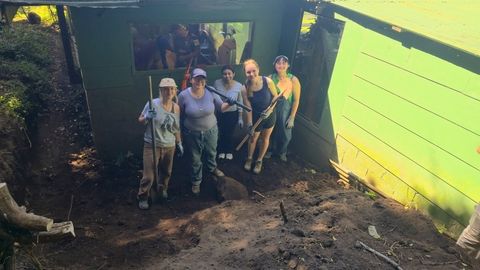
In Costa Rica, Lilliana W. (CIEE Monteverde), a University of Iowa student, experienced community impact as a direct extension of her academic work in ecology and sustainability. By spending time on local farms, she was able to move beyond theory and engage with the real-world application of sustainable agriculture:
“I like the idea of helping the people in the community out and getting to hear stories of what they’re doing on farms around campus. They’re implementing what we learn in our classes, like our sustainable agriculture class. They teach us and then we go learn about it at these farms, and we can participate in what they’re doing. It brought our program full circle.”
Working alongside farmers, Lilliana gained insight into the challenges and creativity involved in building sustainable livelihoods. She was especially inspired by the ways local families were adapting – exploring new opportunities like agritourism to support their work and share their knowledge with others.
What made the experience even more meaningful was seeing tangible progress over time:
“We started at this farm and now seeing how much has changed in just a couple of months [was incredible]. They have this greenhouse where you can have your dinner. They made this whole other part of the kitchen that we helped start in our first week. It was really awesome to see.”
From helping kickstart projects to watching them evolve, Lilliana saw how consistent, collaborative efforts can contribute to long-term growth. Her experience highlights how community development and sustainability initiatives can create lasting impact – while giving students a deeper understanding of how their studies connect to real people, places, and progress.
Expanding Global Awareness
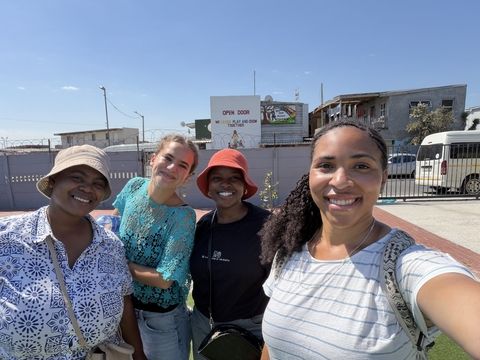
For Ma’ayan (CIEE Cape Town), a Brown University student studying Judaic and Africana studies, community impact meant engaging more deeply with the broader social and historical context of the place she was calling home. In a city still shaped by the legacy of apartheid, she recognized the importance of stepping beyond her immediate surroundings to better understand the full picture:
“We’re experiencing a very particular part of Cape Town. Community impact is making sure that you’re viewing and helping out with other parts of the community as well.”
Through her work with local youth, Ma’ayan experienced the joy of community engagement. The connections she built were immediate and heartfelt:
“The kids were just so sweet. As soon as I walked in, they all just wanted to hug me and be lifted up. I feel very grateful that I got to spend time with them.”
These experiences pushed her to think beyond a U.S.-centric perspective and consider her place within a larger global community:
“Our world is bigger than just our country. It’s important that we explore other communities.”
Her reflection captures the balance at the heart of community impact work – building meaningful human connections while also developing a deeper awareness of the systems and histories that shape everyday life.
The Power of Presence
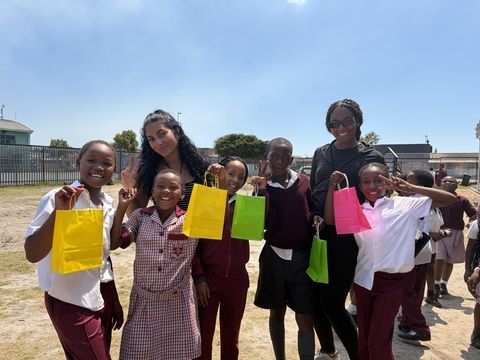
For Sydney C. (CIEE Cape Town), an international business and global studies student, community impact was grounded in presence, connection, and a genuine appreciation for the community she became part of. Through her work with local youth, she experienced how meaningful consistent engagement can be – especially in spaces where relationships matter most:
“Seeing the positive impact that you have on others and how the kids just light up. Just being there, being present with them.”
What stood out most to Sydney was not just the visible joy in those moments, but the mutual exchange behind them. By immersing herself in the local culture and building relationships over time, she came to understand community impact as something rooted in care and intention:
“It means giving back, love, appreciation, and immersing yourself in culture.”
Her experience reinforced her existing passions and goals, strengthening her commitment to global engagement and community-centered work:
“It didn’t change anything; it just reinforced it even more.”
For Sydney, impact wasn’t defined by scale, but by consistency and authenticity. Her reflections highlight how simply showing up – again and again – can build trust, foster connection, and create meaningful experiences that resonate long after the program ends.
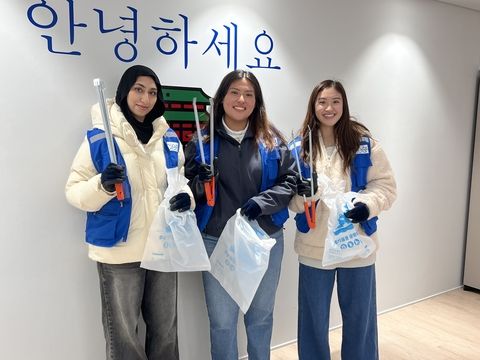
CIEE’s Community Impact Initiative Offers a Lasting Impact
Across CIEE's 45+ global cities and countless service work projects, one theme remained constant: Community impact is not a one-time act – it’s an ongoing exchange. Students didn’t just contribute their time; they gained insight, perspective, and a deeper understanding of their role as global citizens.
As these reflections show, the CIEE Community Impact Initiative is not about quick fixes – it’s about fostering long-term, reciprocal relationships that support meaningful change and reinforce the power of community. And for the students who participated, those experiences will continue to shape how they engage with communities – both abroad and at home – for years to come.