French Conversations and Discussions
Authored By:

There are a lot of things that I thought I was prepared for before arriving in Rennes. I was excited to try new food, eager to meet new people, and ready to see what life was like thousands of miles away from home. I even remembered to bring an umbrella! One thing I did not prepare for, though, was the difference in the way people talk to each other.
Back in my home state of Wisconsin, discussions tend to be shallow and civil. Conversations during family dinners typically revolve around what happened that day, or perhaps a preview of the week to come. Greetings in public usually consist of a “How are you?” to which one responds: “I’m good, you?” We typically wait to speak until the other person is done talking. However, this often means that I can’t get a word in edgewise because someone else starts talking right as I open my mouth, so I have to wait to be polite.
From my experience in France, things work quite differently here. People still ask about my day, and being polite is, of course, still important. But I’ve found that speaking at the same time as someone else is far more acceptable here. That can make it difficult to follow what is going on, as a non-native French speaker, but it also means that you can jump in when you have something relevant to say. Oftentimes, there will be multiple conversations going on at the same table, with people talking across each other. Keep in mind, this isn’t to say that you should interrupt someone whenever you feel like it; I recommend observing some conversations to see the dynamics between people and notice when people talk.
Just as important as the way people talk is the subject matter. I had heard before I arrived that the French are much more willing to discuss serious topics than Americans. I have found this to be true. Again, that doesn’t mean that there aren’t taboos, but serious issues such as politics and climate change are acceptable to talk about as more than passing remarks.
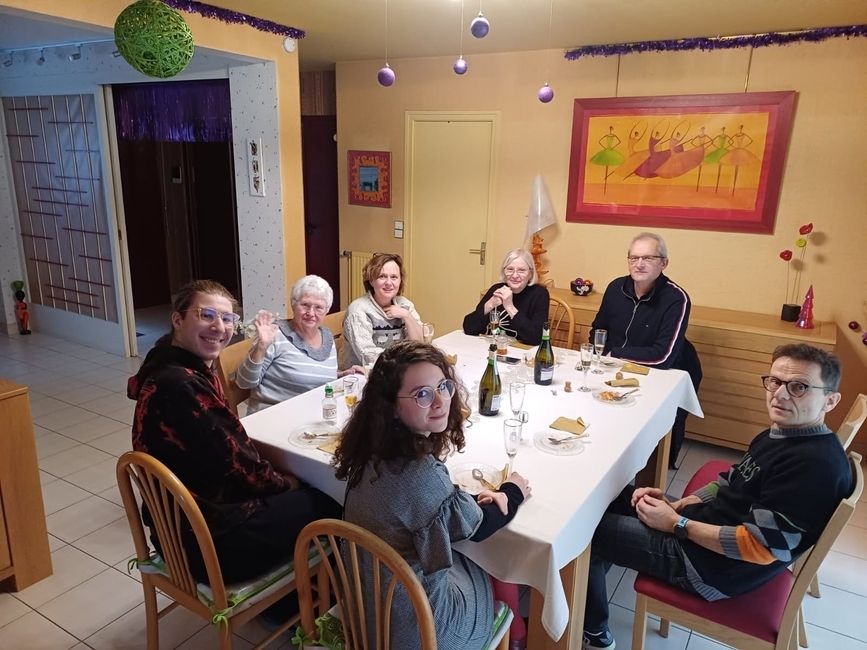
I think back to the first time I met my host mother’s family. She lives alone (well, except for me) so I had yet to experience a discussion with a lot of people at once. I went over to my host mother’s mother’s house for galettes des rois. I was nervous because there were a lot of new people to meet, but they were very welcoming, and I could understand most of what they were saying. Then everyone sat down around the table and the real talking started, and I was completely lost. With so many new voices all talking over one another, I had no idea what was going on. Thankfully, my host mom’s niece spoke some English, so she was able to clue me in on the goings-on. She informed me that the conversation meandered from topic to topic, going from an escape room some members of the family did, to their opinions on current events in American politics, to talking about the galettes we were eating. By the end of the day, I felt comfortable enough to chime in every now and then.
All in all, discussions in France seem quite different from those in America - on the surface level. And while it is true that there are some noticeable differences (such as the French discussing more serious topics openly and talking over each other more), it is really quite easy to get used to the French style of speaking and communicating. Just watch how the native French people talk, and you’ll be indistinguishable from them in no time!
Bennett DOEBLER
Carthage College
CIEE-Rennes Liberal Arts Spring 2026
Related Posts
Volunteering at a Nursing Home in Rennes
When I learned about the collaboration between CIEE and a nursing home in Rennes, I was excited and reassured. As a student on the pre-health track, I was very hesitant... keep reading

My study abroad experience as a transgender woman (EN) / Mes expériences d'études à l’étranger en tant que femme transgenre (FR)
English version (French version below) I’d like to start by saying that I’m only going to talk about my own experiences: I haven’t yet transitioned legally or physically, and I’m... keep reading

Participating in an activity in Rennes
One of my favorite things about Rennes has been some of the great things I’ve gotten to do with the community here, all of the activities that are possible at... keep reading