Top 20 German Slang Words and Phrases You Must Know

Authored By:

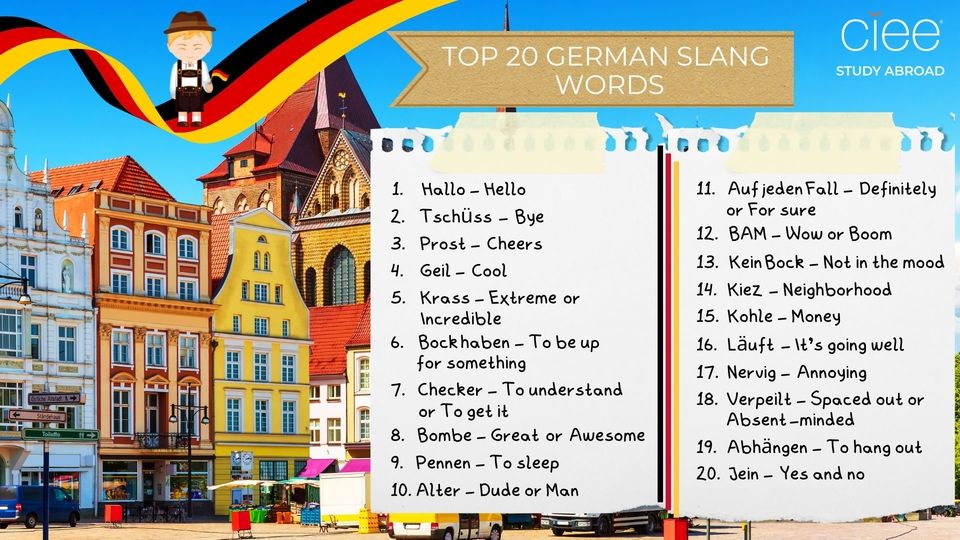
Mastering the German language goes beyond learning proper grammar and vocabulary from textbooks. To truly communicate like a native, you need to embrace the vibrant world of German slang. These colloquial expressions add color, humor, and authenticity to your conversations, allowing you to connect with locals on a deeper level.
So, if you’re preparing to intern abroad or study abroad in Germany or Austria, you’ll need to get a handle on some common German slang terms. Let's dive into the top 20 slang for German language learners that will elevate your skills and make you sound like a local abroad!
Read More: The Ultimate Guide to Studying Abroad in Germany
Top 20 German Slang Expressions and Words
German Slang #1: Hallo
Meaning: “Hello.”
Unlike the German’s more formal greeting for “hello” (“guten tag”), “hallo” is the most common and simplest German slang for “hello.” Use it regularly during informal conversations and greetings with friends to blend in like a natural.
For example: "Hallo! Wie geht's?" (Hello! How are you?)
German Slang #2: Tschüss
Meaning: “Bye.”
Now that you know how to say hello in German slang, it only makes sense to understand how to say goodbye in German slang. “Tschüss” is the most popular and most casual way to say “bye” informally. To kick your slang up a notch, say “tschüss tschüss” (bye bye) or “tschüssi,” (little goodbye).
For example: "Tschüss! Bis später!" (Bye! See you later!)
German Slang #3: Prost
Meaning: “Cheers.”
Unlike the more formal term for “cheers” in German (“zum wohl”), “prost” is the more common, widely understood term for “cheers” in German slang. “Prost” is typically used when toasting with drinks.
For example: "Prost, auf deine Gesundheit!" (Cheers, to your health!)
Read More: 5 Reasons to Study Abroad in Germany
German Slang #4: Geil
Meaning: “Cool.”
Used to refer to something “cool” in German slang,“geil” is one of the most versatile and widely used slang words in Germany. Use “geil” in conversations when you want to describe something really awesome or impressive!
For example: "Dein neues Auto ist echt geil!" (Your new car is really cool!)
German Slang #5: Krass
Meaning: “Extreme” or “Incredible.”
The term “krass” is a go-to German slang term used to express surprise or astonishment. It can be used to describe something in a positive or negative light, similar to how Americans use the words “wild” or “intense” in both positive and negative contexts.
For example: "Das neue Videospiel ist echt krass!" ("That new video game is really awesome!")
Read More: 5 Reasons to Study Abroad in Austria
German Slang #6: Bock haben
Meaning: “To be up for something.”
Save the German slang expression “bock haben” in your back pocket when you want to ask someone if they’re in the mood for something or feel like doing something. It’s a casual way to express your interest.
For example: "Hast du Bock auf Kino?" (Do you feel like going to the movies?)
German Slang #7: Checker
Meaning: “To understand” or “To get it.”
If you’re not sure you understand something or you wish to confirm you understand it, use “checker” in conversation. When posed as a question, the person you’re speaking with will re-explain whatever it is you’re discussing. When posed as a statement, you’ll confirm you understand what they’ve explained to you.
For example: "Ich checker das nicht, kannst du es mir nochmal erklären?" (I don't get it, can you explain it to me again?)
German Slang #8: Bombe
Meaning: “Great” or “Awesome.”
Similar to how Americans use “the bomb” in English, “bombe” is used to describe something exceptionally good or impressive. You can use this German slang word in all kinds of contexts.
For example: "Das Essen war Bombe!" (The food was awesome!)
German Slang #9: Pennen
Meaning: “To sleep.”
When you’re among friends and in informal settings, to say “pennen” to others is to express you’re tired and require sleep.
For example: "Ich bin so müde, ich geh pennen." (I am so tired, I'm going to sleep.)
German Slang #10: Alter
Meaning: “Dude” or “Man.”
Translated literally, “alter” means “old man,” but in German slang, it’s used among friends to mean “dude” or “mate.” It’s a casual way to address someone, usually a close friend.
For example: "Alter, was machst du da?" (Dude, what are you doing?)
German Slang #11: Auf jeden Fall
Meaning: “Definitely” or “For sure.”
Use this phrase when you want to affirm something strongly. Germans use this slang word as if to say “absolutely.”
For example: "Kommst du zur Party?" (Are you coming to the party?) / "Auf jeden Fall!" (Definitely!)
German Slang #12: BAM
Meaning: “Wow” or “Boom.”
Similar to how “boom” is used in American English, “BAM” is an onomatopoeic expression used to describe something happening suddenly or dramatically.
For example: "Und dann BAM, war das Auto kaputt." (And then BAM, the car was broken.)
German Slang #13: Kein Bock
Meaning: “Not in the mood.”
When you don’t feel like doing something, use the German slang expression “kein Bock” to express your lack of desire or interest.
For example: "Ich habe heute echt kein Bock auf Arbeit." (I really don't feel like working today.)
German Slang #14: Kiez
Meaning: “Neighborhood.”
"Kiez" is a German slang term used in Berlin and Hamburg to describe a neighborhood or district, especially one with a distinct local culture. You’ll hear this term across Germany, but it’s not commonly used in Austria, where different regional expressions are more typical.
For example: "Ich wohne im besten Kiez der Stadt." (I live in the best neighborhood in the city.)
German Slang #15: Kohle
Meaning: “Money.”
Whether you’re taking money out at the bank or borrowing a few bucks from a friend, understanding the German slang word for “money” will be hugely helpful while abroad. "Kohle" literally translates to "coal," but in slang, it's used to refer to money, similar to "cash" or "dough" in American English.
For example: "Hast du genug Kohle?" (Do you have enough money?)
Read More: The 6 Best German Study Abroad Programs
German Slang #16: Oida
Meaning: “Dude” / “Bro”
A super common Austrian expression used to react to almost anything – surprise, frustration, excitement.
For example: “Oida, das ist ja unglaublich!” (Dude, that’s unbelievable!)
German Slang #17: Leiwand
Meaning: “Awesome” / “Great”
A very Viennese way to describe something cool or impressive.
For example: “Das Konzert war leiwand!” (The concert was awesome!)
German Slang #18: Baba
Meaning: "Bye"
A casual and widely used way to say goodbye in Austria.
For example: “Okay, baba! Bis später!” (Okay, bye! See you later!)
German Slang #19: Hawara
Meaning: “Friend” / “Buddy”
Used to refer to a close friend in Austria.
For example: “Er ist mein bester Hawara.” (He’s my best friend.)
German Slang #20: Heast
Meaning: “Hey!” / “Listen!”
Used to get someone’s attention – can sound playful or intense depending on tone.
For example: “Heast, komm mal her!” (Hey, come here!)
Put Your German Slang to Use
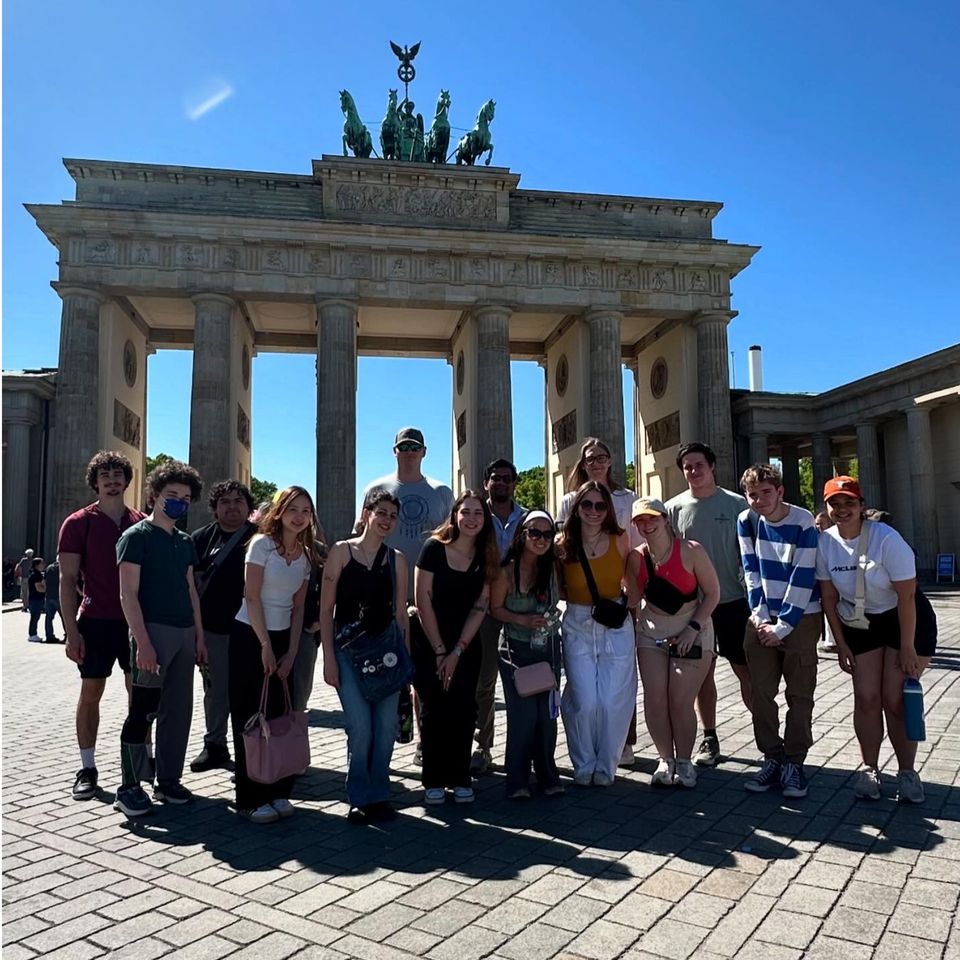
Now that you know 20 of the top German slang words and phrases, it’s time to use them in dialogue with German-speaking friends. You’ll not only sound more authentic but also gain a deeper understanding of the German culture and way of life. These slang expressions can add a lot of flavor to your conversations and help you understand the local lingo better.
“Viel Spaß” (have fun) and happy learning!
Related Posts

Top 4 Benefits of an Internship Abroad
@cieestudyabroad Top 4 benefits of an internship abroad! #ciee #cieestudyabroad #studyabroad #internship #intern #internabroad #howtofindaninternship #summerinternship #college #careeradvice 1901 - Phoenix An internship anywhere is a great opportunity to gain... keep reading

How Much do Internships Abroad Cost?
In today’s globalized world, internships abroad have become invaluable to students’ future careers – essential, even. International experience offers life-changing outcomes from personal growth to professional training to exposure to... keep reading
Inside a Berlin MedTech Start-Up: Max Beach’s Role at UniWearables
Maxwell Beach and His Internship Experience at UniWearables We had the chance to talk with Maxwell Beach, one of our Internship students at CIEE Berlin this Fall Semester. Max is... keep reading