Sustainability in Rennes : my first impressions.
Authored By:

Hello curious reader and possible future CIEE program attendee! To start as a little welcome mat, I wanted to discuss my overall, general impressions of Rennes, France, while specifically focusing on the sustainability of the city later on.
First things first, why did I pick this program over other French study away programs? I chose this program due to several logistical reasons and one personal reason. Logistically, I am not a fan of super crowded spaces, so cities like Paris were out of discussion. I am quite fond of green spaces as I’m sure you will be able to pick up throughout the rest of my article. Another logistical factor was the CIEE program was the most common program at my university! After hearing all the stories that my peers shared when they came back, my interest was piqued. The personal reason is that I work at a French crêperie in the U.S.! I’ve been working there for 7 years, so crêpes and galettes have been integrated into my diet. When I first went to a creperie in Rennes, I was so familiar with many of the galettes I didn’t even need to read the little descriptors under each listing.
Moving past the choosing stage, how is Rennes? Rennes is a medium-density city that actually has a *functional* public transport system (As someone who comes from the American South I am very impressed, stunned even)! There are lots of local businesses to eat at, which is a nice refresher to the many, many chains that are in the U.S. Though there are still chains in France, there seems to be a large portion of local businesses. A lot of these local restaurants/businesses are at Sainte-Annes, which is also the “historical district”. The historical district is where people can see the charming, leaning houses that the city of Rennes is known for!
When you eventually get around to going to the University, the campus is very easy to navigate with panel signs pointing you where you need to be. The students are also incredibly friendly, with a lot of them being international students. The university also offers cheap meals which is fantastic for students who are on a budget. There is also a food pantry for students to take whatever they need! :)
So! To get into the bigger theme of this blog post, sustainability! I will be comparing my sustainability experiences in France to my experiences in the American South. Please note that some cities within certain southern states have better sustainable infrastructure than my hometown does.
Recycling
The first thing I noted was the recycling. In the state that I live in, the only plastics that can be taken are Polyethylene (PET) or High-Density Polyethylene (HDPE) and they *must* be rinsed out and dried. If they are not both rinsed, dried, and sometimes stripped of their wrapping to avoid misidentification, you risk being the person to have the entire collection batch thrown out... not very sustainable, right? In France, I faced a lot of anxiety because everyone kept telling me to NOT rinse out the plastic. Even after living in France for a while, I still ask for reassurance;
I’ve looked it up several times, and sure enough, you don’t need to rinse out any plastic containers, just make sure that there is nothing left in the bottles/containers (like leftover food or liquid).
However, cardboard and paper seem to have the same general rules in both countries.
Bac Jaune/Poubelle de Tri
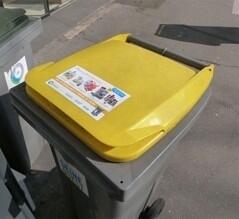
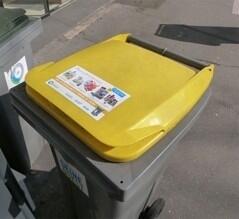
Curbside recycling, in the American south, is considered a luxury. Many of our cities/counties had curbside recycling but decided to cut the program to save money. Thus, many citizens either pay for curbside recycling, go to a collection site (if close by), or just don’t recycle. In France, however, there are things called the “Bac Jaune” or “Poubelle de Tri” which are the general curbside recycling bins.
Glass
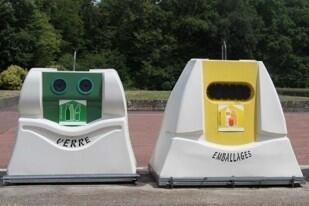
Another thing my state lacks is glass recycling. I must go to specific store franchises to recycle glass. Here, there are community, and sometimes private, glass recycling bins. Don’t be alarmed if you hear the glass break, sometimes these containers can have a big collection pit!
Food Waste
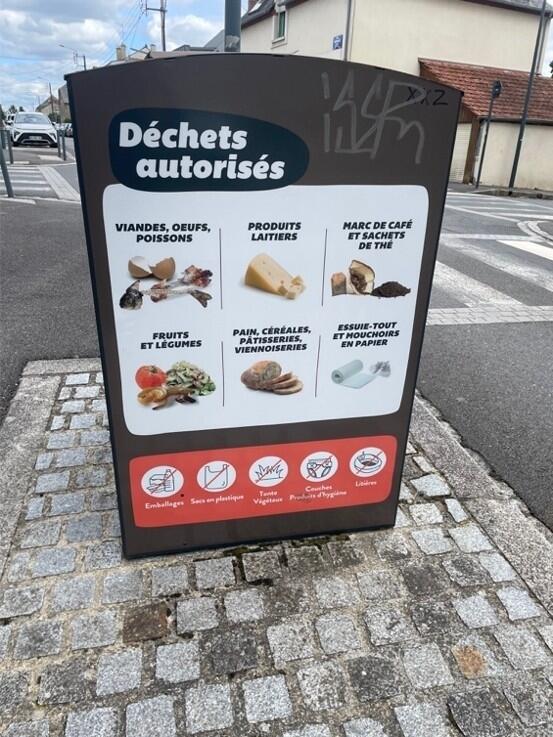
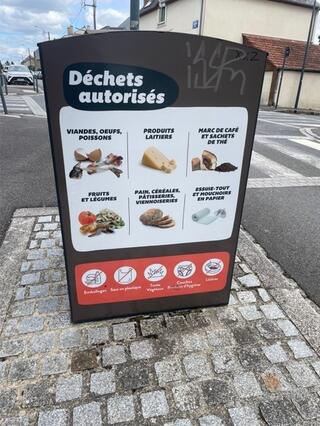
In my city and state, I have never heard or seen any form of community compost or food waste collection site. While it is uncommon to hear someone mentioning composting, there are some southerners who have small compost piles, including my family. However, in France it is a lot more common to compost! For example, there are these community bins that are stationed outside of apartments, for those who, due to restricted space, cannot have compost piles.
Sustainability in the “wild” + stores
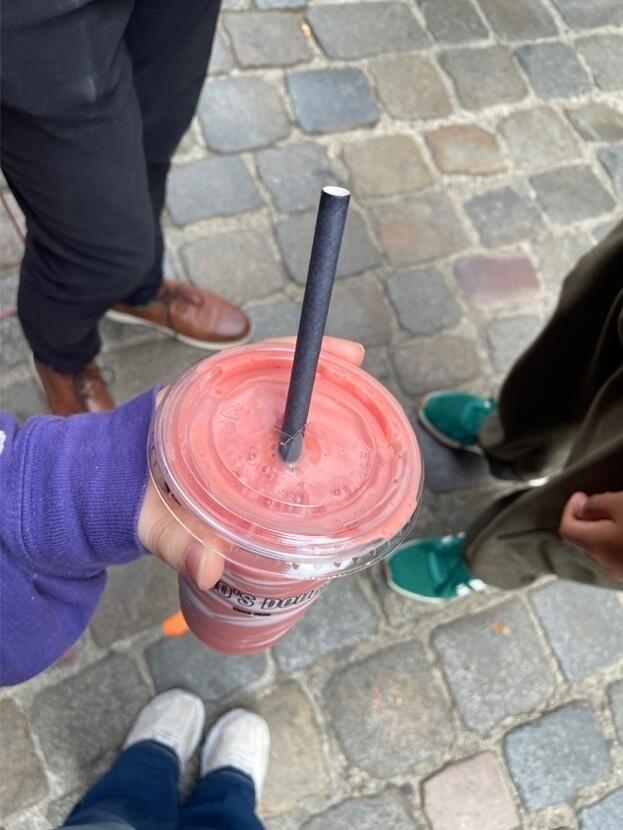
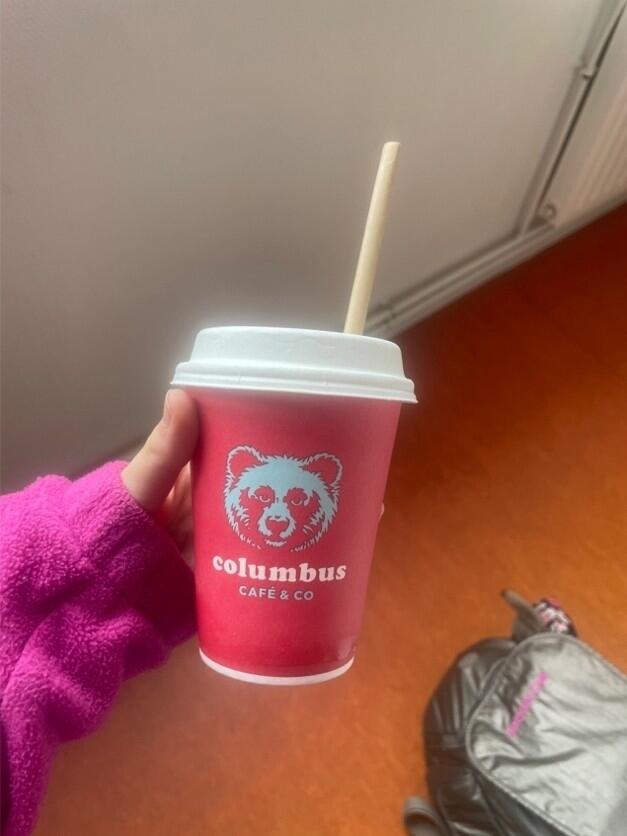
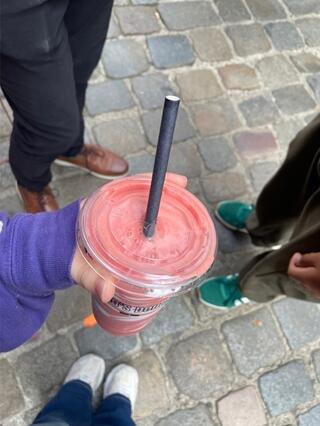
Single use plastics are almost completely out of circulation in France. You almost never get a plastic shopping bag but might get a paper one if shopping at a clothing store. There are no plastic straws, only paper. There are minimal to go plastic cups, even if you get an iced drink. To go containers are rarely Styrofoam, and plastic cutlery is also rare. In the American South it is expected to get your plastic with a side of plastic.

Grocery stores like “Grand Frais” have a selection of unwrapped produce. There are also local grocery stores that have unwrapped produce. Alongside that, there are many thrift stores that sell donated secondhand clothes, and many are local businesses! Like the American South, there are Saturday markets where you can buy directly from the vendor. Though, in southern grocery stores, products are wrapped or bagged. Also, the produce bags aren’t compostable like the ones in France (only compostable in certain conditions, BUT nonetheless, still compostable).
The one thing I will say that I see on par with France’s sustainability is eco-refill boutiques. In the South, there always have been pockets of sustainability, thus, I have always seen a handful of eco-conscious stores within a city.
In my State, the public transport is subpar. While I appreciate that it is there, it isn’t available enough for ready use … After being in Rennes for 3 weeks, I can confidently say I LOVE public transportation. When I left the US, my gas tank was roughly 60 dollars, and I was paying that every 1.5-2 weeks. There are different prices per age group, but for ages 18-26, I paid € 26.60, or $30.68, for a whole month! Not to mention that by taking public transportation I am offsetting my carbon footprint! Another thing here is that you can actually walk! There is infrastructure that promotes walking. One day I walked 20k steps, and I genuinely enjoy the freedom of being able to get to point a from point b without having to be behind a steering wheel for two hours every day because of traffic…
Sustainability in the home
Like most of the families in Rennes (and Europe, really), my host mother is eco-conscious. To start off with, she almost exclusively goes to local business for food. For example, she will often go to a nearby farm to pick her own strawberries, green beans, and pumpkins! She also tries to exclusively shop organic. A lot of the produce she buys comes in brown paper bags, even without the produce sticker that’s oh-so common in commercial grocery stores. You may be wondering what happens to all the bags? Well, we collect our food scraps in those bags and put them into the “déchets alimentaires” trash bin that is just outside of our apartment complex. In the South, we have a lot of farms that are often supported through farmers markets or word of mouth. My university is also very big on composting, and as mentioned above, there are many families and farms that compost too!
We never use disposable meal items in the house. In the United States it is quite common to use paper plates for mealtime, but in France, paper plates are saved for large parties. Official mealtimes come with ceramic plates, and reusable metal silverware. We also don’t use paper towels at dinner; we use tea towels to wipe our hands.
Pollution and hope
To end, I will talk about the two things that both countries/regions share, the unfortunate plague of pollution. While walking around the city of Rennes, it is not uncommon to see cigarettes on the ground, see a bottle rolling in the wind, or a flattened can. The South has equal amounts of physical pollution and air pollution.
However, the second thing that both countries/regions share is hope. While waiting for a bus stop, there was a man and his son literally skipping down the road. While already a cute and impactful sight, the man suddenly stops to pick up a plastic bottle to throw it in the nearby trashcan with a “hup!”. He was setting a standard for his son while also helping his city.
In the South there are hundreds of thousands of people, including myself, who go on community trash pick-ups. Nearby my house there is activism art on a storm drain that says, “the ocean starts here”. The job that I work at has a recycling program and many other restaurants I frequent have to-go containers made from recycled paper and bamboo silverware.
I think the American South has a lot to learn from France, but I still love my region and its efforts all the same. I’m very grateful to be able to have this opportunity to see France in action and share what I have learned when I come back :).
Arkadia Georags-Wilson
Furman University
CIEE-Rennes Fall Liberal Arts Language Immersion 2026
Related Posts

Two Worlds Become One
My name is Li Fu Stigers. I am a student at Furman University in Greenville, South Carolina currently taking full advantage of the study abroad opportunity in Rennes this semester... keep reading

Making Friends Quick: With CIEE!
The start of my term staying in Rennes has been an absolute blast. With every day comes a new adventure, and I owe that in no small part to the... keep reading
Volunteering at a Nursing Home in Rennes
When I learned about the collaboration between CIEE and a nursing home in Rennes, I was excited and reassured. As a student on the pre-health track, I was very hesitant... keep reading