Seeing Kyoto Through History: What My Class Taught Me About the City
Authored By:

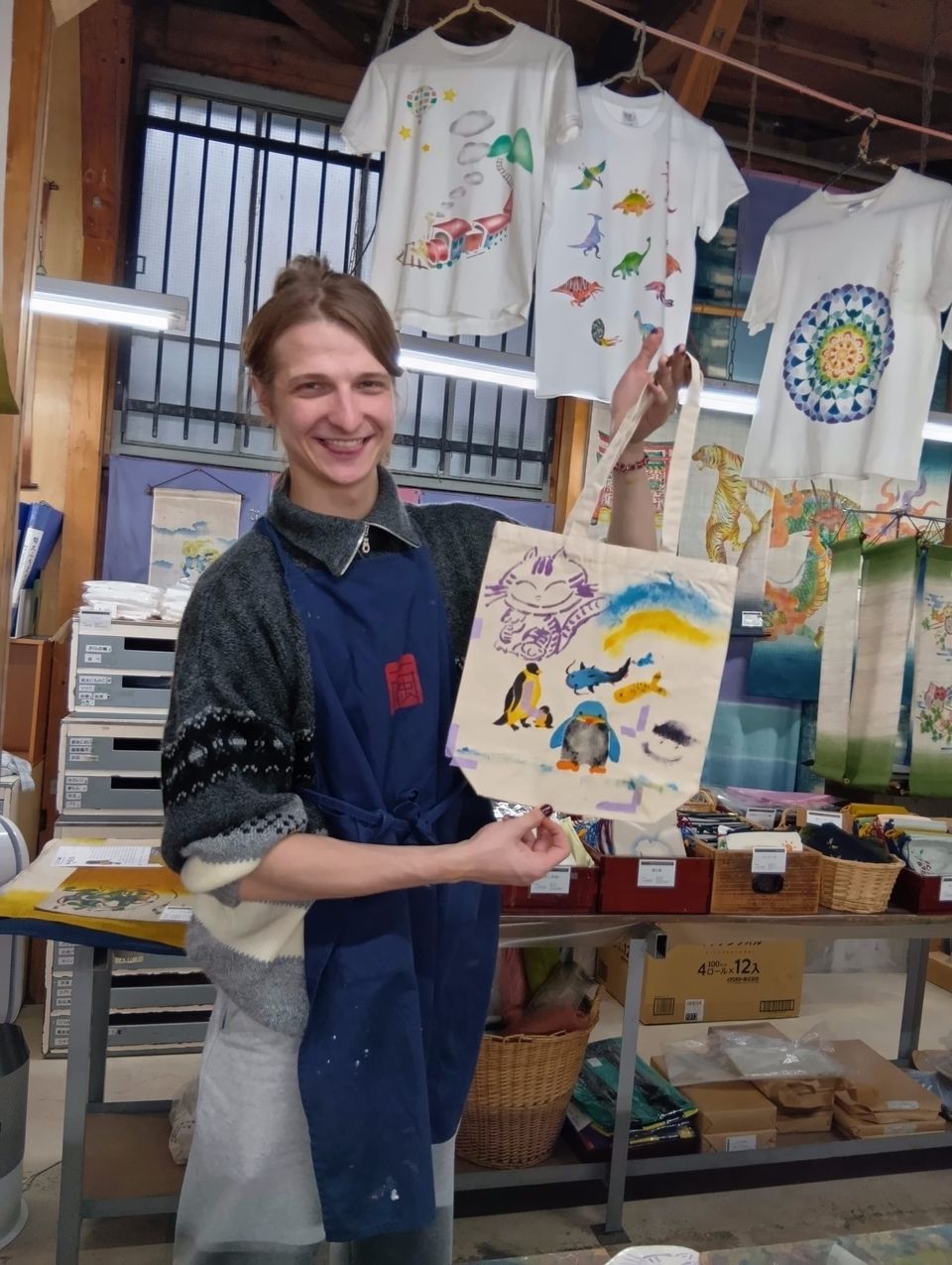
When I was on a plane to Japan, I couldn’t believe I was actually going there. It didn’t feel real until I landed. Full of worry and stress, I spent nearly 20 hours in the air unsure of what would happen and how my next three weeks would turn out. The moment I stepped foot outside of Kansai Airport, I realized my worries were for absolutely nothing and that this trip was going to be amazing.
I was absolutely right. The first couple of days I was more of a loner, which had its own benefits. When you travel alone, you’re more prone to “figure it out.” That’s the part that helps you gain confidence in yourself. You realize how minuscule your problems at home truly are when you’re alone in Kyoto, not sure how the subway lines work and just trying to get back to your hotel. When your brain is fully focused on getting home, all the shyness, embarrassment, and language barriers disappear—you just go and figure it out. The same thing happens when you walk up to a cashier at 7/11 and say “Kumbaya” instead of “Konbanwa” (こんばんは), or make any other silly mistake that you will inevitably make on a daily basis. You quickly realize it’s okay, and you just have to keep going. I believe that’s a powerful lesson.
Another benefit of being alone is that it may actually be easier to make Japanese friends. When you’re in a group in a foreign country, you instinctively want to stick with your own people because it feels safe. And since nobody wants to bother anyone else in Japan, it can feel hard to approach strangers. But when you’re alone, it becomes much easier to start conversations.
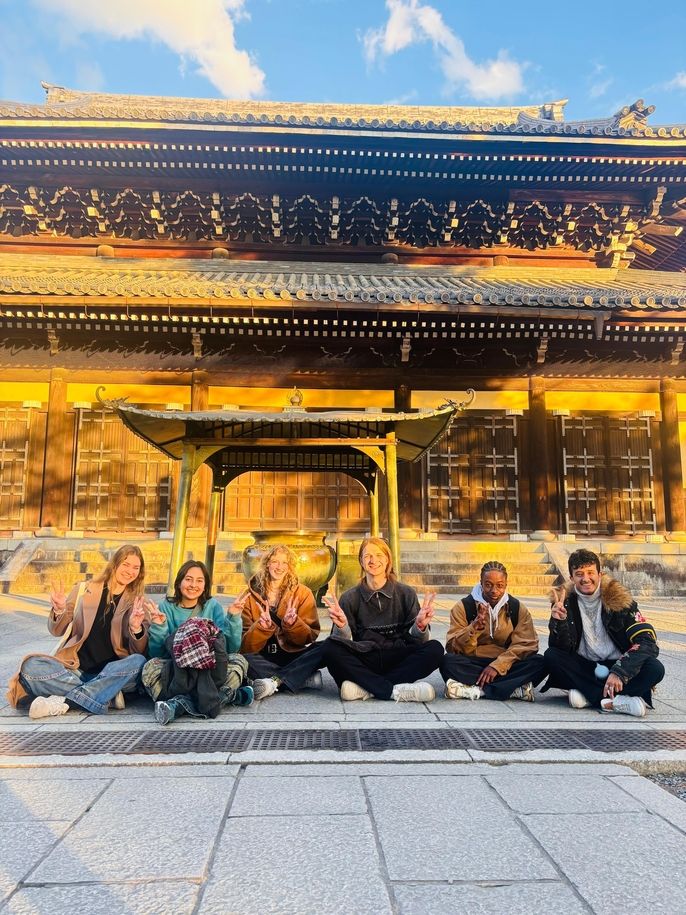
That said, I met amazing people in my cohort. Some experiences, I think, only happen when you’re figuring out a new culture together with others like yourself. If I had stayed alone until the end of the trip, I wouldn’t have discovered the most valuable item of the trip: “Coolish,” an ice cream in a bag that became adored by everyone on our floor after one person bought it and introduced it to the rest of us.
Getting more into the details, the class I took was Modernizing Ancient Japan in Kyoto. As the name suggests, it was a history class, and probably one of the more workload-heavy courses in the study abroad program. But I don’t regret taking it even a little bit. The class provided context for exploring Kyoto. My friends and I would walk around and take in the city through the lens of what we were learning—about how Japan was built, why things are the way they are, and where the traditions we observe come from. Why is everyone so polite? What’s going on with all these temples and shrines? Why are there three Gucci stores on one block? And most importantly, why doesn’t the rest of the world have toilets like they do in Japan?
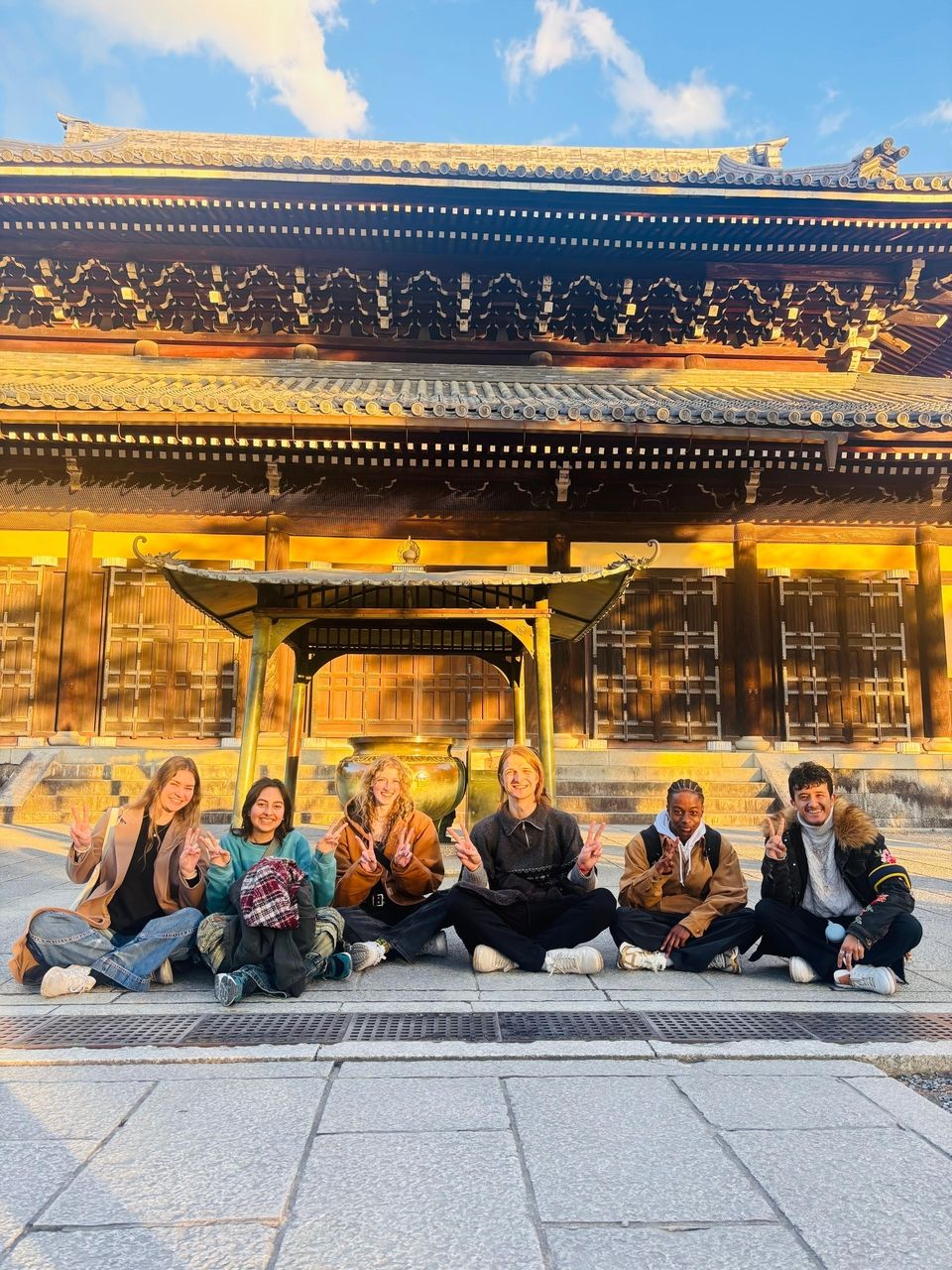
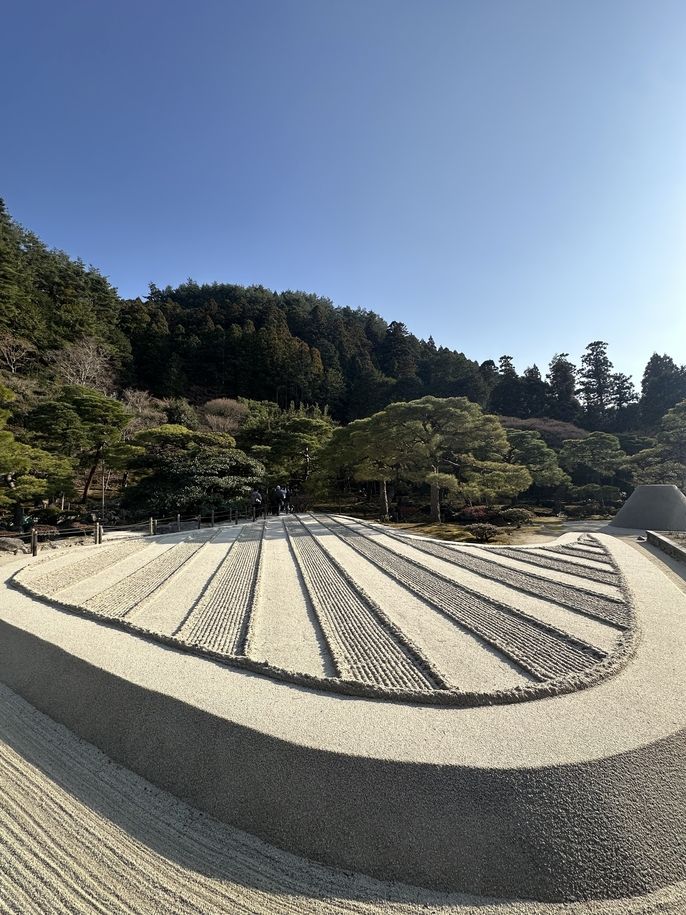
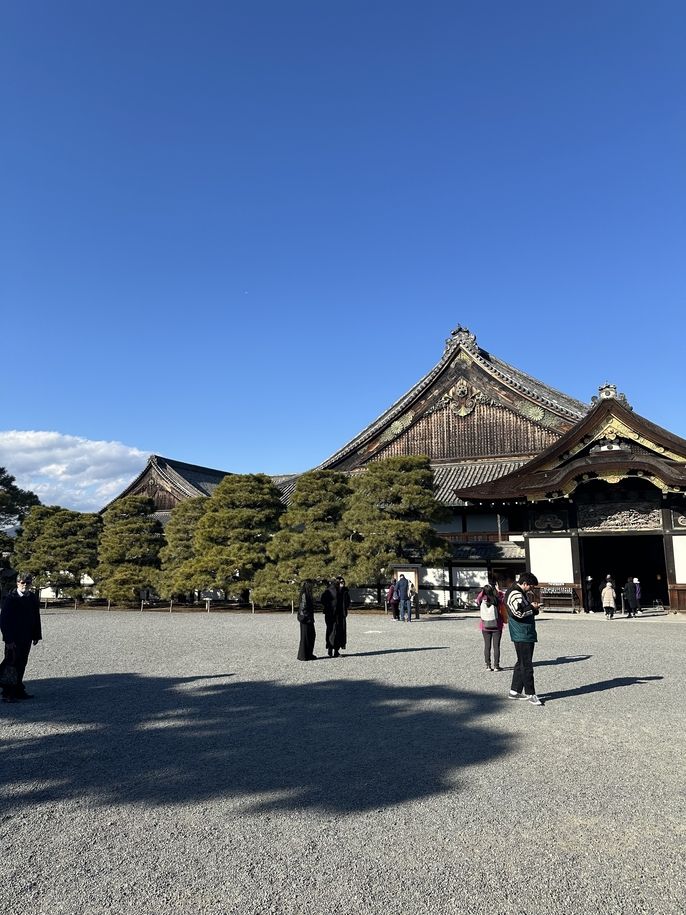
Jokes aside, Kyoto is special in a historic way because it was the capital of Japan for more than a thousand years. The city itself isn’t that big, so you can see a lot in a short amount of time. My absolute favorite place was Nanzen-ji, especially the grounds outside of it. If you have a spare day, I recommend visiting Ginkaku-ji (the Silver Pavilion) and then walking down the Philosopher’s Path to Nanzen-ji. It’s about a thirty-minute walk if you don’t stop anywhere along the way—which is hard, and you definitely should stop if something catches your eye. After exploring Nanzen-ji, grab a burger at Dragon Burger and head home thinking, “Thank you, Danylo, for this recommendation.”
Related Posts
How Curiosity, Study Abroad, and the Silk Road Shaped My Journey
Written by Michiyo Ikemoto, Director of Operations What’s Your Aspiration? Why? There is a famous quote that asks: “If today were the last day of my life, would I want... keep reading
My experience interning in Kyoto
Written by David VanBrackle Hello! Konnichiwa! My name is David VanBrackle, and I was an intern in Kyoto, Japan for the HSSA program in 2025! My internship journey actually started... keep reading
My Study Abroad Experience in Kyoto, Japan
Written by Seth Baker Studying abroad in Kyoto through CIEE was one of the most meaningful experiences of my life. Before arriving in Japan, I expected beautiful temples, amazing food... keep reading