Pottery in Icheon: Learning from a Korean Ceramic Master
Studying abroad in South Korea, I knew I wanted to experience more than just the places I'd heard about before coming here. Seoul is exciting, busy, and constantly moving, but being here has also given me opportunities to experience a completely different side of Korea.
So, for my first blog post, I wanted to start with an experience I probably would not have found myself doing back home: learning Korean pottery in Icheon.
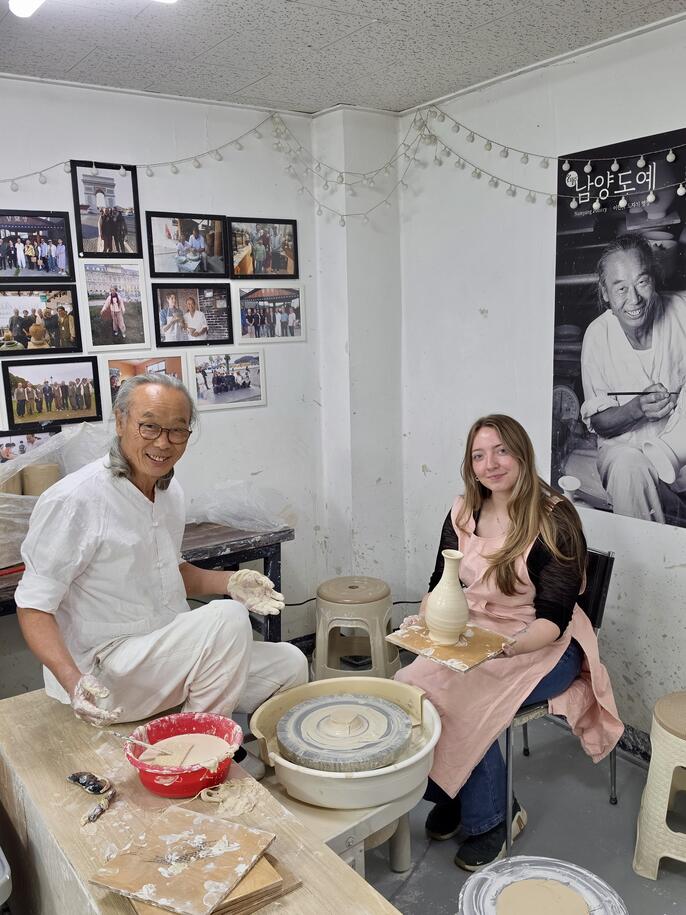
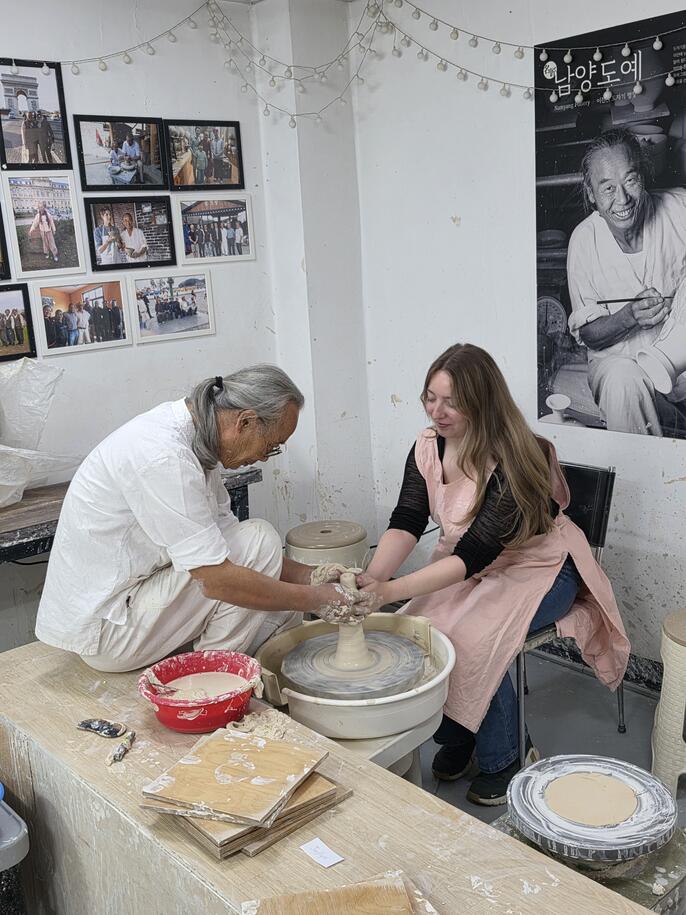
Through CIEE, we traveled outside Seoul to Namyang Pottery, where we learned about Korean ceramics and made our own piece. We also met Lee Hyang Koo, an Icheon-designated ceramic master who began his pottery career in 1969 and has spent more than 50 years practicing his craft.
A Different Side of Korea
One of the first things I noticed about Icheon was how quiet and peaceful it felt. It was very different from Seoul's constant energy, and I really enjoyed the change in atmosphere.
Namyang Pottery seemed to fit perfectly into its surroundings. Wildflowers grew outside, and Po, from Kung Fu Pa, stood at the front of the building, which was immediately one of my favorite details. The building looked older from the outside, but inside it felt much more modern and was filled to the brim with pottery.
That mixture of old and new continued throughout the studio. Traditional wood-burning kilns sat outside, while modern electric pottery wheels sat inside, which we would eventually get to use ourselves. I loved seeing traditional techniques existing alongside modern tools rather than one completely replacing the other.
Learning From a Master
Lee Hyang Koo came across as passionate and warm, with the presence of someone who genuinely enjoyed teaching his craft. With a translator, we could ask him questions and hear his explanations. He seemed eager for us to learn and encouraged us to be curious about what he was showing us.
Watching him make pottery was probably one of my favorite parts. The clay seemed to bend perfectly in his hands. He worked quickly and had complete control over every movement, making the entire process look incredibly easy.
Then I tried it myself.
Suddenly, it didn't look so easy.
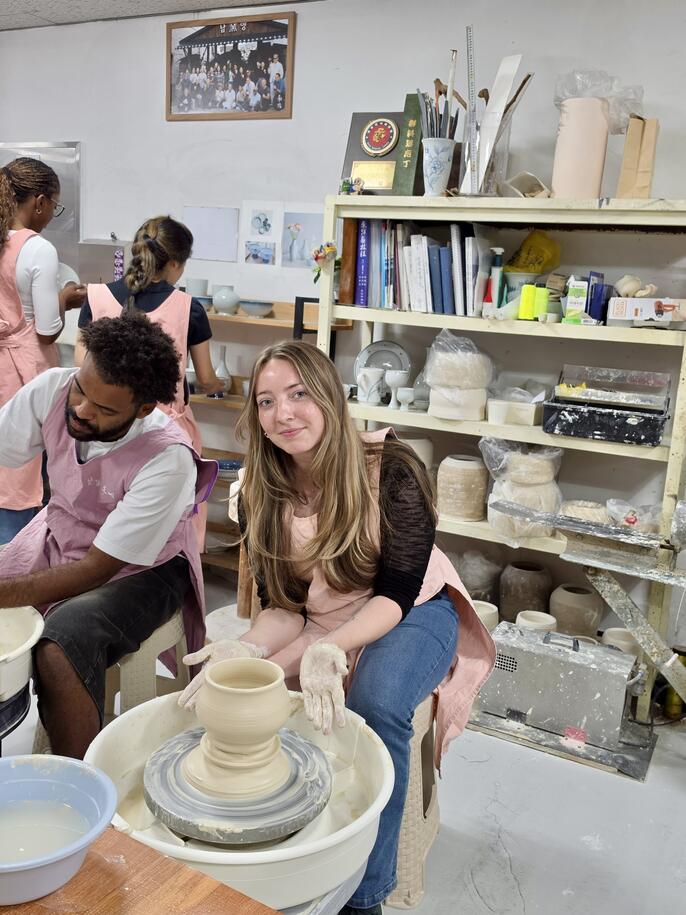
Working with clay requires a balance I wasn't expecting. You have to be gentle, but you also have to apply enough pressure to control it. Your hand placement matters, and I was nervous that one wrong movement would make my piece collapse or wobble. Thankfully, mine did neither!
I tried to mimic the techniques we were shown, but because none of the movements felt natural yet, I eventually stopped worrying so much about technique and focused on simply making something. Once I became more comfortable, it was surprisingly relaxing. I honestly could have sat there working with the clay for hours without even needing to make anything specific.
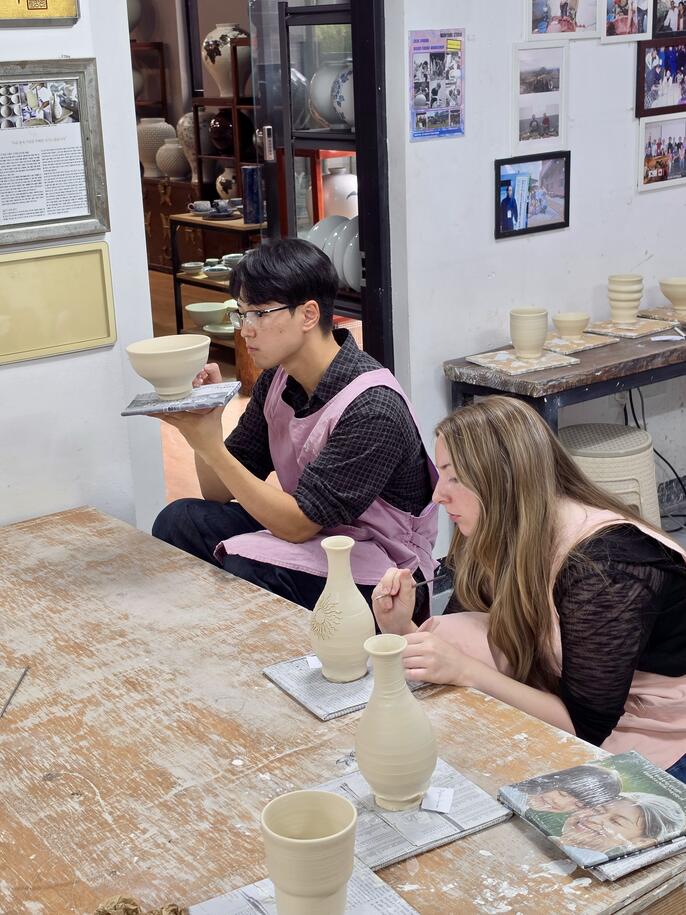
Strangely enough, the wheel wasn't the hardest part for me. Carving was.
Creating designs in the clay required its own kind of precision because I couldn't carve too shallow or too deep. It gave me even more appreciation for how much control goes into making pottery.
Making It My Own
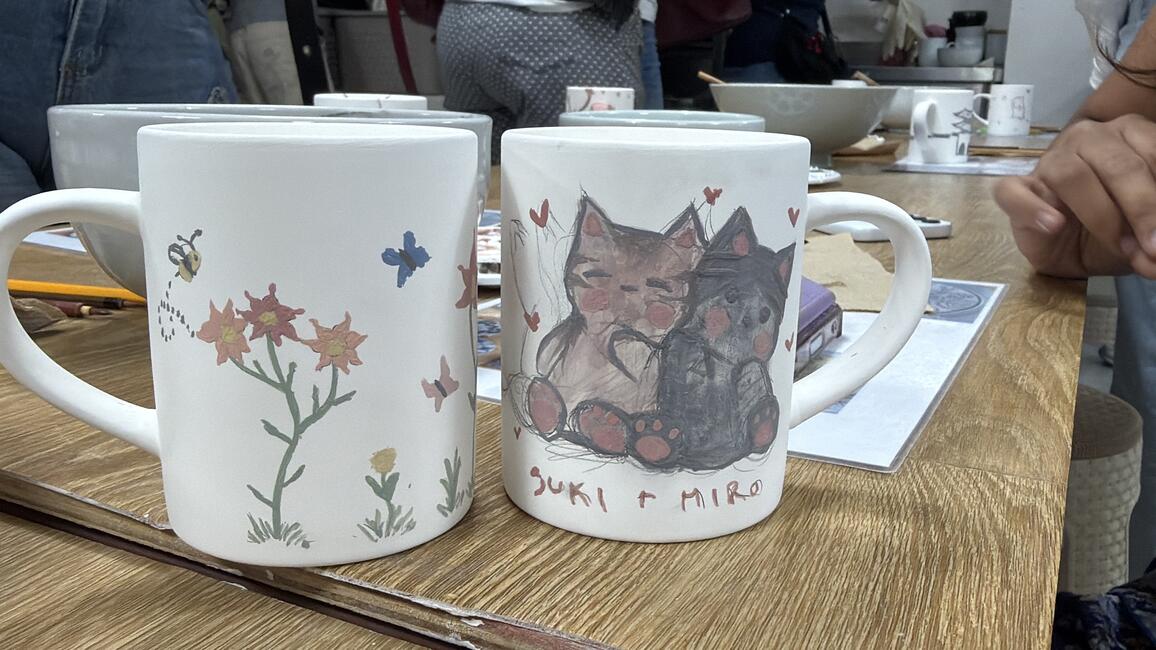
When it came time to decorate the mug they gave us, I wanted to make something personal without choosing designs that were overly complicated.
For my cup, I painted flowers on one side to create a bright, sunny feeling. On the other side, I painted stars over a lake with trees, two peaceful environments, but at completely different times of day. For my vase, I carved a sun on one side and a diamond-like star on the other.
I've always liked the sun, stars, moon, and especially the night sky, so I leaned into those designs.
That made learning about Korean pottery even more interesting. We learned that the shapes and styles of traditional pottery can carry meaning, not just decoration. Lee Hyang Koo is particularly known for his white porcelain moon jars, so learning about the importance of the moon in Korean ceramics made me look at the pottery surrounding us differently.
More Than a Souvenir
This was such a good experience for CIEE to provide because we weren't only being shown a part of Korean culture; we were able to participate in it.
And unlike some excursions where your memories are mostly photographs, this one leaves us with something physical. After the pottery goes through the rest of the process, we get to take our pieces home. I love knowing that I'll eventually return from Korea with something I actually made in Icheon.
I also don't think this experience should be limited to students studying abroad. If you're a foreigner traveling through Korea on your own, Icheon is worth considering, especially if you want to experience something outside of the liveliness of Seoul. You don't have to know anything about ceramics beforehand. I certainly didn't need to be good at pottery to enjoy it.
For my first blog post, I think this experience represents something I hope to keep doing while I'm here: stepping outside what I already know, trying things I might not normally try, and learning about Korean culture through the people who continue to practice it.
I went to Icheon expecting to make some pottery. I left with a much greater appreciation for how much patience, precision, and experience can be hidden behind something that, in the hands of a master, looks completely effortless.
Related Posts
Best Eats and Cafes in Sinchon
Best Eats and Cafes in Sinchon When I first chose Yonsei University, I was excited to explore Seoul’s popular neighborhoods, like Myeongdong, Hongdae, and Seongsu, especially for their restaurants and... keep reading

Hiking to Baegundae Peak Alone: My Bukhansan Adventure
One of my goals while studying abroad in South Korea is to push myself outside of my comfort zone and become more independent. Hiking to Baegundae Peak in Bukhansan National... keep reading
Why I Chose South Korea: Starting My Study Abroad Journey at Yonsei University
Hi everyone! My name is Adiba Anjum, and I’m currently studying abroad in Seoul, South Korea, at Yonsei University through CIEE. I’m originally a student at the University of Illinois... keep reading