Living Between Japan and Oman



Authored By:

Written by Ayah Okada, CIEE Kyoto Program Coordinator

I grew up in Muscat, Oman, a community of about 59,400 people where everyone knew everyone. That closeness was suffocating in ways that are hard to explain until you've experienced it. Your family's reputation mattered everything. There was constant pressure to be respectable, educated, and successful to avoid being the subject of gossip. Being myself felt risky because it reflected on my family.
Moving to Japan for university was an escape. I came to Osaka, a population 47 times larger than Muscat. The anonymity was freeing in a way I hadn't expected. In a city that massive, my choices didn't carry the weight of family honor. For the first time, I could live how I wanted without that constant awareness of being watched.
But living here has also shown me what I lost when I left Oman.
In Oman, people had your back without needing permission or a rulebook. If something needed doing, they'd say, "Don't worry, I got you." In Japan, everything is structured differently. Systems are clear, trains run on time, efficiency is built into everything. But if something isn't written in policy, people seem genuinely confused about how to help. Kindness sometimes requires a framework instead of just happening naturally.

This is where things get complicated for me. I miss Oman's laid-back pace and spontaneous generosity. But I also value the independence Japan gives me. Both places feel incomplete without the other.
The hardest part is identity. A clerk in Muscat once asked where I was from. I said Oman. He asked, "No, where are you *really* from?" The other day, a waiter in Osaka asked why my Japanese was so good. I told him I was Japanese. He said that was impossible. When I mentioned I was half Middle Eastern, he said, "See? You're not Japanese." In both countries, I'm perpetually foreign. Neither place quite believes I belong.
But being in-between has also given me something unique. I was chosen to represent Oman at the Kansai Osaka Expo specifically because I was Omani and could speak Japanese fluently. That opportunity wouldn't have existed for someone who was only one or the other.

Through my background, I've attended official events with the Ambassador of Japan to Oman, met the Japanese national soccer team during their matches in Muscat, and been invited aboard a Japanese naval ship. These experiences shaped how I see both countries, not as an outsider to each, but as someone with genuine access to both worlds.
I've come to see this as an advantage. I can recognize Japan's strengths and its blind spots. I understand what's gained and what's lost in each place. I stay connected to Oman through friends and social media, keeping both worlds alive.
Home isn't just a place. It's the ability to move between two worlds, even when you're never fully read as belonging anywhere.
Related Posts
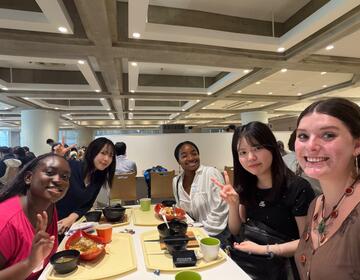
Finding Tomodachi in Kyoto
Written by Holdyn Farrell, FA26 OCBII When coming to Japan, one of the things I was most excited about was the opportunity to make new friends. To make friends with... keep reading
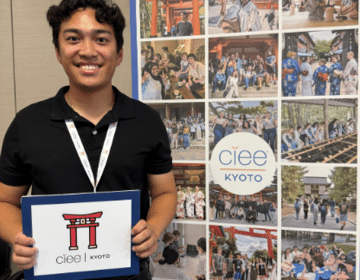
My Study Abroad Experiences and How It Led to an Internship Abroad
Written by Ryan Javier, Marketing Intern Hong Kong, Mexico, Singapore, South Africa, Ireland, Antigua and Barbuda. To any other person, this would just be a random list of countries and... keep reading
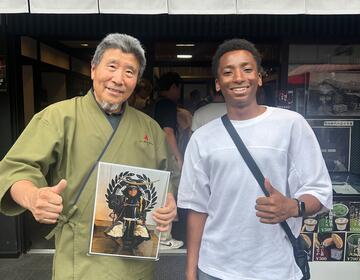
Letter of Gratitude to Japan
Written by Jayden Gridiron SU26 AMJ I My experience in Japan was indescribable. This was the most memorable experience I have ever had. Thanks to CIEE, I was able to... keep reading