Bridging Cultures Through Place by Tasha Gough
Authored By:
Being a guide for an academic group goes far beyond logistics or explaining landmarks. During my time accompanying a group of students from Elon University, I had the opportunity to support a deeply meaningful learning journey, one where the Dominican Republic itself became a living classroom, and every visit sparked conversations about history, identity, economy, culture, and global connections.
From the very beginning, the experience was marked by curiosity and openness. The group arrived eager to understand how baseball and tourism, two pillars of Dominican society, intersect with our history, social structures, and economic realities. My role was to serve as a bridge between languages, perspectives, lived realities, and questions.
Santo Domingo: Memory, Ancestry, and Historical Context
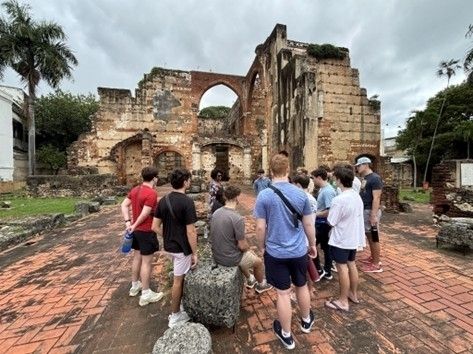
We began in Santo Domingo, exploring the Colonial Zone and key sites of historical memory. One of the most impactful visits was to the Museum of Dominican Resistance, where students engaged with complex topics such as dictatorship, resistance, human rights, and collective memory.
We also visited the Taíno Museum located in Casa del Cordón, where students were introduced to the Indigenous roots of the island. This experience helped frame discussions around pre-colonial history, cultural survival, and the often-overlooked Indigenous foundations of Caribbean identity.
Baseball as Industry, Education, and Life Path
A central component of the program was understanding baseball beyond the field. The group visited the offices of Major League Baseball in the Dominican Republic, gaining insight into how the global baseball industry operates locally and how international systems intersect with Dominican talent and labor.
We also visited several professional baseball academies, including the San Diego Padres Academy and other training facilities. These visits offered students a first-hand look at how young Dominican athletes are educated, trained, and mentored not only to become elite professionals in sport, but to develop as individuals with discipline, values, and long-term life skills.
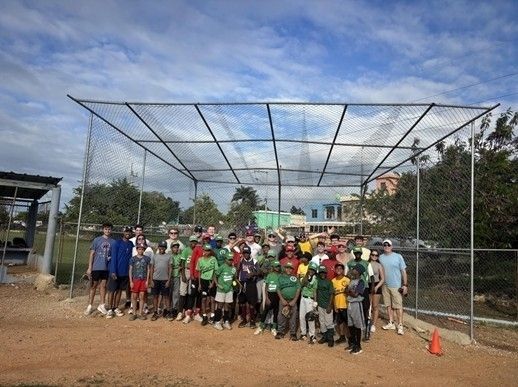
Our visit to the Manny Acta Foundation further highlighted baseball as a tool for community development, illustrating how sport can create opportunities while reinforcing strong community ties.
Santiago and the Cibao: Regional Identity and Cultural Continuity
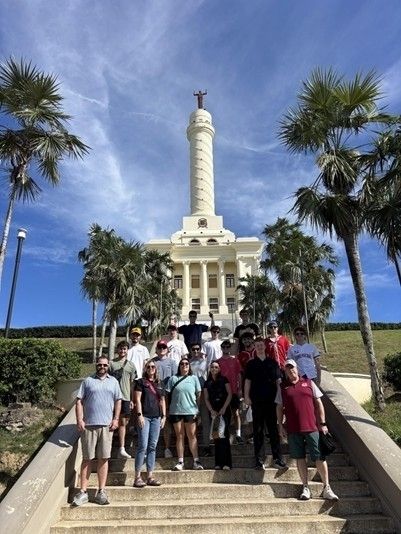
In Santiago de los Caballeros, our experience deepened through a visit to the Centro Cultural Eduardo León Jimenes (Centro León), where students explored exhibitions that trace Dominican culture from its pre-Hispanic roots through the colonial period and into contemporary society.
This visit served as an essential bridge for understanding cultural continuity in the Dominican Republic. Students were able to see how Indigenous, African, and European influences intertwine and continue to shape identity, artistic expression, and social values today. The experience allowed them to connect earlier discussions on history and memory with present-day cultural narratives, strengthening their overall understanding of Dominican culture.
Nature, Tourism, and Balance
The journey also included nature-based tourism experiences, such as the visit to the 27 Waterfalls of Damajagua, where students engaged with the landscape physically and emotionally. These moments created space to reflect on sustainable tourism, environmental stewardship, and the balance between development and conservation.
Ending the program in the La Romana area allowed for a slower pace and time to rest, reflect, and process the experience through informal conversations and shared moments.
Final Reflections
Guiding this group was an ongoing exercise in listening, adaptability, and intentional presence. Each day reaffirmed my belief in the power of academic and cultural tourism when it is grounded in respect, context, and genuine exchange.
More than showing a country, I accompanied a process. Students arrived with questions and left with a deeper, more nuanced understanding of the Dominican Republic. Along the way, I too learned, reaffirmed my vocation, and strengthened my commitment to a form of tourism that educates, connects, and transforms.
Tasha Clarett Gough Reyes - Program Assistant 2026
Related Posts
CIEE Full Circle Experience - Life Update! By Margeaux Stapleton
Hey friends! I thought it was time for a life update. I know many of you watch my stories and reels, but as a friend reminded me the other day... keep reading
EAT, DRINK, EXPLORE: SANTIAGO DE LOS CABALLEROS
BEST FOOD TO EAT IN SANTIAGO DR Dominican cuisine is infused with African, Spanish, and Taino influences, meaning dishes are loaded with herbs, but not spicy in nature. La bandera... keep reading
4 Best Dominican Republic Study Abroad Programs
Imagine waking up to the sound of ocean waves crashing against golden sands, the scent of fresh tropical fruit filling the air, and a day ahead that could include anything... keep reading