Sometimes, sitting at a table can be an act of courage

Authored By:

Have you ever sat down for a meal at a table where you’re the only one who doesn’t understand? If not, that’s perfectly normal. 25½ years went by before I experienced this for myself.
I had been in Spain for five days when our host family came to pick Julia and me up from orientation and bring us back to their house. We had about two hours to unpack and rest, and then we sat down for lunch in their beautiful dining room.
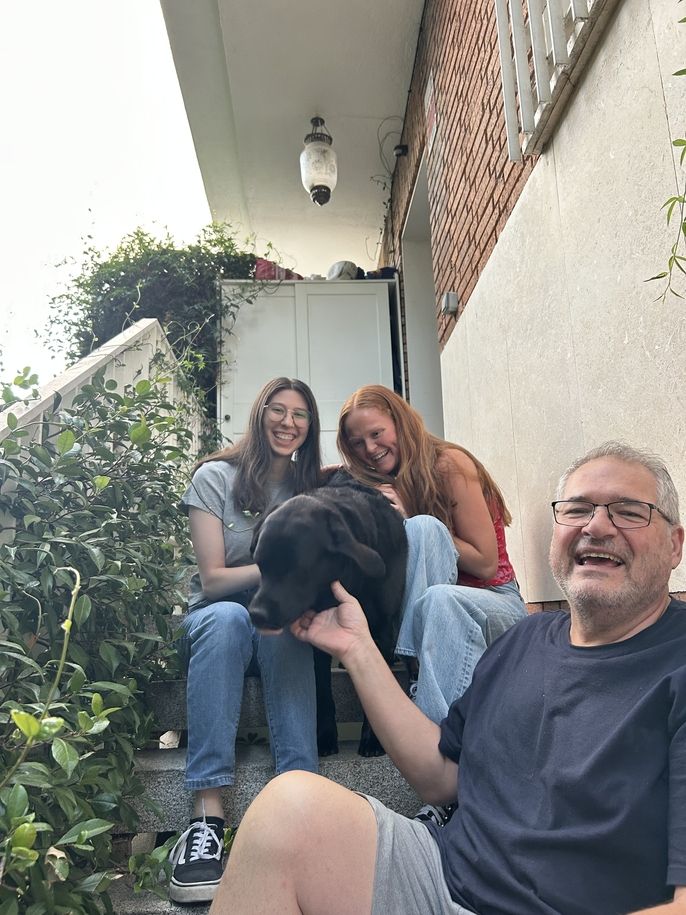
It was Clara, Pipo, their son Juan, Julia, and me at the table. Julia had taken Spanish throughout her life and was able to communicate, as well as understand, much better than she would like to admit. I was immediately wildly impressed and envious of her ability to so fluently - at least to me - speak Spanish with our host parents and their sons.
I remember sitting there and thinking, “Wow, I’m really sitting in a Spanish family’s house, 20 minutes outside of Madrid, where I will be living for the next two weeks, and I don’t understand a word of what they’re saying right now. I wish my friends could see the situation I’m in right now so they could laugh.” I realized I hadn’t been prepared for that feeling. It wasn’t exactly discomfort, since Julia was so willing to translate and constantly make me feel like less of an idiot, but it was definitely some level of shock. I had never been the person in a group who - both figuratively and literally - had nothing to add to the conversation.
I very quickly realized two things: this is my new reality for a while, and I need to work on my Spanish…fast!
I was so fortunate to be living with Clara, Pipo, and their two sons, who were extremely welcoming despite there being a very prominent language barrier. I quickly realized that when language fails, you’re able to tell by the presence of a person that they will be kind and patient. A smile, laugh, and kiss on the cheek go a long way when you can’t express yourself with words you don’t know yet. The moment I met their family, I was relieved at how willing they were to welcome me into their home - a young woman who moved to their country barely knowing any of their native language.
Over the course of those two weeks, I did my best to quickly learn important Spanish phrases by attending language classes every day, but there were many times we resorted to charades, pointing, and, of course, Julia to communicate. Although it would’ve been “easier” to use our phones to translate what we wanted to say to each other, we kept it old school. Technology would’ve ruined this interaction that was actually incredibly human.
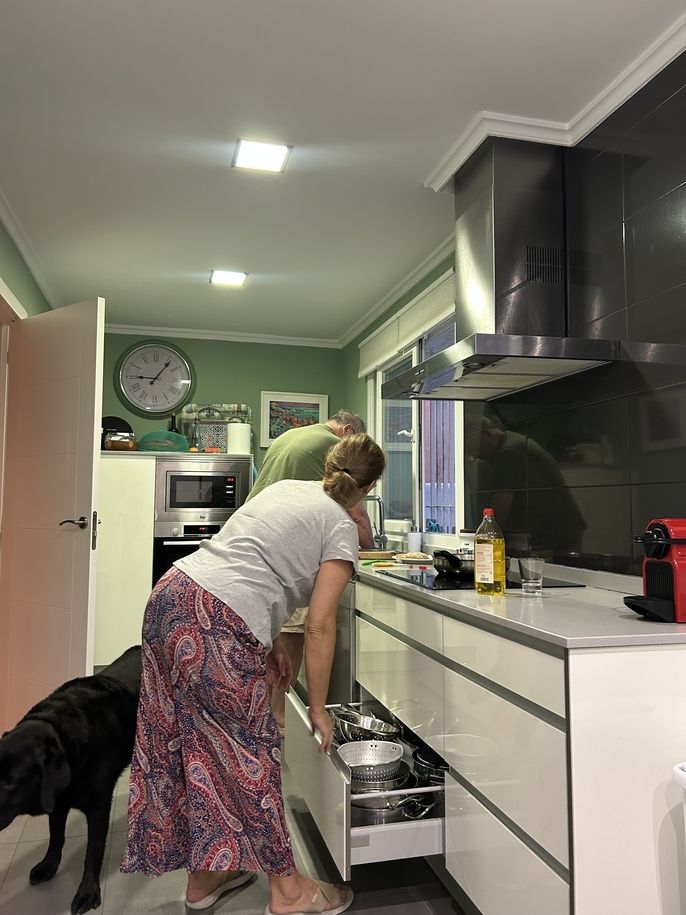
We laughed so hard in the kitchen, at the dining room table, and on the living room sofa over mispronounced words and confusing phrases. Despite not always understanding each other, we’d spend 2 hours eating dinner every night, just trying to get to know one another. I will never forget all the times Pipo tried to ask me something, only to be met with confusion written all over my face - but a smile - to which he’d smile, laugh, and pat my shoulder like it was no pasa nada.
They never made me feel stupid for being there and trying, which is why I’ve had the courage to eat lunch with the teachers after school the past few months. They speak in Spanish almost the entire time, and although I can understand about 25% of a conversation now compared to the 1% I understood at my host family’s, a lot is still lost in translation. But it’s okay. I’m learning. And they appreciate me trying. They help me with words and phrases I don’t know. And they’ve even told me they admire how I’m “not embarrassed to try” because they also get nervous to speak English. Now we all have a place to practice without judgement.
To sit at a table where you’re the only one who doesn’t fully understand is to put yourself in a situation where the only outcome is growth. I have come to find comfort in the discomfort of learning. It can be so easy to shy away from situations where you know your face will turn bright red from embarrassment, but it’s imperative you put yourself in them anyway. In life, you can either be miserably comfortable or happily uncomfortable, so if you happen to be up for it, discomfort might just be where the magic happens.
Related Posts

Expanding the Blog
It was August 2025 when I started writing this blog - just over 6 months ago, before I left for Spain. To say I'm relieved that I've consistently published my... keep reading
Pack Perfectly Every Time: A Guide to Getting Your Luggage Right
The first time I ever flew alone, I was 14 years old. My best friend had moved to Scottsdale, Arizona, and my mom said that she’d let me fly by... keep reading

10 Travel Tips & Tricks I Live By
Trying to avoid unnecessary stress, enjoy your trip as much as possible, and reap the benefits of spending money? Me too, and it's simple! Below are 10 travel tips I... keep reading