Understanding Reverse Culture Shock for Exchange Students and Host Families

Authored By:

Remember the adjustment period your family experienced when your exchange student first arrived?
You may be surprised to learn that you could experience something similar again soon.
As the school year begins to come to a close, it may signal a new transition for your household: reverse culture shock.
This common mix of emotions – often referred to as reverse culture shock for exchange students – can also affect host families in unexpected ways. Learning what to expect can help everyone feel more prepared, supported, and understood during the goodbye – and beyond.
What Is Reverse Culture Shock?
What is reverse culture shock? If culture shock is the emotional and psychological adjustment to a new culture, then reverse culture shock is the challenge of readjusting to life back home after living abroad. While students prepare extensively for arrival, far fewer people prepare for what comes next.
It’s important to normalize this early: reverse culture shock doesn’t mean the experience didn’t “work.” More often, it means it mattered.
And it can happen after any meaningful time abroad – including the reverse culture shock an exchange student may experience participating in a BridgeUSA High School exchange program.
What Reverse Culture Shock Looks Like for Exchange Students
Not every student will experience all the symptoms of reverse culture shock. And that’s OK.
Still, it can be helpful to sit down with your participant and talk through what they might experience as they transition home.
Some common signs include:
- Feeling out of place at home. Home may feel unfamiliar. While it probably hasn’t changed, the student has.
- Difficulty reconnecting with friends and routines. The relationships and rhythms they return to may feel different than the ones they built in the U.S.
- Frustration when others don’t fully understand the experience. Students may struggle to explain what their exchange meant to them – or feel like others have moved on quickly.
- Missing their host family and daily life abroad. Just as they missed home when they arrived, they may now deeply miss their life with you.
- Mood swings or emotional sensitivity. Feelings of sadness, irritability, or restlessness are common during readjustment.
- Idealizing the exchange experience. Remembering only the highlights can make returning home feel disappointing by comparison.
- Questioning identity or sense of belonging. Many students feel caught between two cultures, unsure where they fit best.
- Withdrawing or needing more alone time. Adjusting back can be mentally exhausting. Give them some time and space to do so.
If you’ve built a strong relationship with your participant’s home family, consider sharing these signs with them as well – it can help everyone feel more prepared.
What Host Families May Experience, Too
A host family goodbye to an exchange student can bring a wide range of emotions. You may experience:
- A sense of loss or grief. Saying goodbye can feel similar to a family member moving away.
- An unexpectedly quiet home. The absence may feel especially noticeable during everyday moments.
- Pride mixed with sadness. Many host families feel proud of their student’s growth while grieving the end of the experience.
- An emotional letdown after a meaningful year. After months of shared routines and connection, the transition can feel abrupt.
- Concern about how the student is adjusting back home. It’s natural to worry about their well-being and how they’re handling re-entry.
- A shift in family dynamics. Parents, children, and extended family members may all process the change differently.
- A desire to stay connected. Host families often hope the relationship will continue, even as it naturally evolves.
All of this is normal – and often a sign of just how meaningful the exchange truly was.
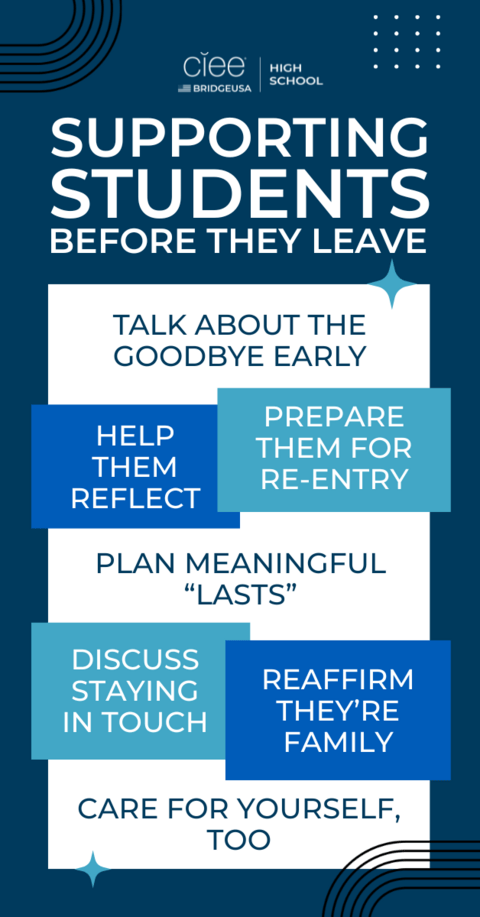
How Host Families Can Support Exchange Students Before They Leave
One of the most common questions host families ask is how to help an exchange student return home after such a meaningful year.
Talk About the Goodbye Early
As hard as it may be, it’s important to acknowledge what’s coming. Avoiding the topic won’t make the separation easier – and talking about it can help normalize emotions.
Help Them Reflect
You’ve shared so many moments together. Take time to reflect on the journey – how far they’ve come, what they’ve learned, and the memories you’ve created as a family.
Prepare Them for Re‑Entry
Your participant may be focused on how sad it will be to leave, but they also need to prepare for what they’re returning to. Home may feel different – and they are different, too.
Plan Meaningful Lasts
Create intentional final moments, whether it’s a favorite meal, a family outing, or a quiet evening together. These don’t need to be big to be meaningful.
Discuss Staying in Touch
Set realistic expectations for communication after they leave. You don’t need to promise daily contact – what matters most is keeping the connection genuine and sustainable.
Reaffirm They’re Family
Let them know they’ll always have a place in your home – and in your heart. It doesn’t have to be goodbye forever.
Care for Yourself, Too
Don’t forget: Your participant isn’t the only one who’ll experience heartbreak. Be gentle with yourself and acknowledge your own feelings during this transition.
Supporting the Transition After They Return Home
As much as you may miss them and want to check in right away, giving your student a little space can be an important part of their adjustment.
Helpful ways to support from afar include:
- Staying connected without pressure
- Allowing time and space for re‑entry
- Letting the relationship evolve naturally
Long‑term connection doesn’t always mean constant communication – and that’s OK.
Why the Hardest Goodbyes Are Often More Meaningful
Saying goodbye to someone you care about should be hard. It’s a sign that they’ve become part of your family.
And just because they no longer live with you doesn’t mean the relationship you’ve built disappears.
At its core, it means the exchange program worked. You’ve learned, you’ve grown, and you’ve bonded. That’s exactly what BridgeUSA is about.
Thinking about hosting again next year? Send in your host family application today.