The Employer's Guide to Ending the BridgeUSA Summer Work Travel Season

Authored By:
When the BridgeUSA Summer Work Travel season starts winding down, there's still important work to do. From confirming end dates to planning for next year, a few simple steps can help you close out the season smoothly.
This guide covers what BridgeUSA (J-1) Summer Work Travel employers need to know before participants finish their programs and head home.
What Happens When a Summer Work Travel Participant's Job Ends
If you’ve hired Summer Work Travel participants from many countries, chances are that you’ll have a number of different end dates at the end of your season.
Participants in the Summer Work Travel program category do not all have the same work end date. Program dates vary by country, which means participants may become ineligible for employment at different points throughout the season.
BridgeUSA Summer Work Travel Program Closing Dates | |
| Season | Average Closing Date Range |
| Summer | Aug. 14 – Oct. 1 |
| Winter | Jan. 11 – April 5 |
| Spring | July 7 – July 19 |
These closing dates correspond with the academic calendars in participants' home countries, which is why work authorization ends at different times throughout the season.
The most recent Summer Work Travel Program Date Chart can be found on the official BridgeUSA Summer Work Travel Resource Page.
As the season winds down, it's important to know your participants' authorized end dates and understand what happens after employment concludes.
- Know when each participant must stop working.
- Understand that participants cannot work during their Summer Work Travel 30-day travel period.
- Ensure employment ends according to their authorized program dates.
Once you understand the program requirements, the next step is making sure your participants understand them, too.
What Employers Should Tell Participants Before the Season Ends
Both you and your participants need to be on the same page about the end of the season. Before their last day, be sure to:
- Confirm their final day of employment.
- Review final paychecks and payroll details.
- Discuss housing move-out dates, how the checkout will work, and when the deposit will be returned, if applicable.
- Explain the J-1 visa grace period, also known as the J-1 30-day grace period, and the employment restrictions that apply during that time.
- Complete any required offboarding steps.
- Share J-1 visa sponsor contact information for post-employment questions.
A quick conversation now can help prevent confusion about final pay, housing, travel plans, and program rules later.
Note: U.S. checks can’t be cashed or deposited overseas. Electronic payments and direct deposits for paychecks or housing deposit refunds are best whenever possible.
How Employers Can Give Their J-1 Workers a Strong Finish
A participant's final days at your organization often shape how they remember their entire summer.
For many participants, the final days of their program are just as memorable as the first. A thoughtful farewell can help them leave with positive memories of your workplace, your team, and your community.
Consider:
- Writing a personalized thank-you note
- Hosting a team lunch or small farewell gathering
- Sharing photos from the season
- Encouraging coworkers to exchange contact information
- Asking participants what they'll remember most about their summer
Small gestures can make a big difference. Participants often stay connected with coworkers after returning home, and the experiences they share can influence future applicants considering your organization.
Why Employers Should Consider Inviting International Participants Back Next Season
If you have BridgeUSA J-1 workers you’d like to invite back next year, tell them now! Not only will it mean a lot to those team members, but it can help you get an early start on next year’s round of hiring.
Reasons that many Summer Work Travel employers enjoy having their participants come back include:
- Spending less time recruiting and interviewing
- Reducing onboarding and training needs
- Bringing back participants who already know your workplace culture
- Filling positions earlier for next season
- Building a reliable network of returning participants and referrals
Participants who enjoy their experience often tell friends, classmates, and family members about your organization. That can make future recruiting easier and help attract strong candidates season after season.
How Employers Can Make Next Season Even Better
Before participants leave, ask for feedback about their experience.
Ask questions like:
- How did you feel about your seasonal employment with us?
- What did you enjoy here? What were some of your least favorite tasks? Was there anything you missed out on doing?
- Was your schedule manageable?
- Is this an opportunity you’d like to come back to in the future?
- Would you recommend working here to your classmates back home?
Their feedback can help you strengthen your hiring, onboarding, housing, scheduling, and cultural exchange efforts next season.
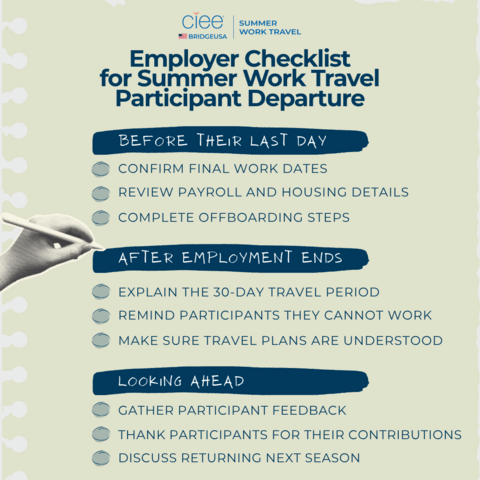
A Quick End-of-Summer Work Travel Season Checklist for Employers
Before the end of your season, take note of what tasks you need to take care of.
How CIEE Supports Employers as the Summer Work Travel Season Comes to a Close
A successful season doesn't end when participants clock out for the last time. Employers often have questions about participant departures, J-1 employee end-of-employment requirements, travel periods, and planning for the next hiring cycle.
That's where CIEE: Council on International Educational Exchange comes in.
With CIEE, employers benefit from:
- Guidance on Summer Work Travel regulations and participant end dates
- Support when questions or issues arise during the season
- Employer resources and tools designed to simplify program management
- Access to one of the world's largest Summer Work Travel participant networks
- A dedicated team that helps employers prepare for future hiring needs
Whether it's your first season or your 20th, CIEE works alongside employers before, during, and after the program. That long-term partnership helps employers build successful seasonal staffing strategies while creating meaningful cultural exchange opportunities for participants.
H2: Make the End of This Season the Start of Next Season
The end of the Summer Work Travel season is an opportunity to reflect on what worked, recognize your participants' contributions, and start preparing for the future.
By ending the season thoughtfully, you can strengthen participant experiences, support future recruiting efforts, and build a foundation for another successful year.