J-1 Visa Training Plan (Form DS-7002) for BridgeUSA Interns and Trainees Explained
Authored By:
With every good internship comes tasks to be completed, skills to be learned, and goals to be met.
With the BridgeUSA Intern and Trainee programs, it’s no different.
In fact, it’s even better. Because so much is prepared before the program begins, both the employer and the participant know exactly what to expect throughout the experience.
Learn more about the training plan that keeps all parties aligned – and meets compliance requirements.
What Is the DS-7002 Form?
Form DS-7002 – titled the Training/Internship Placement Plan (T/IPP) – is the official document required by BridgeUSA Intern and Trainee participants and their host employers.
The form serves as a roadmap for the exchange visitor's time with an American business, and it’s required to be completed and signed off by 4 parties:
- The host employer, to commit to the training outlined in the plan
- The participant, to sign off in agreement that the program meets their area of study and/or career experience
- The J-1 visa sponsor, to verify it meets program standards, aligns and protects both the participant and employer
- The State Department, to ensure regulatory compliance
Employers work directly with a J-1 visa sponsor – such as CIEE: Council on International Educational Exchange – throughout the process. And by choosing an experienced sponsor like CIEE, you partner with the largest and oldest nonprofit sponsor in the country.
Why Is the Training Plan Important?
Because the DS‑7002 form becomes the official record used during sponsor monitoring and State Department reviews, accuracy and structure are critical to the process.
And without an approved J-1 visa training plan, hosting an international participant for a BridgeUSA Intern or BridgeUSA Trainee can’t take place.
Why It’s Important to Employers
A J-1 visa training plan helps employers because it:
- Complies with State Department regulations.
- Strengthens the chances of visa approval for participants.
- Defines their obligations.
- Creates an outline in advance for the work and learning that the participant will perform.
- Protects them during audits or site visits.
Why It’s Important to Participants
A J-1 visa training plan helps participants because it:
- Supports eligibility for a J-1 visa.
- Protects them from doing work outside of the plan.
- Proves the work they completed to employers in their home country, as well as their college or university, if they’re still in school.
- Limits their work to the location, employer, and dates on their plan.
What Information Goes into a J-1 Training Plan?
The BridgeUSA J-1 internship training plan includes 4 sections:
- Information about the BridgeUSA participant
- Information about the host employer
- Statement of acknowledgement
- Placement plan, which includes learning objectives and, in some cases, multiple phases if the participant will intern for different teams
Each section must be fully completed for the plan to be approved.
Section 1: Exchange Visitor Information
The first section includes basic information about the participant, such as:
- Name
- Email address
- J-1 sponsor
- Occupational category
- Years of industry experience
- Planned dates for BridgeUSA program
Section 2: Host Organization Information
Employers enter their business information in this section, including:
- Organization name and address
- Business website
- Employer Identification Number (EIN)
- Participant compensation
- Annual revenue
Section 3: Certifications and Sponsor Approval
In this section, both the intern or trainee and the J‑1 visa sponsor sign to acknowledge they understand the program requirements and the training plan.
Section 4: Training/Internship Placement Plan
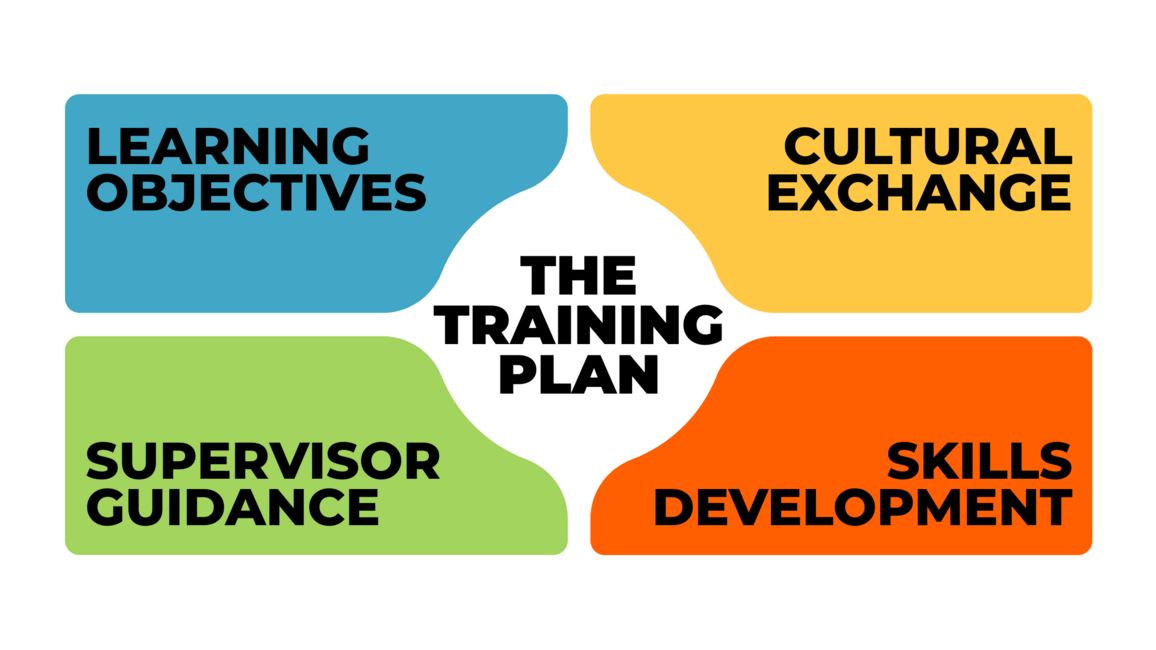
The DS-7002 form outlines the participant's training or internship experience, including what they’ll learn, who will supervise them, and the skills they’ll develop. The training plan may be divided into one or more phases, depending on the program.
Some program types require multiple phases. For example, hospitality internship programs longer than six months and certain trainee programs must include multiple phases. In other fields, employers may choose to organize the training plan into multiple phases when it supports the participant's learning goals.
For each phase, the form must include:
- Description of role
- Specific goals and objectives
- Supervisors
- Skills to be learned, including how they’ll be taught and measured
- Planned cultural activities, like company-sponsored events, sporting events, or cultural festivals
When a program includes multiple phases, a separate section must be completed for each phase.
Common Mistakes to Avoid
To ensure a positive exchange experience, be sure to complete all J-1 training program requirements on the plan. Mistakes that could hold up the process include:
- Treating the form like a job description and not a training program.
- Using vague or generic training phases.
- Having incorrect or incomplete details, like the accurate address for the program location.
- Missing cultural exchange elements.
- Reusing a previous BridgeUSA training plan.
- Having discrepancies between the DS‑7002 and other paperwork.
Remember, your sponsor organization is there to support you throughout the application and hosting process.
How to Get Help Completing Your Training Plan
Of course, if you're still unsure how to fill out DS-7002, your J-1 visa sponsor organization will guide you through the process – making it even easier for you to host international interns and trainees at your business.
Ready to host an international intern or trainee at your business? Connect with the CIEE BridgeUSA Intern and Trainee team to get more information.