14th Annual CIEE Global Internship Conference - Day 2
Authored By:
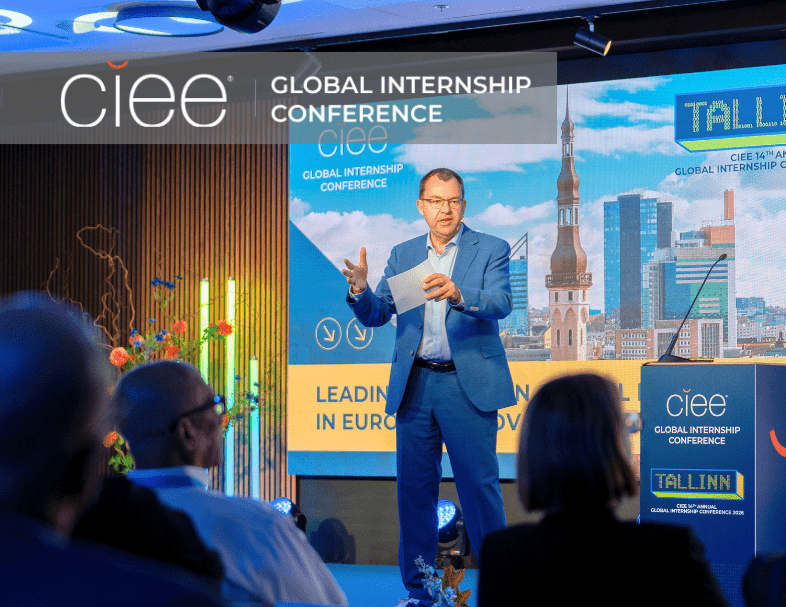
On the second day of the 14th Annual CIEE Global Internship Conference in Tallinn, Estonia, participants explored ways that educators, host employers, governments, and other partners can harness collaboration and innovation to build internship experiences that prepare students for a rapidly changing workforce.
Morning Plenary – A Legacy of Powerful Exchange Programs Between the U.S. and Baltic Countries
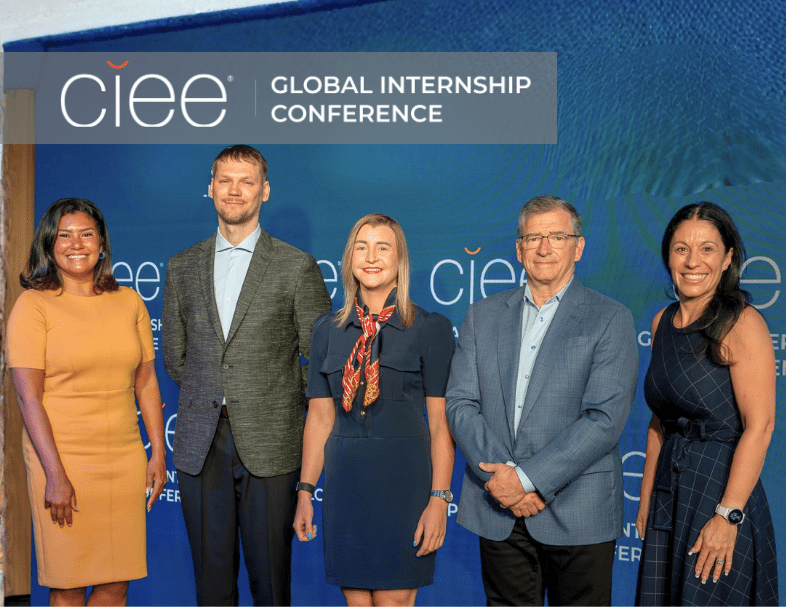
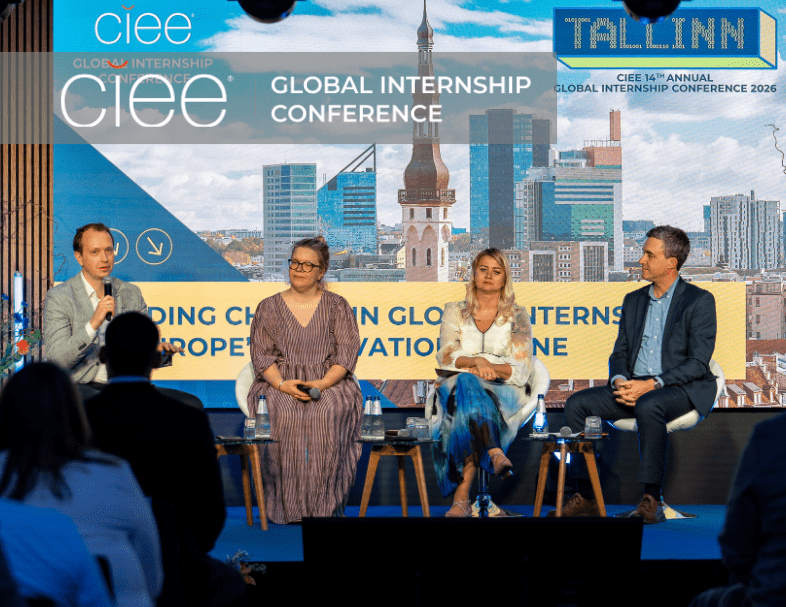
The morning plenary highlighted the impact of educational and professional exchange programs between the United States and the Baltic region. Panelists discussed how partnerships between U.S. host organizations and Baltic participants have created opportunities for professional development, innovation, and cross-cultural collaboration.
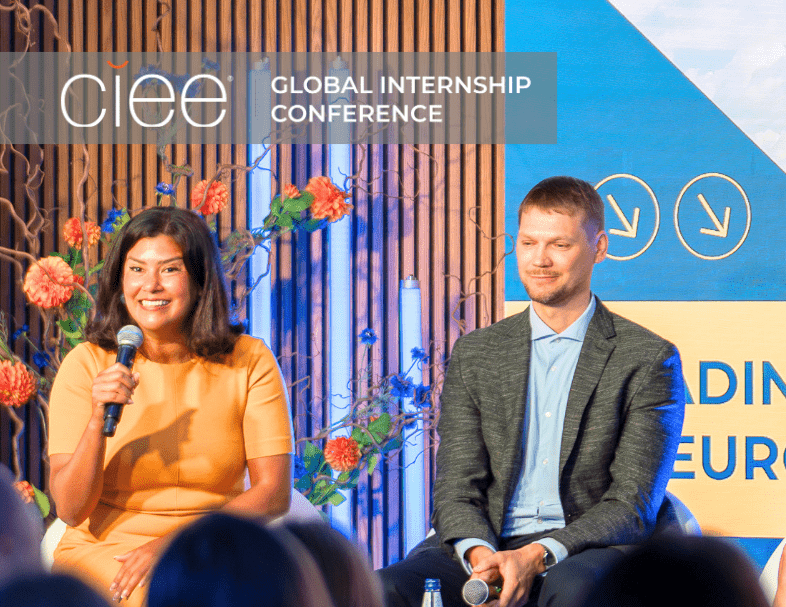
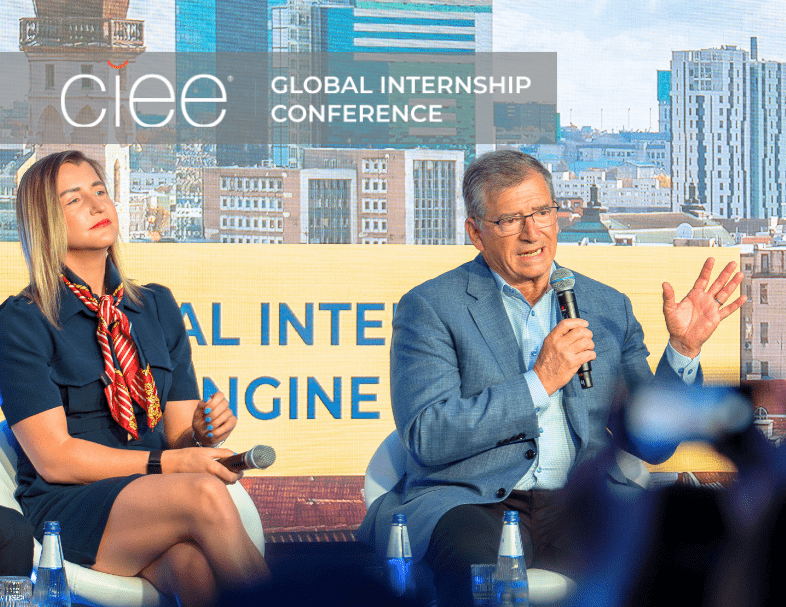
Carye Duffin, Senior Vice President of External Affairs at CIEE, moderated the panel which included Agnė Vaiciukevičiūtė, Member of the Vilnius Municipal Council and alum of the Baltic-American Freedom Foundation (BAFF) Professional Internship Program; Geysha Gonzalez, Senior Advisor at the Center for European Policy Analysis (CEPA); Jānis Kreics, engineer at Akmens Nami and a Baltic American Freedom Foundation Professional Internship alumnus; and Paul Pedini, Senior Vice President at Skanska.
Paul Pedini from Skanska shared his 14-year experience with Baltic interns, emphasizing their initiative and work ethic.
Jānis Kreics, who interned with Paul’s team at Skanska, spoke about the long-lasting positive impact of hands-on work experience in another country. "It forces you to operate outside the context that makes you comfortable, and you have to build your credibility from scratch in a different language and a different professional culture," he said. "That completely reshapes how you view your own market when you return, and the value of that does not stop when you come home. It keeps growing—for you and for the region.”
Jānis shared how after his internship with Skanska, he returned to Latvia and built his own company. Thanks to the relationship he built with his internship supervisor in the United States, he still works on projects for Skanska as a contractor. “Personal trust became a commercial contract,” he said.
The exchange creates trust, trust reduces friction, reduced friction enables collaboration that individual countries cannot achieve alone.
—Jānis Kreics
Concurrent Sessions
After the plenary, attendees participated in one of three concurrent sessions: AI Jam, Study Abroad and Internship Trends Across Europe, or The Global Internship Index.
AI and the Future of International Education
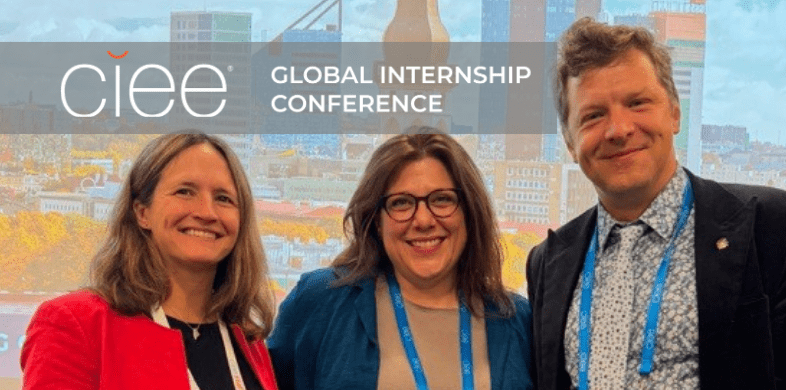
A panel discussion examined how artificial intelligence is changing operations and decision-making across the international education sector.
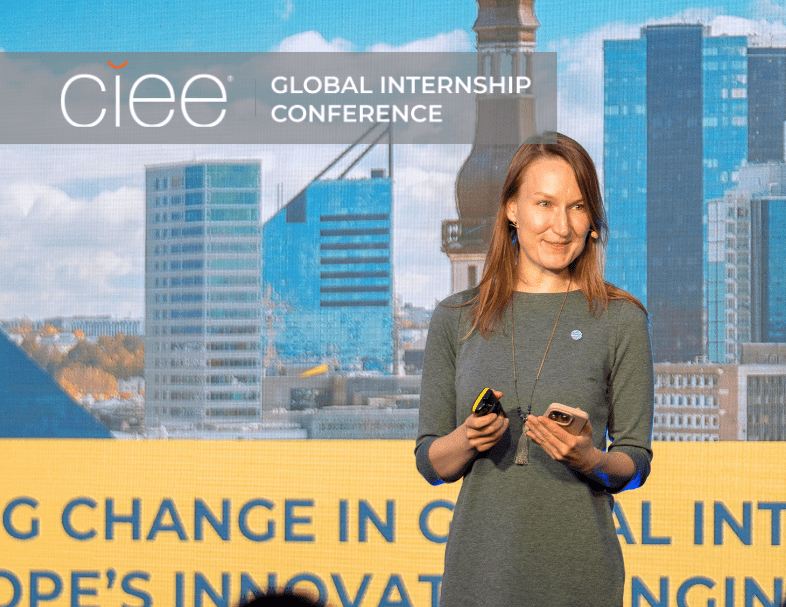
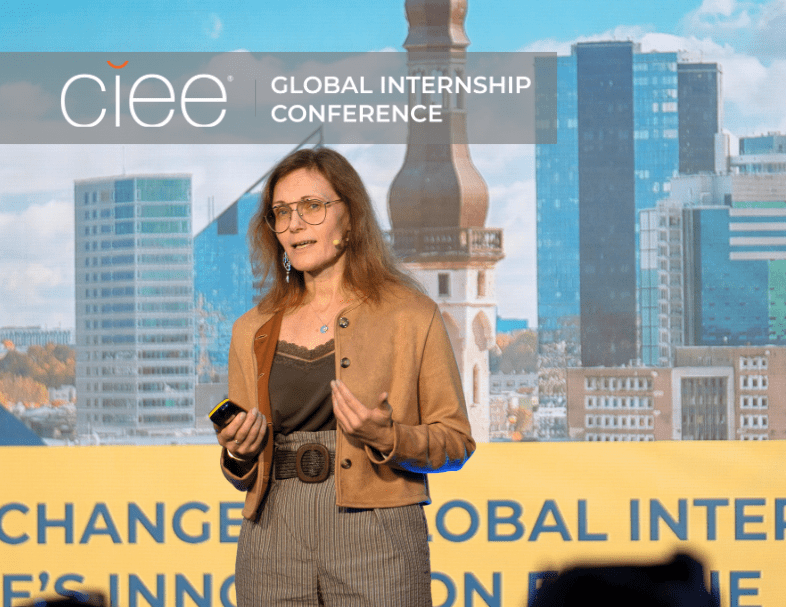
Speakers included Jen Mrowka, Vice President of Strategy at CIEE; Jennifer Palange, Vice President of Client Solutions at OHO; and Jüri Vlassov, Friendly AI Lead at the Estonian Academy of Security Sciences.
Panelists emphasized that while AI is transforming how organizations operate, human skills such as critical thinking, adaptability, intercultural communication, and professional judgment will become even more important for students entering the workforce.
"Internships are going to become even more important in the world of AI,” said Mrowka. “They are critically important because they are an opportunity for students to get the skills that AI can't replace.”
"The future skill is not going to be just simply knowing how to use AI,” said Palange. “That's going to be table stakes for this generation of students. The more important skill is going to be knowing whether something is actually good. Is it accurate? Is it appropriate for the audience? Is it ethical? Is it useful? And does it help the team make a better decision?"
Following the discussion, attendees participated in an interactive exercise using AI tools to identify key themes from the conversation and generate ideas that could be applied within their own organizations.
GIC Talks
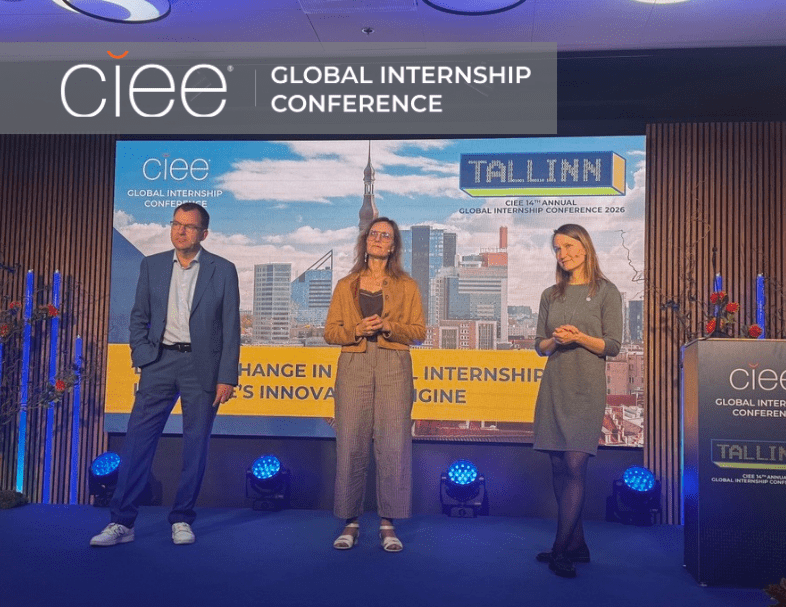
The afternoon featured a series of GIC Talks that highlighted how universities and internship providers can help students acquire skills such as adaptability, critical thinking, collaboration, and a sense of purpose that will help them navigate the quickly evolving workforce.
Frank Ziegele, Executive Director of the CHE Centre for Higher Education, discussed how universities can remain relevant amid significant changes in higher education.
Maria Sakarias explored the human side of digital innovation through Mondo's work with educators, refugees, young people, and partner communities around the world. She emphasized that digital skills extend beyond technical proficiency to include critical thinking, media literacy, civic participation, and confidence.
Technology innovation is important and the human side is the actual practice. Technology innovation is, at the end of the day, a tool.
—Maria Sakarias
Katre Eljas, Head of AI & Robotics Estonia at Tallinn University of Technology argued that future success will depend not only on technological advancement, but also on the ability of individuals and institutions to combine AI with human creativity, judgment, adaptability, and purpose.
Jim Pellow asked panelists how internship programs should evolve to help students prepare for an AI-driven future.
Panelists suggested that internships will become more valuable—not less—in the age of AI because they help students develop the human skills, judgment, adaptability, and real-world experience that technology cannot easily replicate. They suggested that internships should offer students opportunities to work on real projects and solve real problems so students can see how AI is applied to real-world challenges.
Katre Eljas recommended teaching interns how AI technology works, as well as skills that complement AI, including problem-solving, systems thinking, and collaboration. “[Internships should teach] how to create trust, not trust with an AI, but a human trust. So, what do you need to know? What do you need to do in order to be trusted by other people? I would teach those skills.” she said.
CIEE Community Impact Initiative Panel
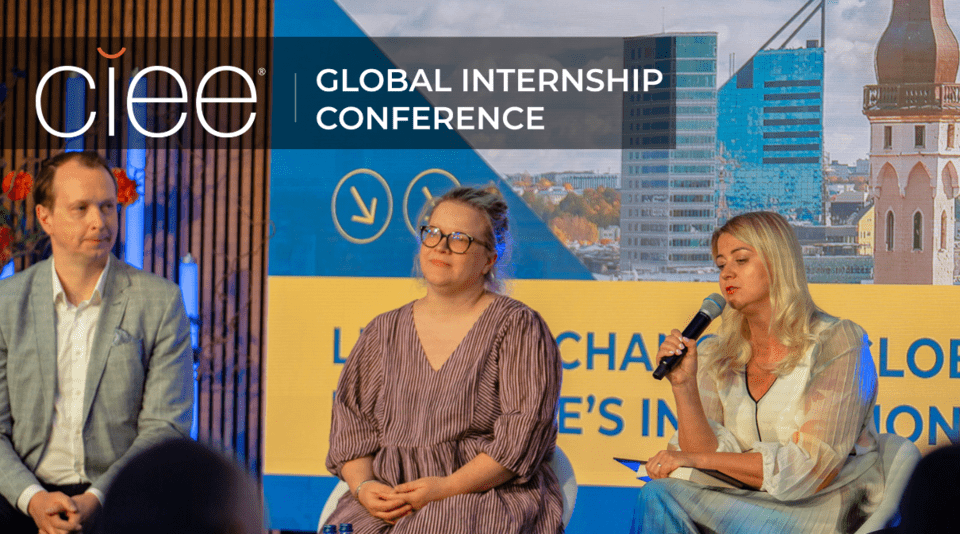
The afternoon continued with a discussion about CIEE's Community Impact Initiative, which connects students with local organizations and projects that address community needs in their host cities.
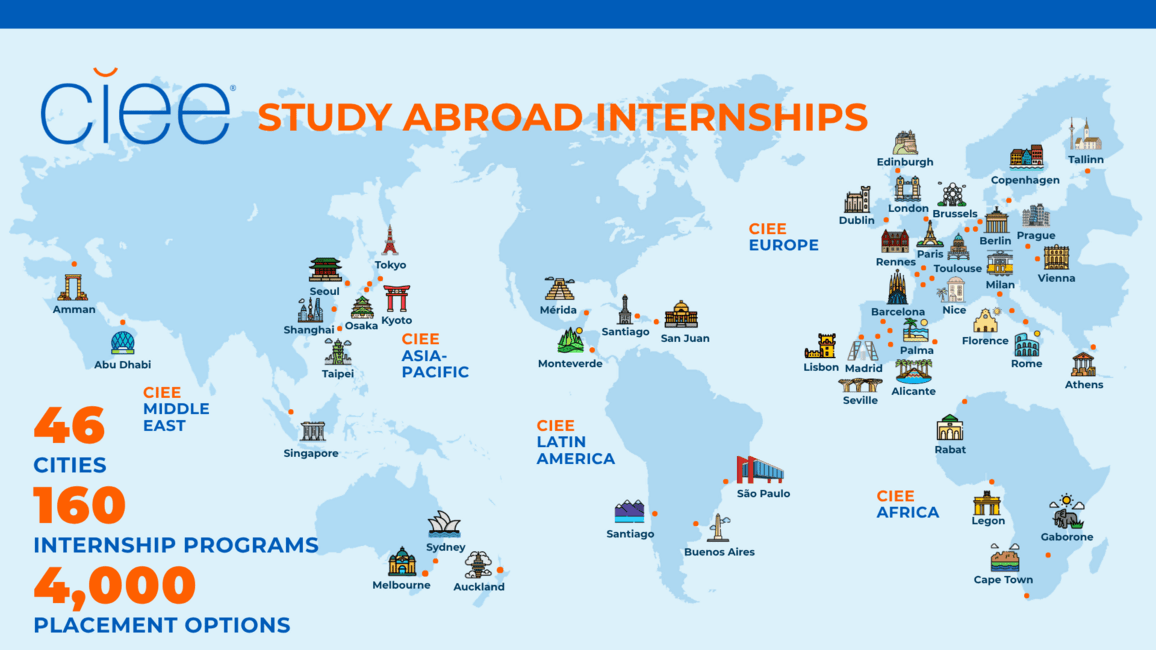
More than 1,000 CIEE students participated in the CIEE Community Impact Initiative during the spring semester and contributed to 160 local community organizations across CIEE's centers worldwide.
Speakers included Evelyn Müürsepp, Center Director of CIEE Tallinn; Marit Kannelmäe-Geerts, Head of Education at Peaasi.ee; Toivo Tänavsuu, Co-founder and Supervisory Board Member of Vähiravifond Kingitud Elu; and Patrick Moran, Senior Vice President of College Study Abroad at CIEE.
Evelyn Müürsepp talked about how students studying at the CIEE Tallinn Center will begin in fall 2027 to contribute their volunteer efforts to support organizations such as Peaasi.ee (Head Matters), which works to make mental health support, education, and resources accessible to everyone in Estonia, and Vähiravifond Kingitud Elu ("The Gift of Life" Cancer Treatment Foundation), which helps cancer patients access life-extending treatments not covered by Estonia's healthcare system.
Toivo Tänavsuu shared how his mother's cancer diagnosis inspired him to co-found Vähiravifond Kingitud Elu after community donations helped her access life-extending treatment not covered by Estonia's healthcare system. Over the past 12 years, the foundation has raised more than $40 million and helped approximately 4,000 patients access potentially life-extending care.
He talked about how the culture of Estonia supports collaboration. "We Estonia are good at coming together and do things, and this is the taste what you have in our volunteer groups, where you feel this real unity," he said. "Different people, different mindsets, different political preferences, but they come together for this one single great cause."
Panelists emphasized that community impact is rooted in people coming together to solve challenges that no individual can address alone. Marit Kannelmäe-Geerts talked about how collaboration is crucial for tackling all kinds of challenges.
I really believe in putting heads together from all over the world to make a difference.
—Marit Kannelmäe-Geerts
Leading Change in Global Internships Partner Awards
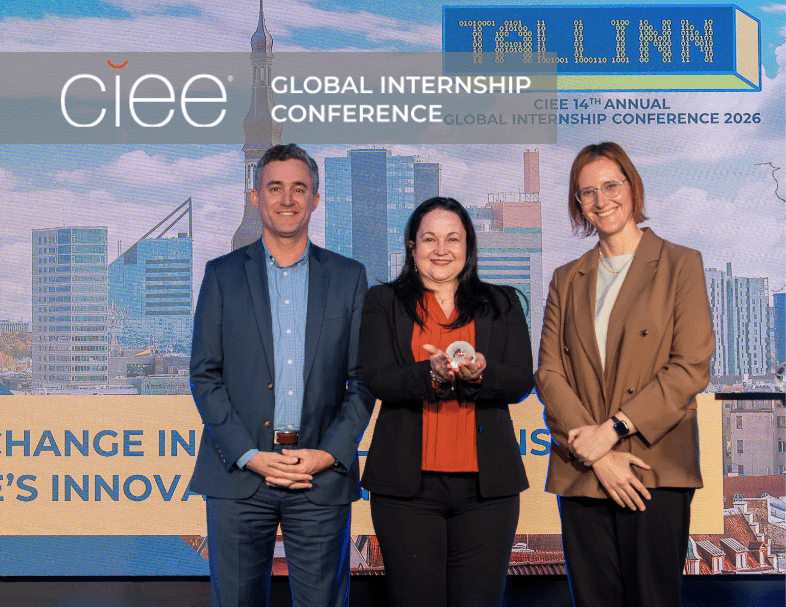
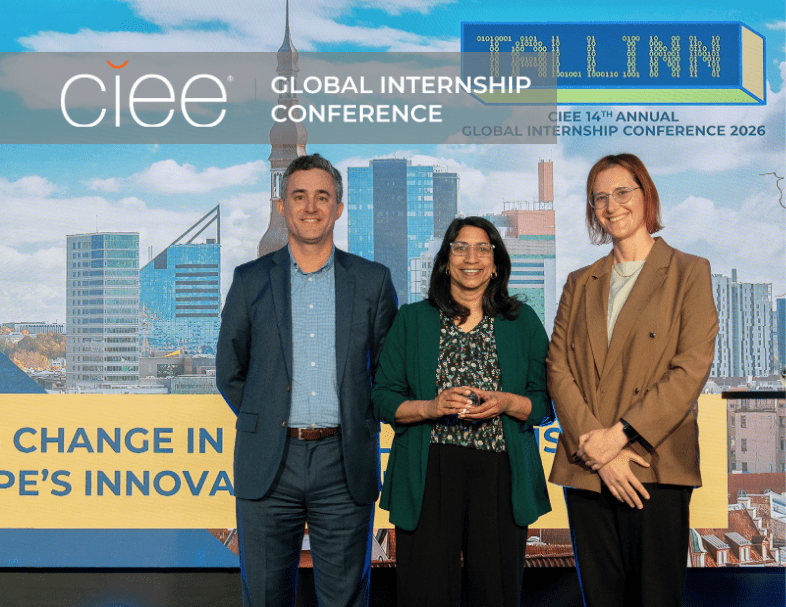
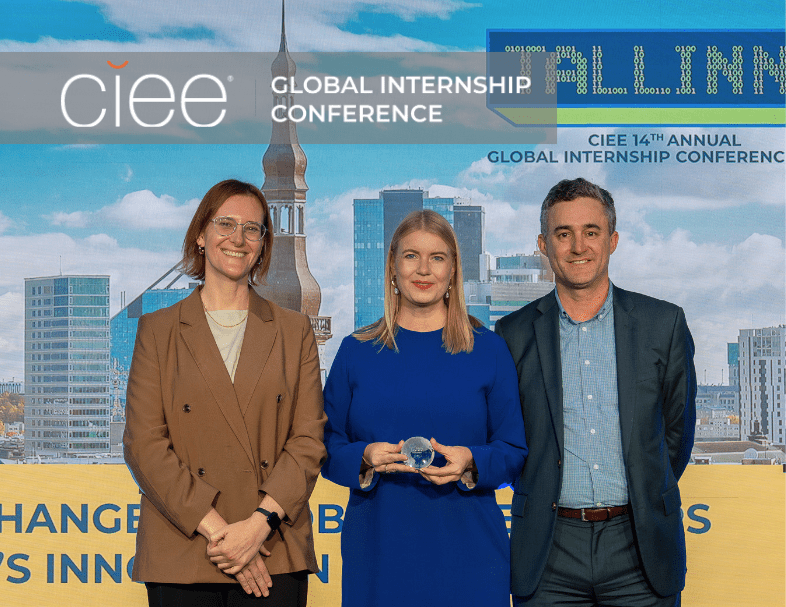
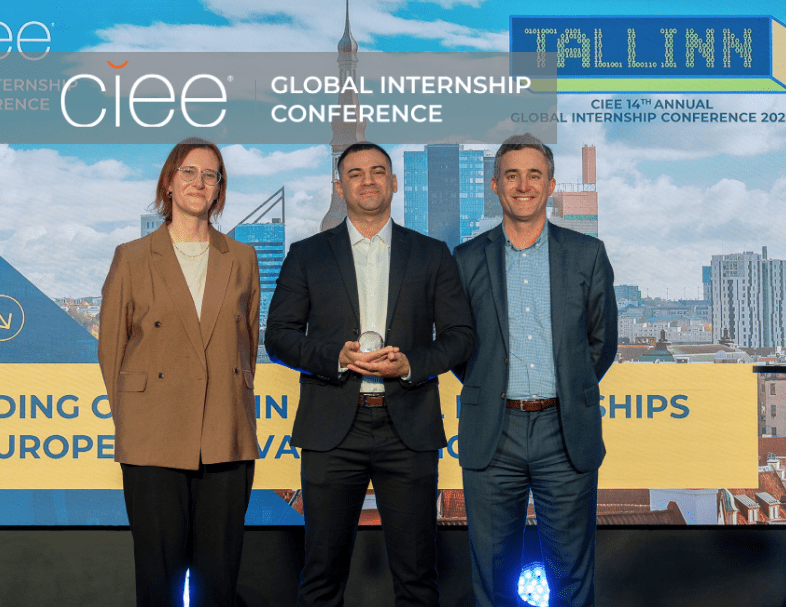
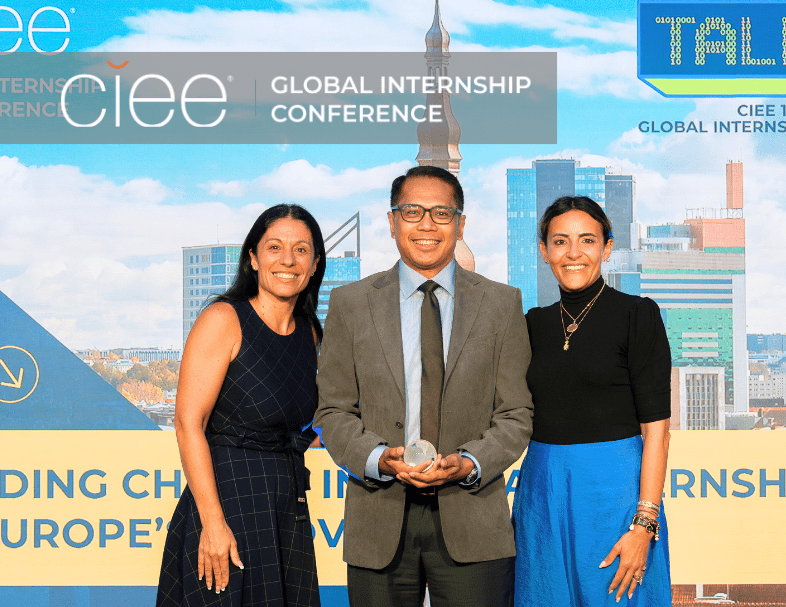
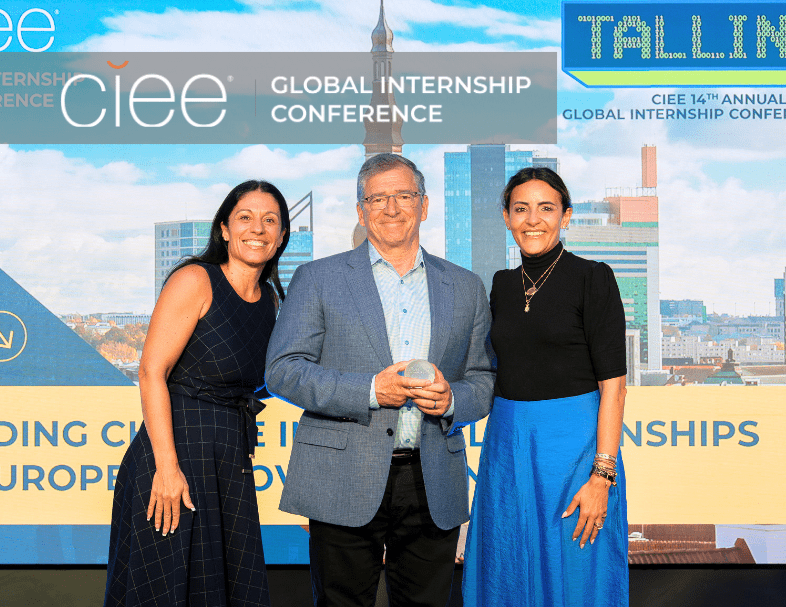
In the afternoon, CIEE recognized employers, university partners, and alumni who are exceptional at supporting student engagement in high-quality internships and skills-based experiential learning.
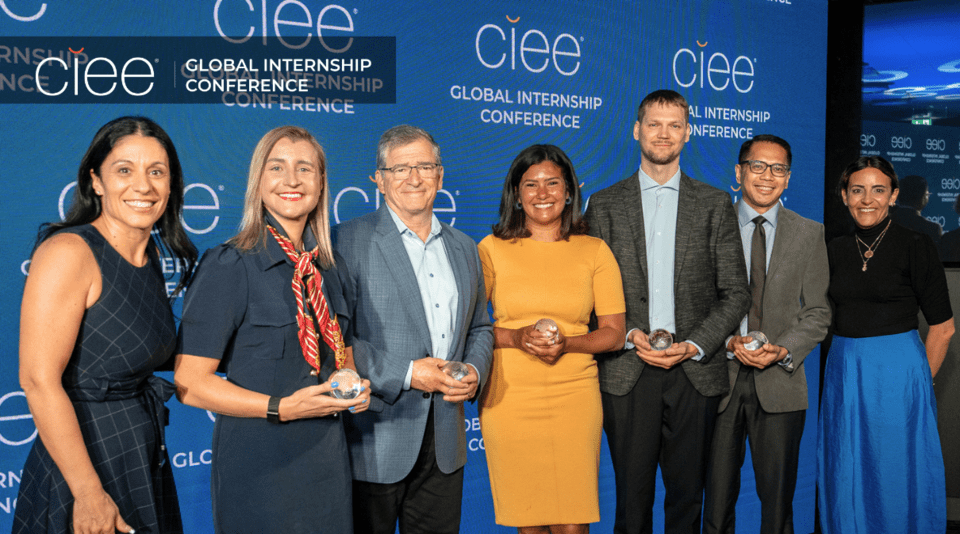
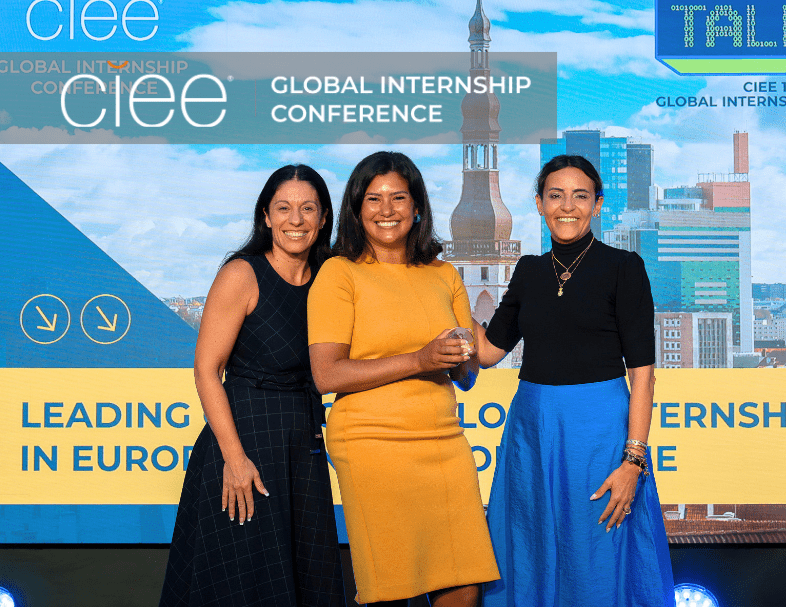
Martine Mangion, Senior Vice President of BridgeUSA Programs at CIEE, and Carye Duffin, Senior Vice President of External Affairs at CIEE, presented awards to outstanding CIEE partners for their support of BridgeUSA Internships.
Host Employer Awards were presented to:
- Skanska, represented by Paul Pedini
- Center for European Policy Analysis (CEPA), represented by Geysha Gonzalez
Distinguished Alumni Awards were presented to:
- Jānis Kreics
- Agnė Vaiciukevičiūtė
The BridgeUSA International Agent Award was presented to Experience Abroad and founder Wing Salo.
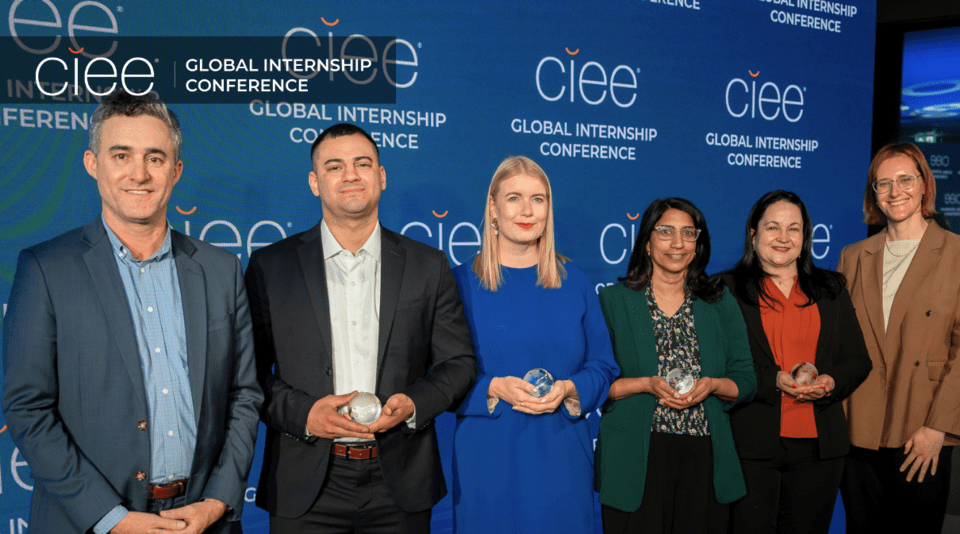
Patrick Moran, Senior Vice President of College Study Abroad at CIEE, and Allison Moroney, Executive Director of Institutional Relations for College Study Abroad at CIEE, presented the following awards to outstanding CIEE partners for their support of global internships:
- Top Innovator in Internships Award: Cynthia Aguilar, University of Texas at Austin
- Top Sender in Internships Award: Safali Patel, Arizona State University
- Top Host Employer Award: International Centre for Defence and Security, represented by Kadri Laar
- Distinguished Alumni Award: John Paul Martinez, University of Florida, Benjamin A. Gilman International Scholar, CIEE Tallinn Alum
Off-Site Reception at Fotografiska Tallinn
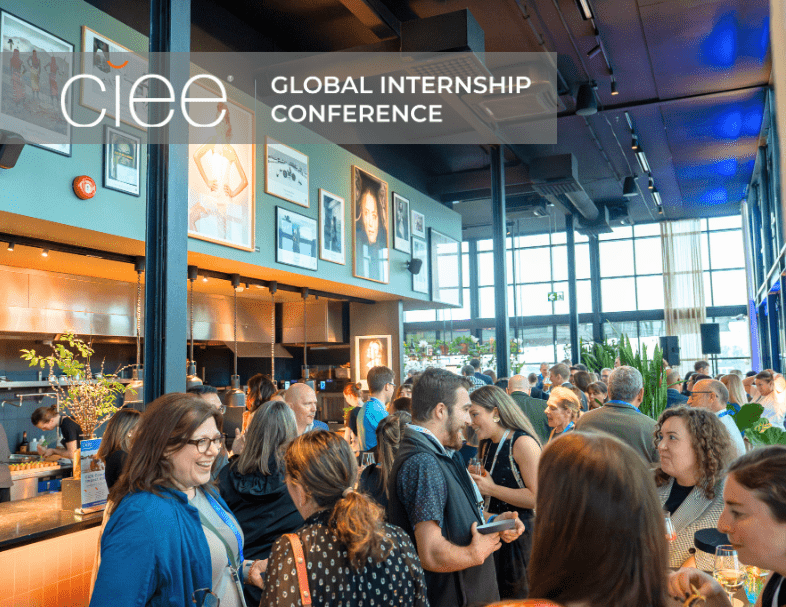
The day concluded with an evening reception at Fotografiska Tallinn, where conference participants gathered to continue conversations from the day's sessions while enjoying views of Tallinn's Old Town from the museum's rooftop terrace.