A Winter Wonderland: Germany's Christmas Markets
Authored By:
Thomas is an American student studying in Germany as part of the CBYX (Congress-Bundestag Youth Exchange) scholarship exchange program.
I pull up the hood of my jacket to block the biting cold winter air. Following in the footsteps of some hyper children, I walk past the auto barricades and into the Christmas market. On my right, long-term stores sell sandwiches and coffee. Others, like the ice cream shops, have given up and closed for the winter. They know they can't compete with the plaza's main attraction.
Ahead of me stands the Weihnachtspyramide (Christmas Pyramid), a multi-story carousel-like building with a rustic wood finish. The building sells Trier-branded mugs, clocks, and elaborate jigsaw holiday models. Surrounding it are more than 50 stalls, hawking traditional German dishes like currywurst and glühwein. I follow a sweet smell around the corner to a stand selling popcorn.
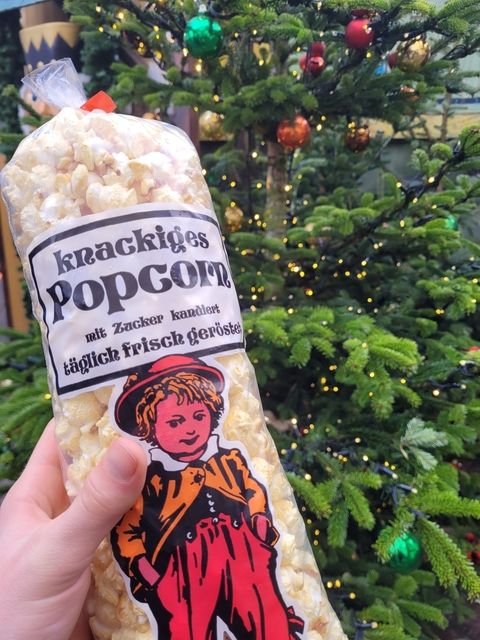
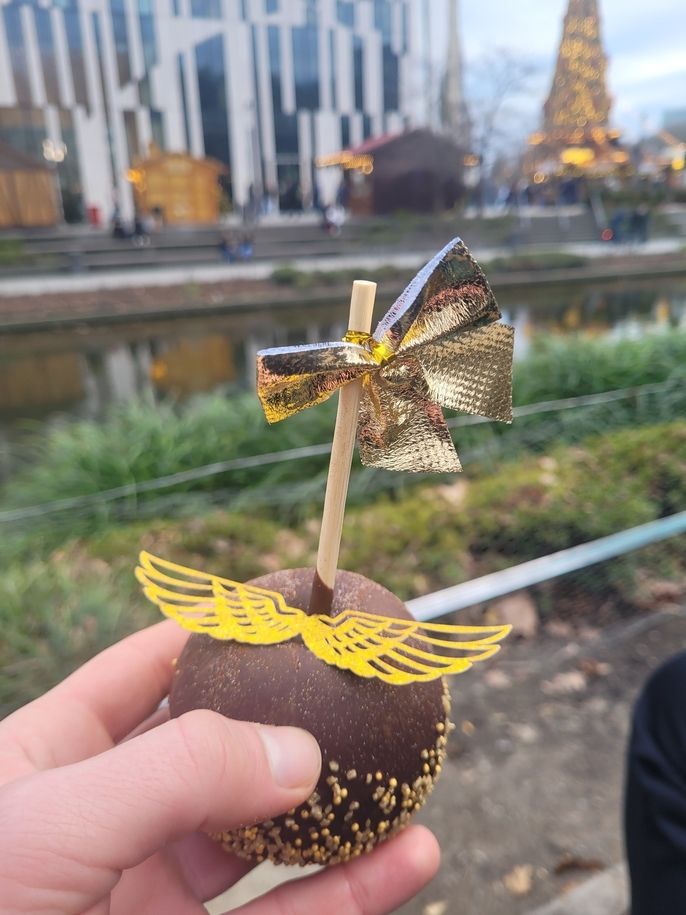
Popcorn – like we would consume it in America (salty) – isn't much of a thing here, instead being replaced by German caramel corn. Picking up a medium-sized bag, I continue walking. The cobblestone pavement gives way to concrete as I round the corner. Ahead, another sweet stall piques my interest. Caramel apples are common. But here? They are selling chocolate-covered versions of every fruit imaginable. Picking out a skewer of chocolate-covered strawberries, I carry onward.
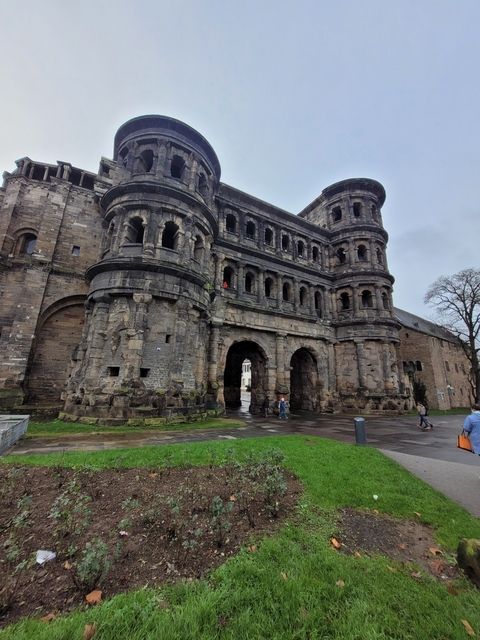
Trier is a remarkably well-preserved historical city. Settled by the Romans, it has architecture unlike that found anywhere else in the country. The Porta Nigra, a four-story building resembling the colosseum, sits casually downtown, its dominating height providing a clear view of the rest of the city. The city also contains other historical points of interest, like a cathedral that claims to hold the original robe Jesus Christ was crucified in. (I went into the church, but the robe is only brought out for special celebrations.)
Aachen is a sea of people. My host brother and I are swept along the medieval streets by the crowd, past gingerbread sellers and crepe makers. School groups pass by all around, matching bright-colored T-shirts, making them stand out from the traditionally dark colors of German dress.
The air buzzes with the sounds of a hundred languages. Finally, pushed away by the masses, we break into the main part of the city. We find a quieter spot, a Chinese restaurant, and eat lunch there instead. Who says that a delicious Christmas meal has to come from the main Christmas market?

Aachen sits on the far west border of Germany, next to Belgium and the Netherlands. It has a high-end shopping district, many churches, and the throne of Charlamagne (the first Holy Roman Emperor). The throne is made of plain-looking stones, which, according to legend, are taken from the flooring of the church where Christ was crucified (going abroad helps to understand global history like no school class ever could!)
We are completely lost in Dusseldorf. It has been two hours, and yet Google Maps can't seem to get us further than five blocks away from the train station. Left, right, left – haven't we been here before?
Just before giving up in frustration, we turn the corner. Seemingly out of nowhere, a magical street appears. The Christmas market. High-end stores on both sides try to draw visitors from the thrall of the market. The front of a T-Mobile store is decked out in advertising for the upcoming finale of Netflix's "Stranger Things" series. (American TV shows are very, very popular here in Germany.) Perusing the market, I discover that my host brother, an exchange student from Mexico, has yet to try Reibekuchen. We grab a plate of the delicious German potato pancakes (similar to hash browns, but... just way better) and find a table to feast. Nearby, the city decides to amplify the holiday spirit with some snow – but since it is a casual 8° Celsius outside, they use bubble machines to produce the effect!
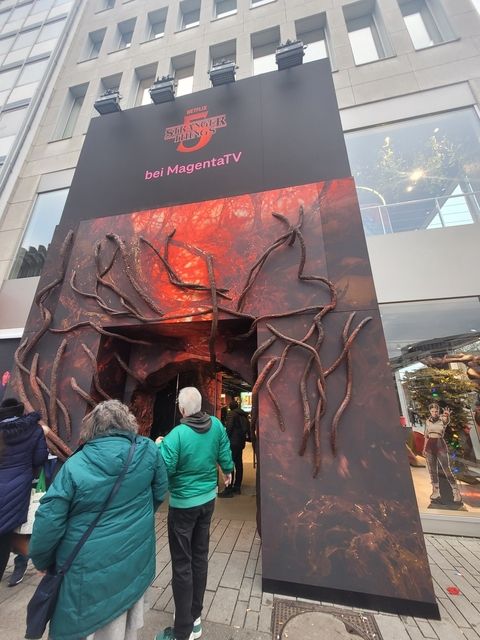
Dusseldorf is part of a sprawling megalopolis, of which the southernmost cities are Cologne and Bonn. The cities meld together, providing many ways to get around. While connected, they are each distinct, with wildly different personalities.
The next upcoming trip is set to introduce me to the fußball-fanatic city of Dortmund!
Related Posts

Promoting New Perspectives About the U.S. – While in Germany
Few high schoolers have the opportunity to speak with Foreign Service officers – and even fewer with a Consulate General.
Knowing My German City
This foreign architecture now feels like home to me. These “half-timbered” houses feel so characteristic to the region I live in. Still, there are a lot of things that I’ve noticed while traveling around.
Finding Ways to Get Better At German
Der, die, oder das. Those are the three haunting indefinite articles that threaten to send shivers down my spine at night as I jerk awake.