German Holiday Traditions: Christmas Camels?
Authored By:

Emiko is an American student studying in Germany as part of the CBYX (Congress-Bundestag Youth Exchange) scholarship exchange program.
I went to the Christmas market expecting the familiar comforts I’ve come to associate with December here in Germany: strings of warm lights illuminating the dark, the spiced sweetness of mulled wine hanging in the air, wooden stalls crowded with mittens, ornaments, and pastries dusted in sugar.
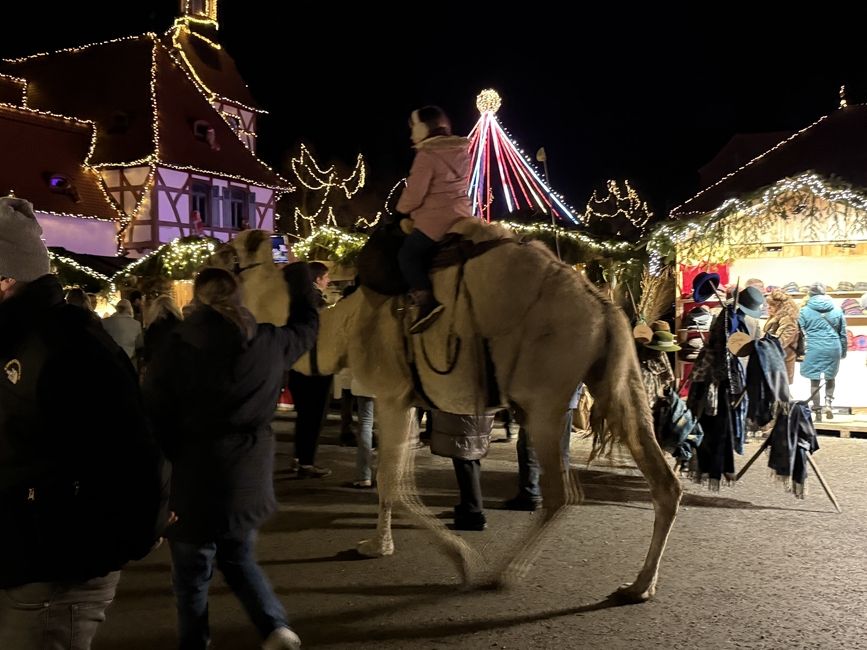
What I did not expect was a camel.
Wrapped in a woolen blanket with a child perched on its back, it wandered between the timber booths unhurriedly, making slow, steady rounds in the candlelight. It was so out of place that I hadn’t registered it at first. Only the second time it passed me did it finally click – why is there a camel here?! – but the question quickly dissolved. That moment is now forever a part of my definition of the Christmas experience here: a unique season created by tradition, warmth, and just the right amount of wonder.
I’ve found that most Christmas markets here feel very different compared to one another, which is one of the many things that keeps me interested in visiting as many as I can during the holiday season. Each one is its own self-contained world, heavily influenced by the city that hosts it and the people who gather there. Some are small and familiar, tucked into narrow streets and quiet town squares, while others in larger cities like Nürnberg or Erlangen spill outward in layers of light and sound, alive with music and conversation.
No matter the location or size of the market, food seems to beat the center of it all: bratwurst sausages sizzling over open-flame grills, waffles pressed fresh and steaming, mugs of mulled glühwein warming gloved hands against the cold.
One market in particular stood out as unique to me: the famed Nürnberg Christkindlesmarkt, which featured its “Sister Cities Market,” a section dedicated to celebrating other countries’ traditions. Flavors and customs from far beyond Germany were greeted with enthusiasm beneath striped tents and flickering lanterns, which felt especially meaningful to me as an exchange student. It’s moments like these that make me feel so much less like a foreigner, as my host country so openly embraces other cultures, meaning I never feel alone. Here, the market itself was acknowledging that even the most deeply rooted traditions leave space for exchange, curiosity, and belonging.
Beyond the storied holiday markets, I’ve been learning how Christmas here is celebrated a little differently from where I grew up. The season here stretches itself out, beginning around the end of November, which is earlier than in the U.S., with little traditions that mark its arrival. One such example is Nikolaus Day on Dec. 6, when boots are left out overnight and filled by morning with chocolates, mandarin oranges, and little surprises.
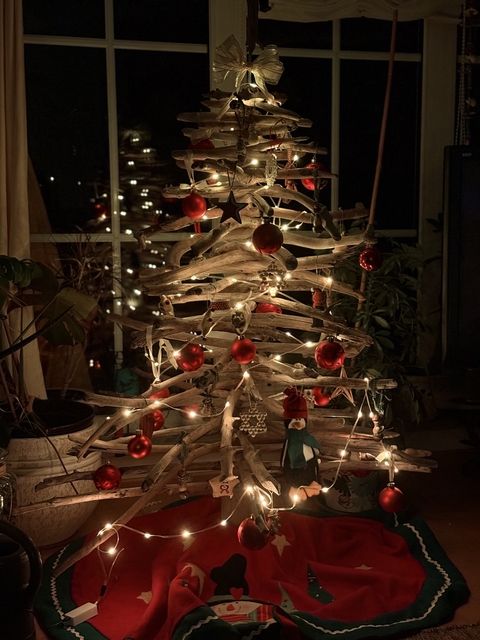
The heart of the holiday arrives on the evening of Dec. 24, when families gather and light candles, the anticipation that’s built up finally settling into something warm and complete. This year, my host family celebrated Christmas over two days – part German, part American – blending our traditions in a natural and inclusive way. I recreated my American family’s “pancakes on Christmas morning” ritual, albeit with lots of practice beforehand due to different ingredients. Later, we shared a traditional duck meal that was rich and slow, encouraging us all to linger at the table and savor each bite. I’ve truly realized how much of a part of my host family I’ve become, rather than just a guest, such as creating inside jokes with each other and simply being comfortable in each others’ presence (often throwing in some chaotic dancing for good measure). Experiencing these traditions as a participant rather than a visitor has shown me how belonging is built through our shared experiences, not shared origins.
Following our luscious Christmas lunch, I noticed the sun beginning to set and decided to take the dogs out for a long walk while the light was still there. With winter fully settled over our little town and daylight fading earlier each day, I’ve been taking advantage of those brief afternoon hours when the world is still lit. The many paths around our Bavarian home can lead you deep into the forest, where the trees stand tall and close around you, leaving every direction open for exploration. Their now-bare branches trace delicate patterns against the pale winter sky, while smaller trees intertwine to create quiet alcoves that beckon you to stray from the path and wander deeper into the woods. It’s a beautiful feeling; the clean air cooling your lungs, the only sounds belonging to birds calling out to one another, the freedom of the forest unfolding before you. That afternoon felt especially still, as if the festive spirit of Christmas had actually softened the world around me. When we eventually turned back, the forest slowly melted away behind us as we neared the edge of town. Windows aglow with candlelight and the familiarity of home greeted us as we stepped back into our neighborhood, sending little flickers of light into the darkening sky to rest among the stars.
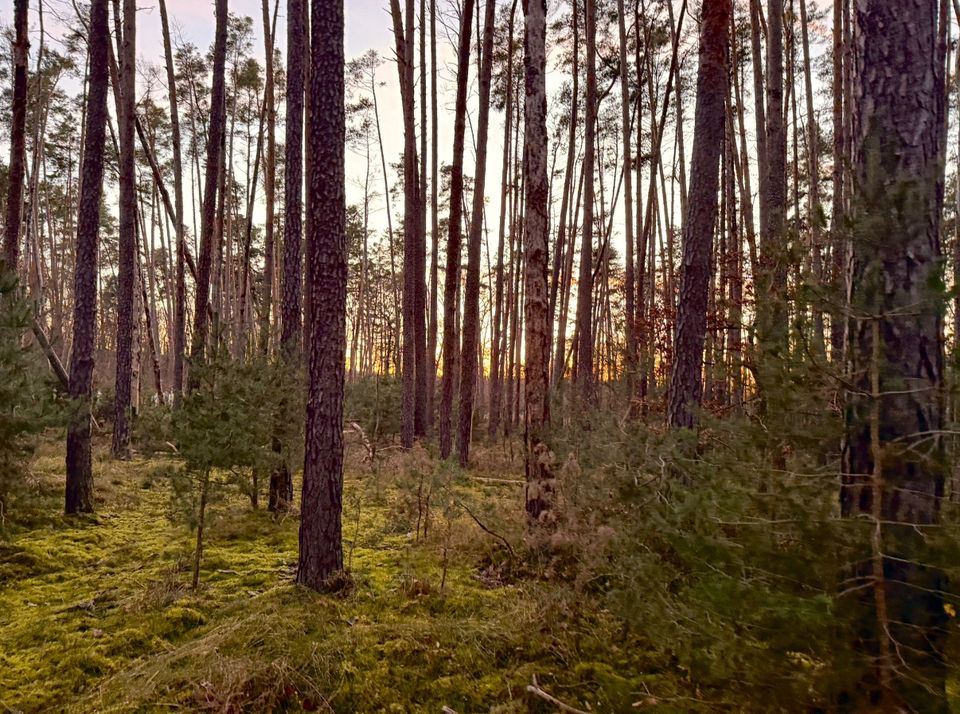
Even without snow, Christmas was still full of magic, reminding me that winter’s beauty isn’t always announced by frost or ice – it often waits to be noticed.
Today, on Dec. 26, our holiday celebration continues with a tradition that comes from the Swiss Alps: raclette. Each of us has a small nonstick pan, filled to the brim with an array of ingredients – veggies, meats, fish, beans, and even chips – ready to be cooked by the raclette grill. As the pans heat, the cheese slowly melts over everything, bubbling and eventually turning crisp and golden, until at last it is scraped onto our waiting plates. Every flavor is rich and comforting, but it is the abundance of perfectly roasted fresh vegetables, bright and savory, that makes me the happiest. Everyone serves themselves, the table full of chatter and the smell of melted cheese, which reminded me of the communal joy I first experienced with fondue.
Soon, we’ll welcome the new year with my host family’s tradition of the Silvester party, and I can already feel the curiosity and excitement for what’s to come next year. Outside, the forecast promises snow from New Year’s Eve (called Silvester here in Germany) into the first days of January, and I can hardly wait to see the world transformed into my familiar white winter wonderland again. Even without much snow so far, Christmas here has introduced me to another way to celebrate a holiday I already love, bringing with it the unmatchable joy and gratitude for the family who has welcomed me so completely and made every moment I’ve spent here absolutely extraordinary.
Related Posts

Promoting New Perspectives About the U.S. – While in Germany
Few high schoolers have the opportunity to speak with Foreign Service officers – and even fewer with a Consulate General.
Knowing My German City
This foreign architecture now feels like home to me. These “half-timbered” houses feel so characteristic to the region I live in. Still, there are a lot of things that I’ve noticed while traveling around.
Finding Ways to Get Better At German
Der, die, oder das. Those are the three haunting indefinite articles that threaten to send shivers down my spine at night as I jerk awake.