Promoting New Perspectives About the U.S. – While in Germany

Hanna is an American student studying in Germany as part of the CBYX (Congress-Bundestag Youth Exchange) scholarship exchange program.
Few high schoolers have the opportunity to speak with Foreign Service officers – and even fewer with a Consulate General.
But five days before my 18th birthday, while I was interning under Jens Nettekoven, the state representative of Wahlkreis 35 (Radevormwald/Remscheid), I partook in a conversation with Nettekoven and Preeti V. Shah, the U.S. Consul General for North Rhine-Westphalia, about developing the partnership between the United States and
Germany.
As a political exchange student from the United States studying abroad in Germany through the Parliamentary Partnershaftsprogramm (PPP), I had numerous opportunities to engage in German politics, whether traveling to Berlin on a sponsored trip with the Social Democratic Party of Germany (SPD) or interning at Radevormwald’s city hall.
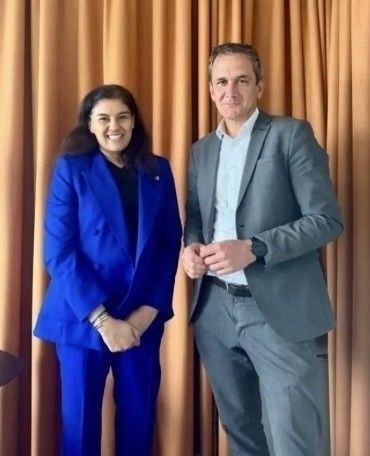
However, this meeting was different from the domestic politics I previously associated with. Given the deteriorating relations between Washington and Berlin – fueled by the Iran war and the U.S. distancing itself from NATO – the necessity of transatlantic partnerships was the main theme of the discussion.
The partnership between the United States and Germany has existed for years, a fact underscored by both Nettekoven and Shah’s service in Afghanistan, with the former serving as a soldier and the latter as a member of the U.S. Foreign Service. The U.S.-German alliance in Afghanistan is just one example of the over 75 years of interconnected service between the two countries. And in times of turmoil, it is important to highlight the necessity of this transatlantic relationship.
Shah views Germany as a leading force in Europe, an essential ally that is well-positioned to take on a greater role within NATO. She also affirmed the importance of the extensive economic network that ties the two countries, with Germany being the third-largest investor in the United States.
Similarly, Nettekoven values the military security that America provides. In the wake of the war between Ukraine and Russia, European countries have increased investment in their military. As a former soldier, Nettekoven believes that the Bundeswehr is not yet where it needs to be. Nettekoven emphasizes that "Democracy cannot be taken for granted. People need to defend it." Even as Germany transitions to a more robust military, the United States strong military presence in Europe is essential to Western security.
At the end of the conversation, both Shah and Nettekoven highlighted that countries are more than their political leaders, rather a mixing pot of people, cultures, and ideas.
As an exchange student, my role is a little bit like an ambassador. While it is tempting to form opinions about countries based on the media, my role is to introduce a new perspective about the U.S. with my German community. My time abroad has also helped me shift my own viewpoint of Germans (although the fanatic football stereotype remains the same). I view relationships as an exponential force, where a small positive interaction can blossom into a powerful connection.
While I may be one of the few students to speak with a U.S. General Consulate, I believe real diplomacy starts in the intention to listen and understand.
Related Posts
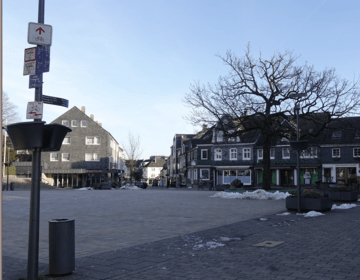
Knowing My German City
This foreign architecture now feels like home to me. These “half-timbered” houses feel so characteristic to the region I live in. Still, there are a lot of things that I’ve noticed while traveling around.

Finding Ways to Get Better At German
Der, die, oder das. Those are the three haunting indefinite articles that threaten to send shivers down my spine at night as I jerk awake.
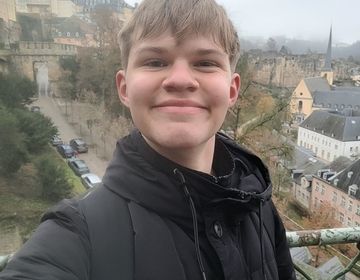
Traveling from Germany to Luxembourg
Traveling within Europe is almost too easy! In the U.S., I can drive for house without making it out of the state. But from Germany, other countries are a mere jump away!