Program Overview
Program Overview
Come explore the splendor that is St. Petersburg in summer. Begin or continue your Russian language studies, enroll in courses on a variety of topics, and examine the intriguing complexities of Russia’s past and present in the warm weather and white nights.
And with homestays, peer language tutors, cultural activities, and excursions that allow you to explore the city and the surrounding areas, studying abroad in Russia offers you an exciting and uniquely immersive international experience.
Study abroad in Russia and you will:
- Begin or conintue your Russian language studies in spectacular St. Petersburg, where the entire downtown is a protected UNESCO heritage site
- Gain insight into Russian history, politics, business, and culture through courses taught in English
- Enjoy a rich cultural program including local and regional excursions to museums, historical sites, and theaters, and interaction with locals
The CIEE Difference
The CIEE Difference
Coursework
Choices matter. With no required courses, you build your own curriculum in St. Petersburg. Choose from a variety of electives in language study, Russian politics, business, history and art.
Cultural Activities
Explore the city through a series of museum visits, boat tours, a group cooking class in Russian cuisine, visits to the Russian bathhouse, and tickets to concerts, ballets, and sporting events.
The study abroad program offers two overnight field trips each summer to Moscow, Russia’s vibrant capital, and Novgorod, Russia’s oldest city. Both trips include excursions to places of educational, cultural, and historic significance, while providing time for you to explore the sites on your own.
Immersion
Take part in the Sobesedniki program and you’ll be paired with local students for a variety of language and cultural exchange activities. This partner program provides you with additional language support, while giving you insight into the lifestyles of your Russian peers.
Dates, Deadlines & Fees
We want to make sure you get the most out of your experience when you study abroad with CIEE, which is why we offer the most inclusions in our fees.
- Tuition and housing
- Pre-departure advising and optional on-site airport meet and greet
- Full-time program leadership and support
- Field trips and cultural activities
- CIEE iNext travel card which provides insurance and other travel benefits
Please note, program dates are subject to change. Please contact your CIEE Study Abroad Advisor before purchasing airfare. Click the

button to view more detailed information about dates and fees as well as estimated additional costs. Please talk with your University Study Abroad Advisor about additional fees that may be charged by your home institution when participating in a program abroad.
Application Due
Start Date
End Date
Costs
Summer 2013 (6 wks)
03/15/2013
06/15/2013
07/28/2013
$6,450
Program Date Notes
These program dates are tentative. Please contact your CIEE Study Abroad Advisor prior to purchasing an airline ticket.
Program Fees
In addition to the items outlined below, the CIEE program fee includes an optional on-site airport meet and greet, full-time leadership and support, orientation, cultural activities, local excursions, field trips, pre-departure advising, and a CIEE iNext travel card which provides insurance and other travel benefits.
Participation Confirmation *
$300
Educational Costs **
$4,555
This breakdown has been prepared from the program budget for the purpose of calculating eligibility for financial aid. During the course of program operations, actual figures may vary. It should not, therefore, be used as a basis for calculation of refunds. CIEE reserves the right to adjust fees at any time.
Students required to study on CIEE programs through a School of Record will be charged a $340 administrative fee in addition to the Program Fees listed.
* non-refundable
** direct cost of education charged uniformly to all students
*** includes most meals
Estimated Additional Costs
Meals not included in program fee *
$400
International Airfare **
$1,250
Local Transportation
$150
The estimated additional costs indicated are intended to assist students and parents in budgeting for those additional living and discretionary expenses not included in the program fee. Actual expenses will vary according to student interests and spending habits.
* for weekday lunches
** round-trip based on U.S. East Coast departure
Summer 2014
03/15/2014
TBA
TBA
Program Date Notes
Program Fees
This breakdown has been prepared from the program budget for the purpose of calculating eligibility for financial aid. During the course of program operations, actual figures may vary. It should not, therefore, be used as a basis for calculation of refunds. CIEE reserves the right to adjust fees at any time.
Students required to study on CIEE programs through a School of Record will be charged a $340 administrative fee in addition to the Program Fees listed.
Estimated Additional Costs
The estimated additional costs indicated are intended to assist students and parents in budgeting for those additional living and discretionary expenses not included in the program fee. Actual expenses will vary according to student interests and spending habits.

Eligibility
Eligibility
- Overall GPA 2.75
- 0–3 semesters of college-level Russian or equivalent
- Due to the length of the Russian visa process, CIEE requires students to have a valid passport in order to be accepted. Russian immigration requires that this passport is valid for 18 months beyond the end date of the program.
Recommended Credit
Recommended Credit
Course contact hours are 45 hours and recommended credit is 3 semester/4.5 quarter hours per course. Total recommended credit for the summer program is 6 semester/9 quarter hours.
Program Requirements
Study abroad students are required to enroll in two courses. They may choose two area studies courses or one area studies course and one language course.
About the City
About The City
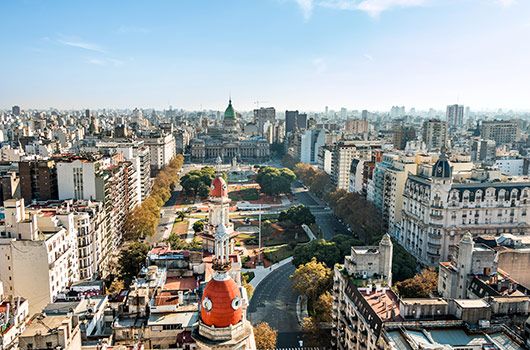
Envisioned by Peter the Great as the “Window to the West” and created by French and Italian architects, St. Petersburg became a testimony to opulence with golden palaces, pastel-colored mansions, and landscaped parks, gardens, and canals. Having endured the horrors of World War II and Stalinist repression, the people now cope with a new political and economic reality. Known as Leningrad from 1924 to 1991, the city of nearly five million is easily navigated by foot, bus, trolley, and an efficient metro system.
Meet The Staff
Meet The Staff
Irina Makoveeva
A native of Moscow, Irina Makoveeva received her Master’s in Russian Philology and Comparative Linguistics from the Moscow Lomonosov State University and her Doctoral Degree in Slavic and Film Studies from the University of Pittsburgh. Her dissertation Visualizing Lev Tolstoi’s Anna Karenina reveals her interest in popular-culture adaptations of canonical literary texts. While her first publications focus on problems of translation and methodology of teaching Russian as a foreign language, her recent articles explore various aspects of Soviet and post-Soviet culture. Throughout her long academic career, she has taught various courses on Russian literature, culture, cinema, and all levels of Russian language at such schools as Moscow State Mining University, the Moscow Lomonosov State University, Virginia Tech, the University of Pittsburgh, and Vanderbilt University.
Read More
Summer is the best season to explore St. Petersburg because of its warm weather and white nights that allow one to fully appreciate the splendor of its numerous canals and rivers, magnificent architecture, and intricately designed gardens. The trips outside the city stress its uniqueness in Russia’s cultural landscape and extend your understanding of its multifaceted essence. Your stay in St. Petersburg allows you to not only penetrate the beauty of Russia’s Imperial capital, but also to enjoy Russian hospitality as you share with a Russian family its everyday life. Additionally, the classroom experience at St. Petersburg State University enriches students and individuals thanks to the unfailing enthusiasm and professionalism of the University’s faculty. The combination of these factors create a perfect environment for your summer study and quench your thirst for new knowledge, the exploration of unknown cultures, and the joy of traveling abroad.
— Irina Makoveeva, Resident Director
“”
Katya Rubtsova
Student Services Assistant Katya Rubtsova joined the CIEE Study Center in 2009. A graduate of Tula Lev Tolstoy State Pedagogical University with a degree in teaching foreign languages, she assists CIEE students in their everyday endeavors. In addition, Katya has coordinated such projects as the Smolny Spring Ball, Stilyagi and Leningradsky Rock. In 2007-2008, as an administrator of a Russian-German NGO in Tula, Katya participated in many youth leadership conferences which included social and theatrical projects in Izhevsk, Nizhny Novgorod and other cities in Russia and Ukraine. She participated twice in the CIEE Work and Travel USA program.
Read More
Where You'll Study
Where You'll Study
Founded in the 18th century, St. Petersburg State University is one of Russia’s leading institutions of higher education. The campus has expanded from its original site on the Neva River, and now includes over 400 buildings around the city center. CIEE students study at the University’s stunning Smolny campus—on the territory of the renowned school for noble ladies founded in 1764—in a quiet neighborhood on the east side of downtown St. Petersburg.
Housing & Meals
Housing & Meals
All study abroad students live in Russian homestays. Participants have their own room with a Russian family in a private apartment. Housing and most meals (two meals daily and three on weekends) are included in the program fee. Students are responsible for weekday lunches. The University cafeteria offers reasonably priced meals.
Orientations
Orientations
You'll begin your study abroad experience in St. Petersburg even before leaving home by participating in a CIEE online pre-departure orientation. Meeting with students online, the resident director shares information about the program and site, highlighting issues that alumni have said are important, and giving you time to ask questions. The online orientation allows you to connect with others in the group, reflect on what you want to get out of the program, and learn what others in the group would like to accomplish. CIEE’s aim for the pre-departure orientation is simple—to help you understand more about the program, and identify your objectives so that you arrive well-informed and return home having made significant progress towards your goals.
At the beginning of the program, you will participate in an intensive three-day introduction to Russian everyday culture and customs, health and safety issues, and the academic program. The orientation, held in a St. Petersburg hotel, is supported by Russian student assistants in order to facilitate your entry into your new culture. After the initial three-day orientation, you'll move to your homestay. For the remainder of the orientation, you'll take part in a variety of exercises, excursions, and meetings as you become familiar with your new home. The program orientation also includes a Survival Russian language session.
Internet
Internet
You are encouraged to bring a wireless-enabled laptop. Internet access in homestays is not guaranteed; however, limited, but free, wireless is available at the CIEE Study Center. Wireless Internet is also available through local cell phone providers, 4G Internet providers, and many Internet cafés throughout St. Petersburg. Additionally, there is a fee-for-service Internet classroom maintained by the University.
Culture
Culture
Cultural Activities and Field trips
The academic program is supplemented with excursions, study tours, and field trips. Although the schedule changes somewhat from year to year, typical excursions include a city bus tour, the Hermitage and Peter and Paul Fortress, Pavlovsk, Peterhof, a walking tour of Dostoevsky’s Crime and Punishment, and Pushkin’s Apartment Museum. Additionally, CIEE staff arranges boat tours, a group cooking class in Russian cuisine, visits to the Russian bathhouse, and tickets to activities such as concerts, ballets, and sports events. Weekends are mostly free with the exception of overnight weekend field trips and possible Saturday excursions.
The study abroad program offers two overnight field trips each summer to Moscow, Russia’s vibrant capital, and Novgorod, Russia’s oldest city. Both trips include excursions to places of educational, cultural, and historic significance, while still allowing some time for you to explore the sites on your own. Some group meals are included during these group excursions.
Immersion
Sobesedniki—Peer Language Partners
If you choose to take part in the Sobesedniki program you'll be paired with local students for a variety of language and cultural exchange activities. These students will provide you with additional language support and give you a firsthand look at their lifestyle.
Academics
Academics
In 2013, the CIEE Study Center marks its 46th year in St. Petersburg. CIEE began its close relationship with St. Petersburg State University when the Summer Russian Language Program began there in 1967.
This Russian Area Studies summer program includes six weeks of study at the School of Political Science of St. Petersburg State University. The curriculum includes courses in Russian culture, business, politics, art and architecture, and Russian language. During the program, students visit places of historical and cultural significance in and around St. Petersburg, Moscow, and Valaam.
Academic Culture
Study abroad students attend classes five days a week with one afternoon reserved for cultural activities. Classes are 90 minutes in length. All of the area studies courses are taught in English. Russian language courses are taught in Russian. Students who choose to enroll in a Russian language course are grouped by language level based on the results of a placement test. In-class participation often accounts for a large percentage of students’ grades as Russian teaching methodology emphasizes in-class learning.
Nature of Classes
CIEE participants take classes with CIEE study abroad students only.
CIEE Community Language Commitment
Students are encouraged to speak Russian as much as possible both in and outside of the classroom. CIEE resident staff encourage students to use Russian during excursions and with their Russian host families.
Grading System
Grades are assigned using the Russian grading scale of one to five and converted to U.S. letter grade equivalents. Plus and minus grades are also assigned. Grades are determined by a combination of in-class participation, short quizzes, written assignments, and exams.
Language of Instruction
English
Russian
Faculty
All courses are taught by faculty from the St. Petersburg State University School of Political Science or other local Russian universities.
Course Description
Course Description
All Courses
Note: This course listing is for informational purposes only and does not constitute a contract between CIEE and any applicant, student, institution, or other party. The courses, as described, may be subject to change as a result of ongoing curricular revisions, assignment of lecturers and teaching staff, and program development. Courses may be cancelled due to insufficient enrollment.
CIEE Study Center Syllabi
To view the most recent syllabi for courses taught by CIEE at our Study Centers, visit our syllabi site.
CIEE Russian Language Elective Courses
RUSI 1001 RASU Elementary Russian I
RUSI 1002 RASU Elementary Russian II
RUSI 2001 RASU Intermediate Russian I
Students are placed in an appropriate language level at the beginning of the program. Each course emphasizes basic grammatical structures, their use in conversation with simple sentences, basic vocabulary, and comprehension. Correct pronunciation is also stressed.
CIEE Russian Area Studies Elective Courses
AHIS 3001 RASU
The Politics of the Image and the Image of Politics in Russian Art of the 20th and 21st Centuries
The course examines Russian/Soviet visual art from the prism of political forces that influenced its developments. The renaissance of Russian art known as the Silver Age coincided with the social unrest and political turmoil at the beginning of the 20th century. In the 1910s Russian avant-garde artists introduced new ways of non-objective art (Malevich, Kandinsky, Larionov) through their re-discovery of Russian icons. The Utopian ideas of the 1920s and the Stalinist ideology of the 1930s-1950s brought to life Socialist Realism—the prevalent method of Soviet art. The overall liberalization in culture following Stalin’s death resulted in the artists’ interest in the form of representation rather than its content. The irony of the Sots-Art movement of the 1970s (Komar and Melamid) contributed to the disappearance of totalitarian ideology in the visual art. The cardinal political changes of the 1980s inevitably affected the aesthetics of Russian art: the after-Perestroika art has been accepted as a new avant-garde. This course includes excursions to museums, contemporary art galleries, and artists’ studios in St. Petersburg.
BUSI 3001 RASU
Current Issues in Russian Business
This course examines a variety of issues impacting Russian business today. The course begins with a look at the overall business environment in Russia and then focuses on approaches to market research, market segmentation, and competitive strategies in Russia. Finally, the course explores the distribution system and taxation issues in Russia. The course utilizes case studies on local and international businesses in Russia.
POLI 3001 RASU
Topics in Post-Soviet Russian Politics
In accordance to the mission of CIEE, “to help people gain understanding, acquire knowledge, and develop skills for living in a globally interdependent and culturally diverse world,” this course is designed to provide students with basic knowledge about evolution of the political life in contemporary Russia. We mean to show Russian politics through the eyes of Russian political scholars and in broad context of Russian culture. We show Russian politics in relation to cultural values and lifestyle, in other words how it is often seen by an average Russian citizen. It is a multidisciplinary course aimed for holistic knowledge about political reality from anthropological, historical, cultural, and philosophical perspectives. Besides the theoretical insights, the course is meant to enable students to use theoretical base while searching for the practical solutions of ethnic and political conflicts in a post Soviet world. Instructor: Dr. Akopov Sergei
RUSI 3001 RASU
The Cultural Myths and Realities of St. Petersburg
The Mirrored Myth—the splendid yet tragic St. Petersburg is recreated as a cultural “myth.” Architectural landmarks, works of poetry and literature, Russian opera, and famous Soviet movies are transformed into the emblems of the city. The course examines the so-called “Petersburg text,” which consists of the literary works, paintings, and drawings, music and theatrical productions, and philosophical and moral ideas connected with Petersburg’s special place in Russian past and present. Students are encouraged to construct their own vision of the Petersburg mythos through the series of discussions and debates. Instructor: Dr. Loshenkov
Program Blog
Videos
Photos
Top