14th Annual CIEE Global Internship Conference - Day 3
Authored By:
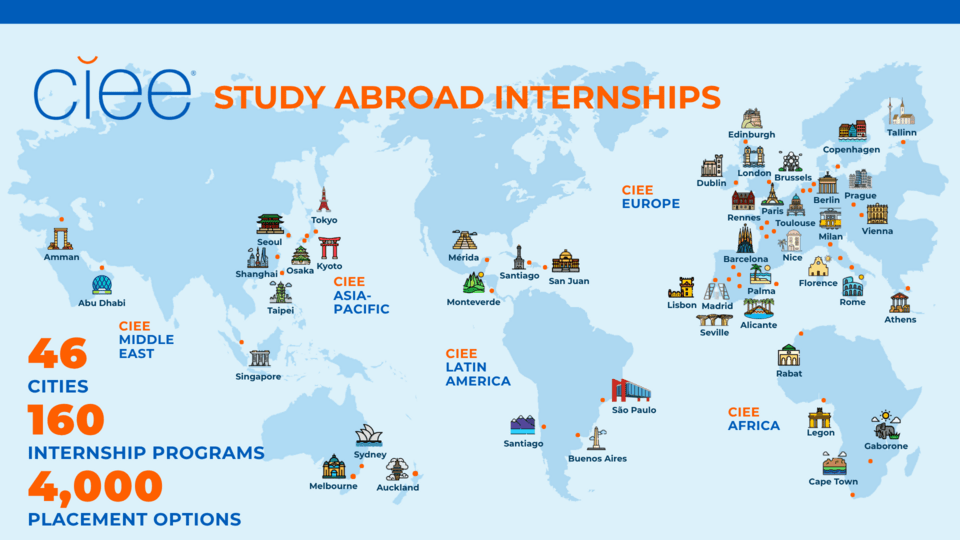
Today was the closing day of the 14th Annual Global Internship Conference in Tallinn, Estonia. Over the course of the three-day exploration of the future of work, one question emerged in a variety of contexts: If an estimated eight million learners wanted to intern last year, why did fewer than half of them actually do it?
Cost is one reason millions of students miss out on internships. But conference speakers argued that another barrier receives far less attention: academic policies that treat internships as optional rather than essential components of a degree.
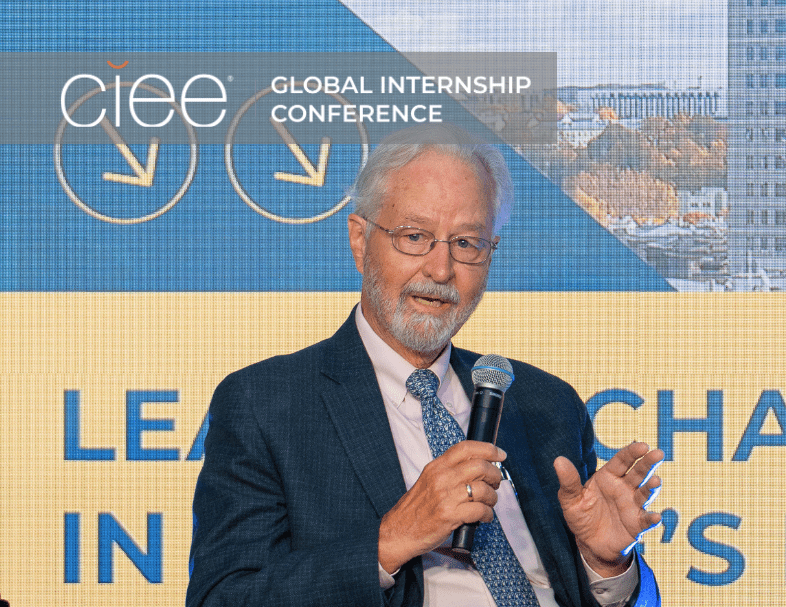
As CIEE President and CEO James Pellow argued during the conference's closing session, financial barriers are only part of the problem. Rigid curriculum rules can hold students back from life-changing, career-enhancing internships.
If internships and other experiential learning opportunities do not count toward academic credit, students are often forced to choose between graduating on time and pursuing experiences that employers increasingly value.
Pellow pointed to the Yale Report of 1828, an influential defense of a classical curriculum that resisted calls for more practical education, as an example of how higher education has long struggled to balance academic tradition with workforce preparation. More than 190 years later, he argued, many institutions continue to treat experiential learning as secondary to classroom instruction.
Pellow exhorted conference attendees to push universities to develop a systemic structure for recognizing credit for internships so the decisions are not made by individual faculty members in individual departments at individual institutions.
Conference Day 3
During day three of the conference, attendees explored ideas for increasing access to global internships and examined what universities can learn from Baltic states that have positioned their citizens for success in an increasingly interconnected world.
Closing Plenary: The Baltic Blueprint
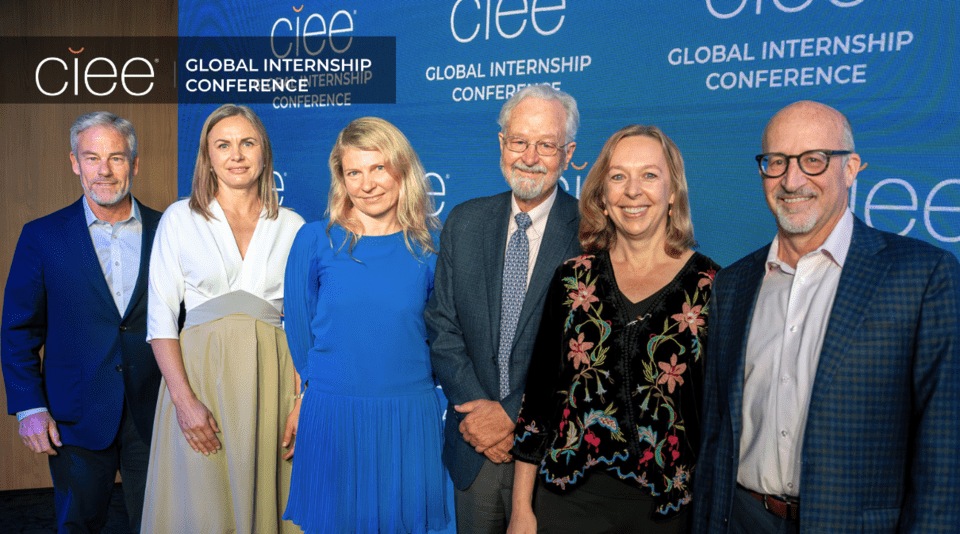
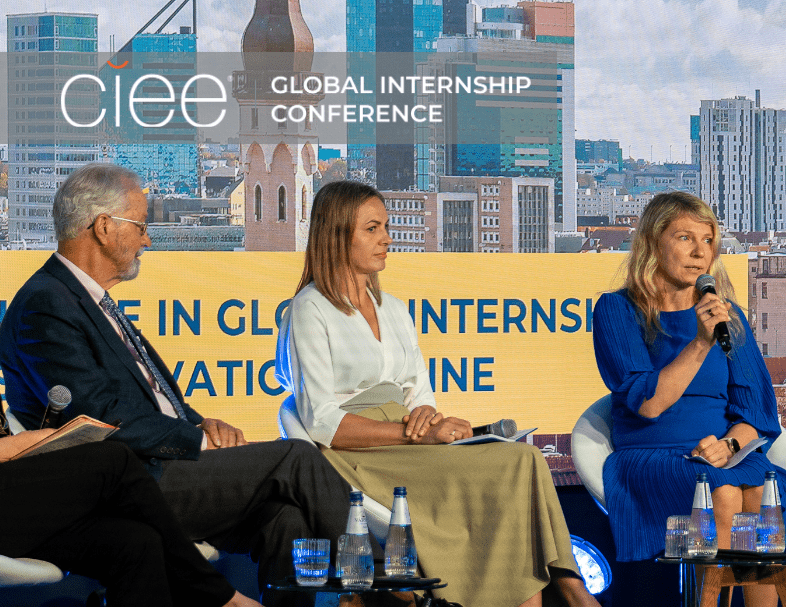
CIEE Senior Vice President Martine Mangion introduced the closing plenary panel that included Doug Lederman, columnist and former editor and co-founder of Inside Higher Ed; Getlyn Nuut, Development Manager at Eurowind Energy; Ingrid Pappel, Vice Rector for Academic Affairs at Tallinn University of Technology; Iveta Silova, Professor of Comparative and International Education and Associate Dean of Global Engagement at Arizona State University; and Rick A. Ruth, former Senior Advisor in the Bureau of Educational and Cultural Affairs at the U.S. Department of State.
Mangion introduced the event by referencing the Nordic-Baltic Eight Summit that took place in Estonia just before the CIEE Global Internship Conference. "Just steps away from this conference, world leaders were gathering. The presence of President Zelenskyy in this very hotel serves as a powerful reminder that the Baltic region is not simply observing history, it is helping shape it... Small nations, bold ideas, and strong partnerships can have an outsized impact on the world."
The way all three Baltic states have woven together seamlessly care for their people, education, employment, national defense, and international experience is a marvel to behold.
— Rick Ruth
Throughout the discussion, panelists pointed to the Baltic states as examples of how collaboration among universities, employers, and government institutions can create environments that support innovation and workforce development.
Iveta Silova, who was born and raised in Latvia, captured this idea through a memorable metaphor. "We often ask how Estonia produces so many unicorns,” she said. “But it's almost like asking a forest how it grows so many mushrooms. It's not about the mushrooms. It's about the ecosystem."
The panelists suggested that universities should learn from the Baltic states’ embrace of collaboration and innovation when thinking about how best prepare students for an evolving global workforce.
It's almost impossible to prepare students for a specific job anymore, but we can prepare people for a changing world.
— Iveta Silova
Panelists argued that work-based learning in an international context is crucial if we are to help students develop the skills, perspectives, and relationships needed to navigate an increasingly complex world.
“The real magic of the internships is the relationship…The bottom line is about building relationships between countries, generations, languages, and across borders.” said Silova.
Expanding Access to Global Internships
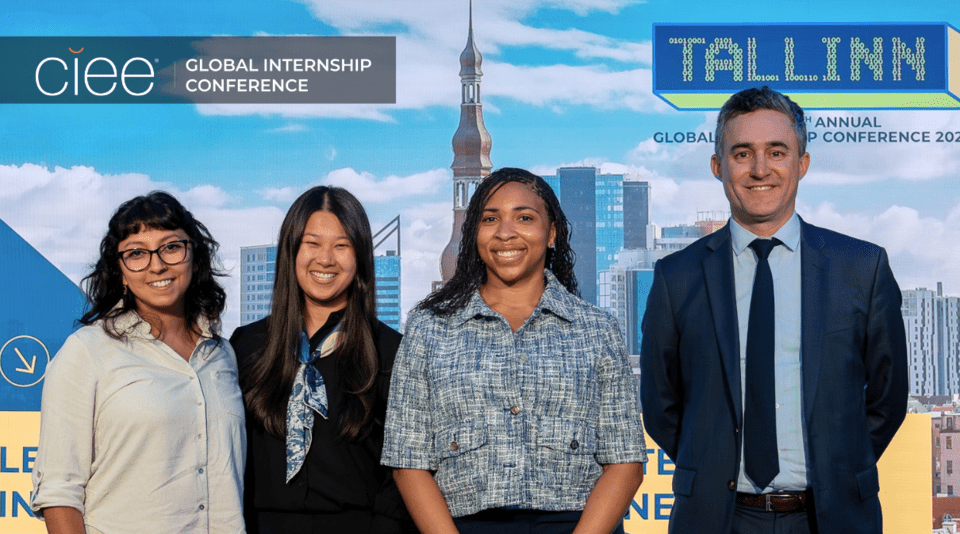
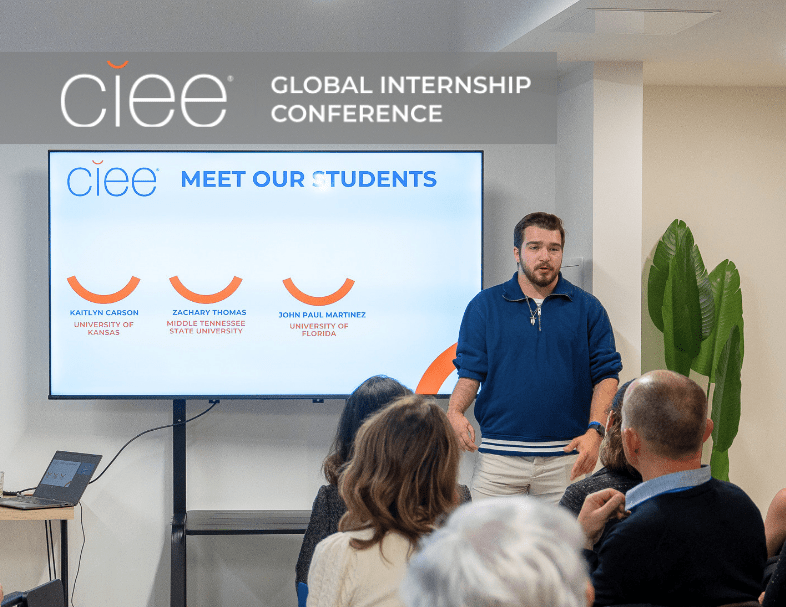
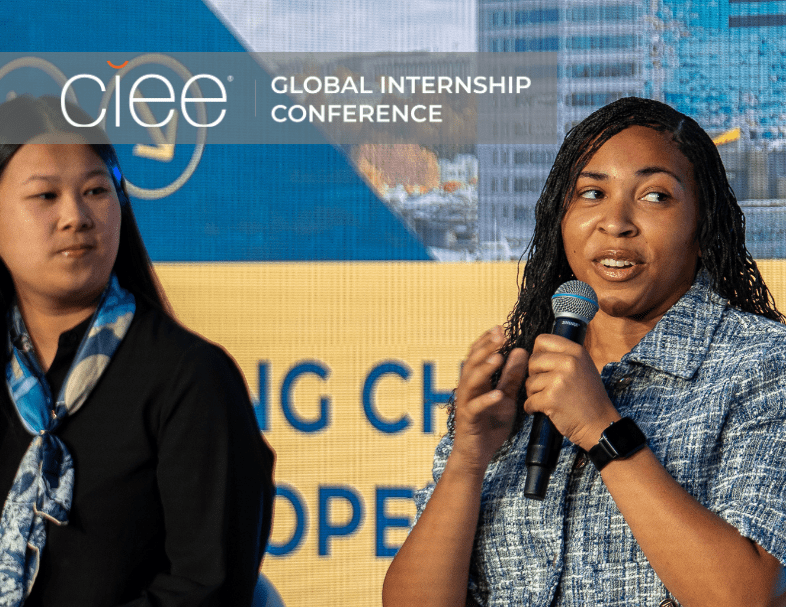
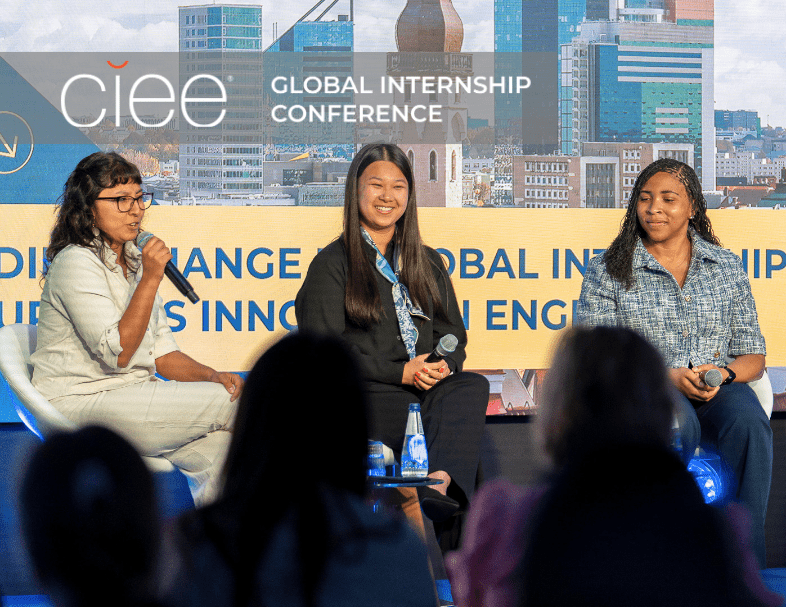
Patrick Moran, CIEE Senior Vice President for College Study Abroad, moderated a panel that highlighted the impact of CIEE's paid internship program. Three interns from the inaugural cohort of paid CIEE Business & Marketing Interns shared their experiences: Michayla George from Tennessee State University who interned at CIEE Cape Town, Mya Lillemoen from the University of Colorado Boulder who interned at CIEE Kyoto, and Samantha Michell from UC Berkeley who interned at CIEE Monteverde.
Students on the panel described managing projects, leading community initiatives, creating digital content, coordinating events, and working across cultures and time zones. They explained how their internship strengthened their communication, leadership, and problem-solving skills. They spoke about the importance of mentorship and how the professional network they gained helped them navigate challenges, gain confidence, and better understand potential career paths.
The panel also highlighted how paid internships can help level the playing field.
“It's important that we have this paid model,” said Mitchell. “Because for me and many, many other students, it isn't just about providing for home... student loans exist, and we have to pay them. We can't pay our loans with experience.”
The panel expanded the conversation around access, explaining that while paid internships help remove financial barriers, access also includes exposure to professional networks, mentorship, and opportunities that many students may not otherwise encounter.
CIEE Tallinn Open House
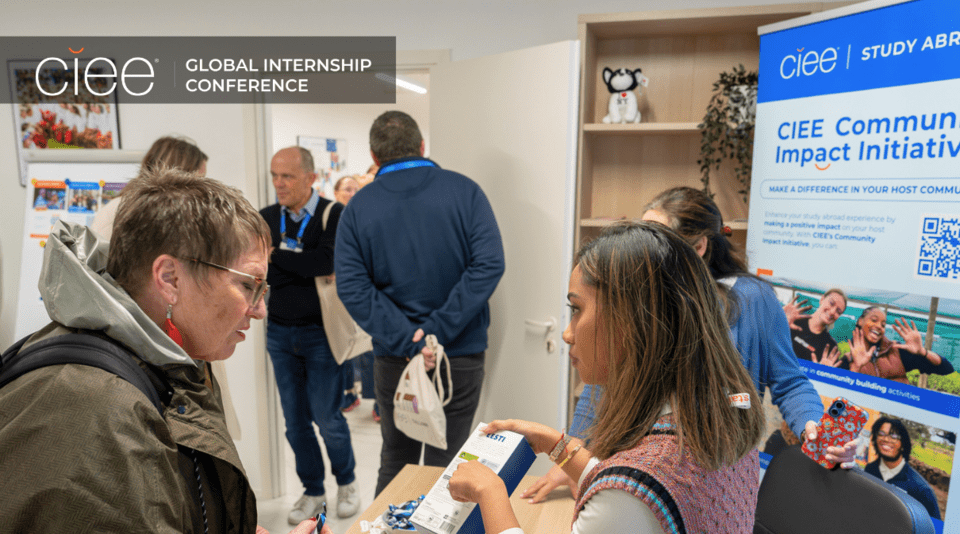
Conference attendees took a tour of the Tallinn University of Technology (TalTech) campus and visited the newly opened CIEE Tallinn office which is located close to the quaint cobblestone streets of Tallinn's Old Town. CIEE Tallinn Center Director Evelyn Müürsepp offered the group a tour of the new office, showcasing the center's modern learning and collaboration spaces while sharing how the location serves students participating in CIEE programs in Estonia.