
International Business + Culture


Unique Experiences
Gain valuable work experience
by participating in an optional credit-bearing internship in a Spanish company
Develop intercultural skills
that are essential for success in a global interdependent economy
Choose classes in English or Spanish
and explore the European economy

Your Destination
Seville is Spain’s captivating southern city, celebrated for its deep-rooted cultural heritage and growing business scene. As a center for commerce, tourism, and innovation in Andalusia, Seville offers valuable opportunities for students exploring the intersection of business and culture. With its vibrant traditions, iconic landmarks like the Royal Alcázar and Plaza de España, lively festivals, and flourishing local markets, Seville is the perfect place to study abroad.

Program Highlights
- Academic Courses: Choose from CIEE courses, host institution courses, and online courses delivered by CIEE’s global partner, ASU, that align with your academic major.
- Optional Internship Placements: Enhance your program with an optional for-credit internship that aligns with your career aspirations.
- Immersive Experiences: Participate in activities, excursions, study tours, and more that showcase your host city's culture, values, and local art, film, music, cuisine, and sports scenes.
- Academic Projects: Enroll in an optional for-credit independent research project or service-learning project for increased professional development opportunities.

Excursions & Activities
CIEE’s excursions and cultural activities in Seville will open doors for you to explore Spain's rich diversity, language, culture, history, and timeless beauty in ways that will enhance your time abroad.
Samples of past excursions and activities:
- Engage in fun sport activities and workshops such as bike tours, wine tastings, cooking, flamenco, ceramics classes, and many more
- Get to know local Spanish students through fun and engaging activities of exclusive Global Discussion events and meetings
- Join in campus activities at University Pablo de Olavide
Please note: Activities are based on past programs and subject to change at CIEE's discretion to adapt to local circumstances and participant feedback. Our goal when arranging activities is always to enhance your experience.
Program Blogs

Sevilla v. Betis: The Rivalry
By: Graham Kreppein As a study abroad student in Seville, immersing myself in the local culture has led me to one of the most fascinating aspects of life here: the... keep reading
Te Amo Sevilla
By: Josiann Campos My time in Sevilla has been absolutely unforgettable. Leaving feels so hard, but deep down, I know this isn’t goodbye—it’s just “see you later.” When I first... keep reading

Day Trip to the Alhambra
By: LiSha Powell Hi! My name is LiSha, and I studied abroad with CIEE during the fall 2024 semester in Seville, Spain. There were countless highlights during the trip, but... keep reading
Housing & Meals
Housing
CIEE Seville offers two housing options to meet the needs of all students who want to comfortably enjoy the city while living in a culturally immersive environment: Either living with families in homestays or with other local and international students in a residence hall. All housing options have convenient access to public transportation.
Standard Housing: Includes a single room at a homestay, or a double occupancy room at a residence hall located within a 45-minute commute of CIEE Seville. Commute time from housing to host institution campuses may vary.
- Homestay: Homestays feature a kitchen, living room, and bathroom shared with a host family.
- Residence Hall: Residence halls have kitchen access, shared laundry facilities, and common spaces.
Select Housing: Includes a single room (shared bathroom and kitchenette with another CIEE participant) in a residence hall located under 30 minutes from CIEE Seville or a single studio (including private bathroom, kitchen, and laundry facilities) in a residence hall within 45 minutes from CIEE Seville. Commute time from housing to host institution campuses may vary. Select housing requires an additional fee.
A note: The default criterion to assign housing is first-come, first-served; however, other factors may also be considered. If we cannot accommodate your first housing choice, we'll let you know before you arrive. Non-standard housing options require an additional fee that can be found in the program Dates and Fees.
Meals
Homestays: Three meals per day are included.
Residence Halls: Meals are not included. Students have access to the studio apartment kitchens.





Academics
CIEE Seville: Study in the heart of Seville in a beautifully renovated 18th-century palace in close proximity to shops, markets, restaurants, cafés, Catedral de Sevilla, the Royal Alcázar of Seville, and other important monuments. CIEE Seville features six classrooms, a library, an academic advising office, a student life office, and a computer lab.
Universidad Pablo de Olavide (UPO) : With nearly 11,000 students, UPO is the second-largest state university in Seville. Its 345-acre campus is 30 minutes from the center of the city. UPO offers undergraduate and graduate programs in traditional majors, as well as other areas, from biotechnology to translation. Modern facilities include campus-wide internet access, sports facilities, science labs, and more.
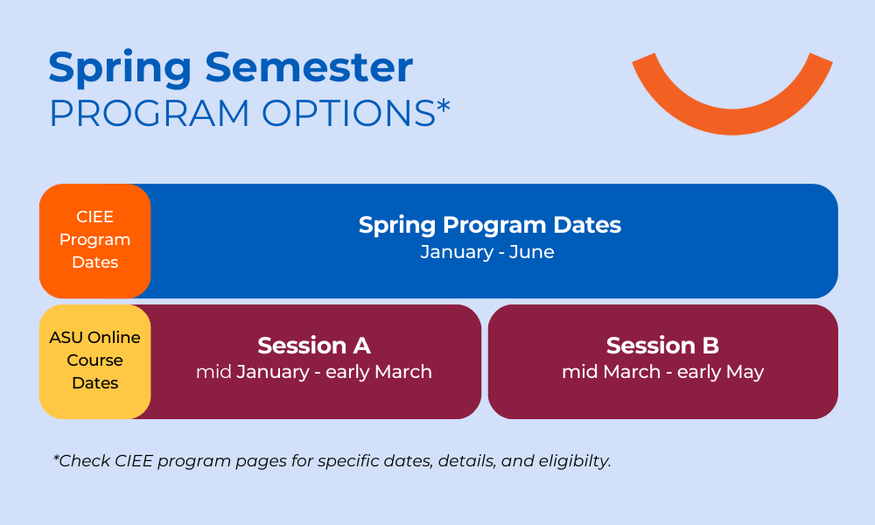
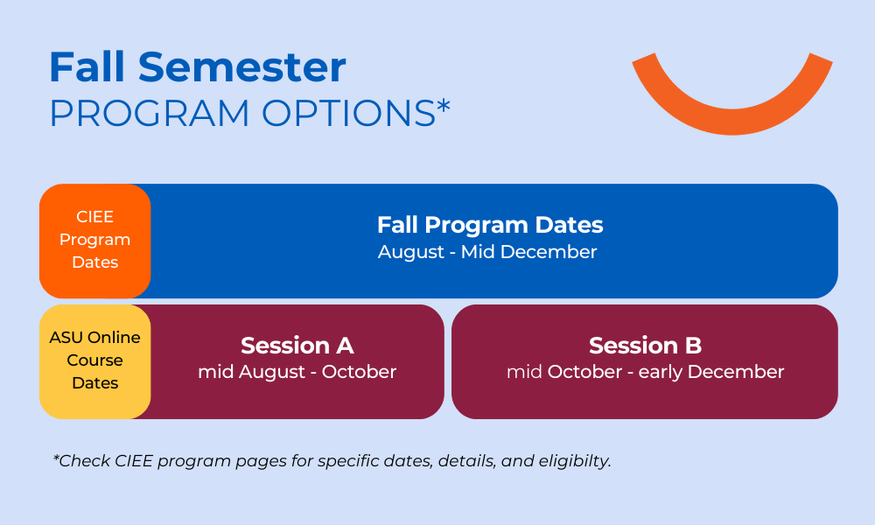
Arizona State University (ASU): Brought to you by CIEE in partnership with ASU, enhance your international coursework with online classes that align with your degree requirements. ASU offers thousands of online courses in asynchronous 7.5-week sessions that fit within the CIEE academic calendar.
Course Information
Academic Projects
- Students applying for an Academic Project are required to submit additional materials during the course selection process.
- Students applying for an Academic Project in Spanish must have four college semesters of Spanish, or equivalent. If a student does not meet the minimum requirements, they may still participate after their proficiency is confirmed through the OLPT.
Grades Notes
- Grades from Seville may take longer than 12 weeks to process due to host university timelines. Please contact CIEE only if your grades are still missing after that period.
- For Direct Matriculation courses at host institutions, you must remain in Seville until you complete your exams. Official exam periods are Fall (January) and Spring (June). Some professors may allow early exams in December or May, but this is at their discretion and must be requested and confirmed individually during the CIEE add/drop period at the start of the term. Because exam schedules cannot be confirmed before arrival, if you plan to leave as soon as finals end, purchase a flexible ticket or one with a low change fee.
Academic Projects
Languages and Cultural Studies
Communication, Journalism, and Media
Academic Projects
Languages and Cultural Studies
Communication, Journalism, and Media
Academic Projects
Languages and Cultural Studies
Communication, Journalism, and Media
Course offerings may vary from semester to semester. Here is a sample of courses that may be offered:
Universidad Pablo de Olavide Multidisciplinary Studies Program
UPO MSP COURSES
These courses, taught in English or Spanish, are available to international students only. If you choose to take courses in Spanish, you must also enroll in either SPAN 2504 IBCP or SPAN 3503 IBCP for your CIEE Intensive Spanish Language course requirement.
Courses in English
- DE UPO MSP-ANTH215E: Health, Healing and Culture: An Introduction to Medical Terminology
- DE UPO MSP-ART313E: History of Spanish Art
- DE UPO MSP-ART/SPAN 333E: Film Nations: Comparative Perspectives on Spanish and U.S. Cinema
- DE UPO MSP-BIO 209E : Anatony and Physiology II
- DE UPO MSP-BIO-242E: Applied Microbiology
- DE UPO MSP-BUS325E: International Marketing
- DE UPO MSP-BUS334E: International Management
- DE UPO MSP-BUS346E: International Finance
- DE UPO MSP-BUS353E: International Financial Accounting
- DE UPO MSP-354E: Business Ethics
- DE UPO MSP-BUS 357E: Organizational Behavior
- DE UPO MSP-BUS 359E: Entrepreneurship and New Ventures
- DE UPO MSP-BUS366E: Operations Management I
- DE UPO MSP-BUS/COMM360E: International Business Communication
- DE UPO MSP-CHE210E: Organic Chemistry I with lab
- DE UPO MSP-COMM340E: Communication and Media in the Digital Age
- DE UPO MSP-COMM/ART 341E: Spanish Identity: Film, Advertising and Pop Music
- DE UPO MSP-COMP356E: Database Systems Technology
- DE UPO MSP-ECON331E: The Global Economy
- DE UPO MSP-ECON391E: International Economics
- DE UPO MSP-ECON321E: The European Union
- DE UPO MSP-HIS312E: History of Spain
- DE UPO MSP-LIT367E: Nobel Prizes in Spanish and Latin American Literature: A Critical Approach
- DE UPO MSP-MATH368E: Introduction to Descriptive and Inferential Statistics
- DE UPO MSP-NUTR301E: The Mediterranean Diet: from Fiction to Facts
- DE UPO MSP-POL363E: U.S. - European Relations Since World War II
- DE UPO MSP-POL372E: Contemporary Spanish Politics
- DE UPO MSP-POL352E: The Road to Democracy in Portugal, Greece and Spain
- DE UPO MSP-PSY251E: Cultural Psychology
- DE UPO MSP-PSY255E: Social Psychology
- DE UPO MSP-PSY260E: General Sport Psychology
- DE UPO MSP-REL/HIS357E: Christianity, Islam and Judaism in the Spanish Context
- DE UPO MSP-SPAN317E: Culture and Society in Spain
- DE UPO MSP-SPAN319E: Spanish Culture and History through Film
- Courses in Spanish
- DE UPO MSP-ART/HIS347: Seville: The Expression of a City through its Art
- DE UPO MSP-COM/SOC 320: Intercultural Communication
- DE UPO MSP-HIS/SOC 362: Slavery in Latin America and the Caribbean
- DE UPO MSP-LIT365: Contemporary Spanish Literature
- DE UPO MSP-LIT370: The Latin American Short Story
- DE UPO MSP-SOC329: Spanish Society Through Volunteering
- DE UPO MSP-SPAN 101: Elementary Spanish 101 (Grammar)
- DE UPO MSP-SPAN102: Elementary Spanish (Grammar)
- DE UPO MSP-SPAN 115: Spanish Culture (elementary level) (in Spanish)
- DE UPO MSP-SPAN201: Intermediate Spanish I (Grammar)
- DE UPO MSP-SPAN 203: Spanish Reading & Composition-Intermediate I/II
- DE UPO MSP-SPAN206: Spanish Conversation-Intermediate
- DE UPO MSP-SPAN215: Spanish Culture
- DE UPO MSP-SPAN 226: Spanish for the Health Sciences-Intermediate I/II
- DE UPO MSP-SPAN241: Intermediate Spanish II (Grammar)
- DE UPO MSP-SPAN246: Spanish Conversation ? Intermediate II
- DE UPO MSP-SPAN306: Spanish Conversation- Advanced
- DE UPO MSP-SPAN 311: Advanced Spanish I (Grammar)
- DE UPO MSP-SPAN 313: Spanish Reading & Composition-Advanced
- DE UPO MSP-SPAN317: Culture and Society in Spain (Spanish)
- DE UPO MSP-SPAN 351: Advanced Spanish II (Grammar)
- DE UPO MSP-SPAN376: Spanish for Business
- DE UPO MSP-SPAN378: Spanish Phonetics & Phonology
- DE UPO MSP-SPAN 381: Spanish-English/English-Spanish Translation
- DE UPO MSP-SPAN339/CUL339: A Window to the Spanish Cuisine and Culture
- DE UPO MSP-SPAN361: History of Flamenco in Spain: Theory and Practice (Spanish)
Universidad Pablo de Olavide Integration Program
UPO PIU COURSES
These courses, taught in English or Spanish, are available to local and international students. There is limited availability due to priority registration for local students.
Course and syllabi finder, for courses in Spanish
Courses in English
- DE UPO-202100E: General Chemistry
- DE UPO-202101E: Physics
- DE UPO-202102E: Cellular Biology
- DE UPO-202103E: Biochemistry: metabolism and its regulation
- DE UPO-202104E: Chemical Thermodynamics and Kinetics
- DE UPO-202105E: Animal Physiology
- DE UPO-202108E: Genetic Engineering
- DE UPO-504001E: Introduction to Economics
- DE UPO-504002E: Economic History
- DE UPO-504003E: Mathematics for Business I
- DE UPO-504004E: Introduction to Business Management
- DE UPO-504005E: Business Law
- DE UPO-504011E: Financial Mathematics
- DE UPO-504012E: Macroeconomics
- DE UPO-504013E: Business Statistics II
- DE UPO-504014E: Business Management
- DE UPO-504015E: Business Tax Law
- DE UPO-504021E: Advanced Financial Accounting
- DE UPO-504022E: Marketing Management II
- DE UPO-504023E: Human Resources Management
- DE UPO-504024E: Operations Management I
- DE UPO-504025E: Management Information Systems
- DE UPO-504030E: Financial Management II
- DE UPO-504031E: Strategic Management I
- DE UPO-504036E: Market Research Techniques
- DE UPO-504038E: Innovation Management
- DE UPO-203100E: Water and Soil Management, Conservation and Exploitation
- DE UPO-203101E: Natural Hazards
- DE UPO-203102E: Environmental and Quality Management Systems
- DE UPO-305100E: Fundamentals of History I
- DE UPO-305101E: Classical Backgrounds to European Culture
- DE UPO-305102E: Physical Geography
- DE UPO-305104E: Geographic Information Sciences
- DE UPO-305105E: History of Europe and the World
- DE UPO-305121E: Prehistory
- DE UPO-101067E: Internacional Trade Law
- DE UPO-103067E: Political Economics
- DE UPO-103069E: International Relations
- DE UPO-802061E: Economic Sociology
- DE UPO-802100E: Cognitive Base of Social Interactions and Communication
- DE UPO-802102E: Introduction to Sociology
CIEE proudly partners with ASU to deliver asynchronous, online coursework that aligns with your degree requirements from anywhere you study abroad.
CIEE and ASU offer courses online per program eligibility, at no additional charge. Be sure to review online courses with your home school advisor.
Check the CIEE Program Dates and ASU start dates below to maximize course options within your program!
Search ASU Online Courses BROWSE FAQs for more INFO
Note: This course listing is for informational purposes only and does not constitute a contract between CIEE and any applicant, student, institution, or other party. The courses, as described, may be subject to change as a result of ongoing curricular revisions, assignment of lecturers and teaching staff, and program development. Courses may be canceled due to insufficient enrollment.
"(GI)" denotes courses that originated at CIEE's Global Institutes and that are offered at multiple CIEE sites.
Discover Internship Opportunities
We're excited you're considering this program! Next, explore the types of internships you can choose from for an epic internship abroad with CIEE Study Abroad.
Explore Industry Options
Seville's vibrant and diverse work scene is largely driven by tourism, cultural industries, and a growing tech sector. Startup opportunities are rising across the city, all within a relaxed atmosphere that values work-life balance and social interaction, making it an appealing hub for professionals and entrepreneurs.

Arts, Audio/Video Technology and Communications
Immerse yourself in today's cutting-edge global media by working in film studios, media companies, the theater, and more.

Business Management and Administration
Study international business practices, multicultural leadership, and global market dynamics.
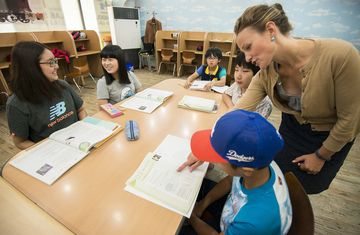
Education and Training
Experience international teaching methodologies and curriculum development in classrooms around the globe.

Finance
Study global markets, financial systems, and cross-border investment strategies in international firms, banks, and companies.

Government and Public Administration
Gain insight into global policy-making, diplomatic relations, and governance practices in agencies, nonprofits, and firms.

Hospitality and Tourism
Polish your hospitality management skills by studying global tourism practices, customer service excellence, and more.
Browse Internship Opportunities
Explore internship placements available through this program to find the right fit for your academic and professional goals.
Disclaimer: Internship placements are subject to availability and host employer hiring discretion. Application and payment of CIEE fees does not guarantee specific placement. This internship listing is for informational purposes only and does not constitute a contract between CIEE and any applicant, student, institution, or other party.
Scholarships & Grants
CIEE offers scholarships and grants annually to help students like you make your study abroad dream a reality.
Students who apply to this program are eligible for the following scholarships and grants:
- Ping Scholarships for Academic Excellence
- Global Access Initiative (GAIN) Travel Grants
- CIEE Gilman Go Global Grant
- Global Access Initiative (GAIN) Scholars Grants
To be considered, submit the CIEE Scholarships & Grants application within your CIEE program application.
Dates & Fees
You get more for every dollar when you study abroad with CIEE, because our high-quality programs include everything from excursions to insurance. There are no hidden charges, and no disappointing surprises when you arrive.
Program |
Application Due |
Start Date |
End Date |
Fees & Housing |
|---|---|---|---|---|
| Program Spring 2027 19 weeks | Application Due Deadline Passed | Start Date | End Date | Fees & Housing $20,450 |
| Program Fall 2027 17 weeks | Start Date * | End Date * | Fees & Housing $20,450 | |
| Program Academic year 2027-2028 39 weeks | Start Date * | End Date * | ||
| Program Spring 2028 19 weeks | Start Date * | End Date * | ||
| Program Fall 2026 18 weeks | Application Due Deadline Passed | Start Date | End Date | Fees & Housing $19,950 |
| Program Academic year 2026-2027 39 weeks | Application Due Deadline Passed | Start Date | End Date | Fees & Housing $39,375 |
*Dates for this program are provided as tentative dates. Please consult with your study abroad advisor to confirm dates before purchasing your flights.
To help you budget, keep in mind that students are responsible for the cost of international airfare, local transportation, books and supplies, visas, and personal expenses. In addition, your college or university may charge additional fees for study abroad, or may require you to receive a transcript via CIEE's School of Record, which carries an additional fee of $500.
Program Fees
CIEE offers the most student support of any provider in its program fee, including an airport greeting, full-time leadership and support, orientation, cultural activities, local excursions, pre-departure advising, and CIEE iNext travel protection with benefits.
| Participation Confirmation | $500 * |
| Educational Costs | $14,656 ** |
| Housing | $5,100 *** |
| Insurance | $194 |
| Total Fees | $20,450 |
Optional Housing
CIEE accommodation options are detailed in the Housing section. Based on availability, Select or Select Plus Housing can be chosen during the application process for an additional fee. Housing is assigned on a first-come, first-served basis; however, other factors may also be considered.
| Select Housing Fee | $950 |
Financial Aid
CIEE offers the most grants and scholarships of any study abroad organization, including $8 million/year in travel grants, merit-based scholarships, institutional grants, and Gilman Go Global Grants.
Estimated Costs
Students are responsible and manage costs related to travel, meals, books, and personal expenses. Below are estimates for consideration.
| Meals not included in program fee | $581 † |
| International Airfare | $1,250 †† |
| Local Transportation | $160 ††† |
| Books & Supplies | $60 |
| Visa Fees | $160 |
| Potential travel to consulate for visa | $500 |
| Personal expenses | $1,030 †††† |
| Total Costs | $3,741 |
*non-refundable fee
**Direct cost of education charged uniformly to all students
***Housing fees listed are for financial aid purposes only and should not be considered a basis for calculation of refunds.
†For students in homestays, families provide all meals (breakfast, lunch and dinner). The listed estimated cost is optional for dining out once per week ($581). Budget more money if you plan on eating out regularly. For students in residence halls/apartments, you should budget approx. $266 per month for groceries if you plan on making your own meals, and more if you plan on eating out regularly.
††Round-trip based on U.S. East Coast departure
†††Transportation card $40 per month.
††††Personal expenses may include but are not limited to the following: taxis, social activities and entertainment, toiletries, cell phone (low-cost SIM card with a 30GB-50GB data plan). Does not include personal travel.
Program Fees
CIEE offers the most student support of any provider in its program fee, including an airport greeting, full-time leadership and support, orientation, cultural activities, local excursions, pre-departure advising, and CIEE iNext travel protection with benefits.
| Participation Confirmation | $500 * |
| Educational Costs | $14,656 ** |
| Housing | $5,100 *** |
| Insurance | $194 |
| Total Fees | $20,450 |
Financial Aid
CIEE offers the most grants and scholarships of any study abroad organization, including $8 million/year in travel grants, merit-based scholarships, institutional grants, and Gilman Go Global Grants.
Estimated Costs
Students are responsible and manage costs related to travel, meals, books, and personal expenses. Below are estimates for consideration.
| Meals not included in program fee | $520 † |
| International Airfare | $1,250 †† |
| Local Transportation | $160 ††† |
| Books & Supplies | $60 |
| Visa Fees | $160 |
| Potential travel to consulate for visa | $500 |
| Personal expenses | $1,016 †††† |
| Total Costs | $3,666 |
*non-refundable fee
**Direct cost of education charged uniformly to all students
***Housing fees listed are for financial aid purposes only and should not be considered a basis for calculation of refunds.
†For students in homestays, families provide all meals (breakfast, lunch and dinner). The listed estimated cost is optional for dining out once per week ($520). Budget more money if you plan on eating out regularly. For students in residence halls/apartments, you should budget approx. $266 per month for groceries if you plan on making your own meals, and more if you plan on eating out regularly.
††Round-trip based on U.S. East Coast departure
†††Transportation card $40 per month.
††††Personal expenses may include but are not limited to the following: taxis, social activities and entertainment, toiletries, cell phone (low-cost SIM card with a 30GB-50GB data plan). Does not include personal travel.
Program Fees
CIEE offers the most student support of any provider in its program fee, including an airport greeting, full-time leadership and support, orientation, cultural activities, local excursions, pre-departure advising, and CIEE iNext travel protection with benefits.
Financial Aid
CIEE offers the most grants and scholarships of any study abroad organization, including $8 million/year in travel grants, merit-based scholarships, institutional grants, and Gilman Go Global Grants.
Estimated Costs
Students are responsible and manage costs related to travel, meals, books, and personal expenses. Below are estimates for consideration.
Program Fees
CIEE offers the most student support of any provider in its program fee, including an airport greeting, full-time leadership and support, orientation, cultural activities, local excursions, pre-departure advising, and CIEE iNext travel protection with benefits.
Financial Aid
CIEE offers the most grants and scholarships of any study abroad organization, including $8 million/year in travel grants, merit-based scholarships, institutional grants, and Gilman Go Global Grants.
Estimated Costs
Students are responsible and manage costs related to travel, meals, books, and personal expenses. Below are estimates for consideration.
Program Fees
CIEE offers the most student support of any provider in its program fee, including an airport greeting, full-time leadership and support, orientation, cultural activities, local excursions, pre-departure advising, and CIEE iNext travel protection with benefits.
| Participation Confirmation | $300 * |
| Educational Costs | $14,456 ** |
| Housing | $5,000 *** |
| Insurance | $194 |
| Total Fees | $19,950 |
Optional Housing
CIEE accommodation options are detailed in the Housing section. Based on availability, Select or Select Plus Housing can be chosen during the application process for an additional fee. Housing is assigned on a first-come, first-served basis; however, other factors may also be considered.
| Select Housing Fee | $900 |
Financial Aid
CIEE offers the most grants and scholarships of any study abroad organization, including $8 million/year in travel grants, merit-based scholarships, institutional grants, and Gilman Go Global Grants.
Estimated Costs
Students are responsible and manage costs related to travel, meals, books, and personal expenses. Below are estimates for consideration.
| Meals not included in program fee | $0 † |
| International Airfare | $1,250 †† |
| Local Transportation | $160 ††† |
| Books & Supplies | $60 |
| Visa Fees | $160 |
| Potential travel to consulate for visa | $500 |
| Personal expenses | $220 †††† |
| Total Costs | $2,350 |
*non-refundable fee
**Direct cost of education charged uniformly to all students
***Housing fees listed are for financial aid purposes only and should not be considered a basis for calculation of refunds.
†For students in homestays, families provide all meals (breakfast, lunch and dinner). For students in residence halls/apartments, you should budget approx. $265 per month for groceries if you plan on making your own meals, and more if you plan on eating out regularly.
††Round-trip based on U.S. East Coast departure
†††Transportation card $40 per month.
††††$100 emergency fund + cell phone expense (low-cost SIM card with a 30GB-50GB data plan) + toiletries
Program Fees
CIEE offers the most student support of any provider in its program fee, including an airport greeting, full-time leadership and support, orientation, cultural activities, local excursions, pre-departure advising, and CIEE iNext travel protection with benefits.
| Participation Confirmation | $300 * |
| Educational Costs | $28,781 ** |
| Housing | $10,100 *** |
| Insurance | $194 |
| Total Fees | $39,375 |
Optional Housing
CIEE accommodation options are detailed in the Housing section. Based on availability, Select or Select Plus Housing can be chosen during the application process for an additional fee. Housing is assigned on a first-come, first-served basis; however, other factors may also be considered.
| Select Housing Fee | $900 |
Financial Aid
CIEE offers the most grants and scholarships of any study abroad organization, including $8 million/year in travel grants, merit-based scholarships, institutional grants, and Gilman Go Global Grants.
Estimated Costs
Students are responsible and manage costs related to travel, meals, books, and personal expenses. Below are estimates for consideration.
| Meals not included in program fee | $0 † |
| International Airfare | $1,250 †† |
| Local Transportation | $160 ††† |
| Books & Supplies | $60 |
| Visa Fees | $160 |
| Potential travel to consulate for visa | $500 |
| Personal expenses | $220 †††† |
| Total Costs | $2,350 |
*non-refundable fee
**Direct cost of education charged uniformly to all students
***Housing fees listed are for financial aid purposes only and should not be considered a basis for calculation of refunds.
†For students in homestays, families provide all meals (breakfast, lunch and dinner). For students in residence halls/apartments, you should budget approx. $265 per month for groceries if you plan on making your own meals, and more if you plan on eating out regularly.
††Round-trip based on U.S. East Coast departure
†††Transportation card $40 per month.
††††$100 emergency fund + cell phone expense (low-cost SIM card with a 30GB-50GB data plan) + toiletries
What's Included
Tuition
Housing
Pre-departure Advising
Advising before you depart to set goals and answer questions
Optional on-site airport meet-and-greet
Orientation
Introduction to your program plus practical information about living in your host city
On-site Staff
Full-time program leadership and support in your city
Cultural and/or Co-curricular Activities
Excursions and/or Study Tours
Travel Protection
CIEE iNext travel protection
24/7 emergency on-site support
Our Staff

Salvador Parra
Center Director
Salvador has been working at CIEE since 2000 and is passionate about international exchange. He has a strong passion for working with international students and in the implementation, management, and maintenance of many different programs at CIEE throughout all these years.

José Luis Martinez
Academic Director
José Luis Martinez (Juli) has a B.A. in Hispanic Philology and an M.A. in Spanish Literature (Theater) from the Universidad de Seville. He has been working with CIEE since 2002.

María Montes de Oca
Director of Student Life
María has been working at CIEE since 2007. She studied Journalism and Translation Studies (French and Italian) at University of Granada, and obtained a Masters degree in European Studies. Having studied and worked abroad herself, she does her best to help program participants to have an enjoyable and rewarding semester in Spain.

Malka Steinberg
Program Manager
Formerly a study-abroad student in Seville, Malka has created her own community and found a comfortable rhythm to life in Seville. She is a graduate of The Ohio State University having studied Spanish, linguistics, and intercultural competence. This mix of interests culminates in a passion to assist students during their own cultural and academic exploration while studying in Sevilla.
Get Started
1
2
Connect With Your Campus Study Abroad Office
Share your plans and confirm you're on track to meet all required steps to go abroad.
3
Contact CIEE
We're here to help! Send us an email if you still have questions or need information about applying to this program.
4
Interested in an optional internship?
After being accepted to this program and submitting the required internship documents, work with CIEE staff on your internship goals and select which positions to interview for. CIEE will reach out to companies that would be a good fit for you, your interests, and your qualifications. Finalize your internship placement upon arrival!
You might also like

- Barcelona, Spain
- Study Program
...for 1, 2, or 3 term blocks!

- Madrid, Spain
- Study Program
- Part-Time Internship
...for 1, 2, or 3 term blocks!

- Seville, Spain
- Study Program
...for 1, 2, or 3 term blocks!