
Liberal Arts Language Immersion
AACSB Accredited
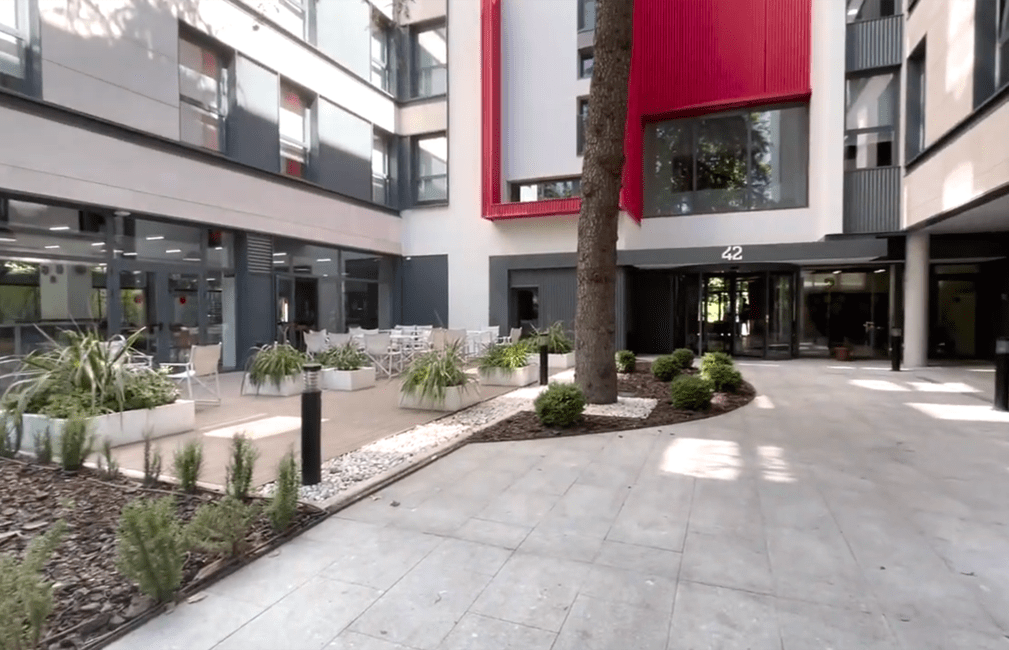

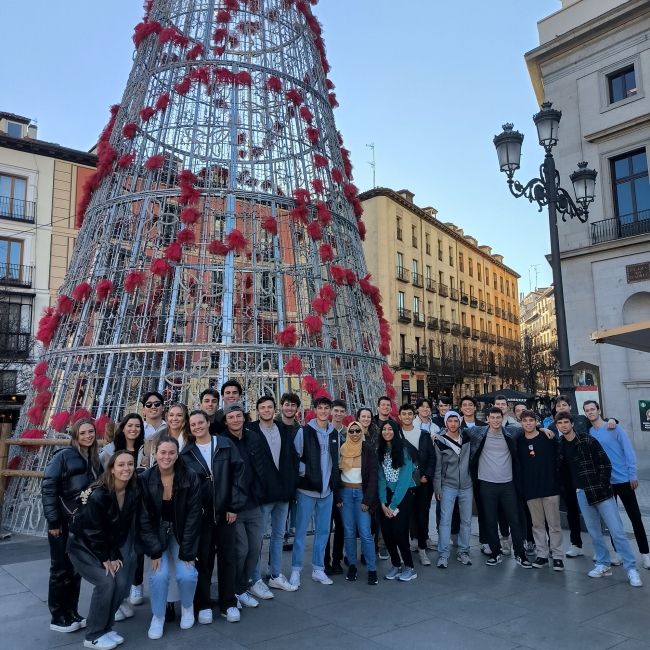
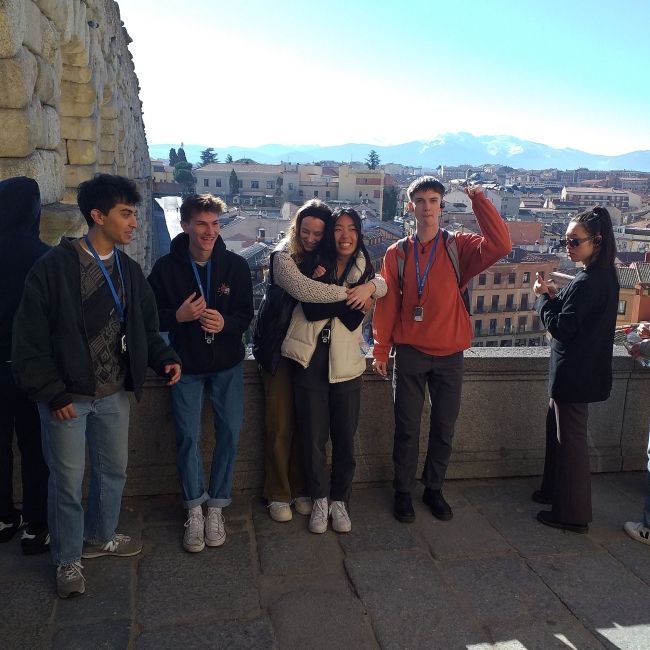
Unique Experiences
Perfect Your Spanish
by taking courses at Universidad Carlos III de Madrid (UC3M)
Expand your global network
through class projects, social activities, or an internship in Spanish
Immerse yourself in Spanish culture
when you engage with student organizations, theater groups, wellness workshops, and small-group tutoring

Your Destination
Madrid is Spain’s vibrant city where Spanish culture and language thrive, creating the perfect environment for language immersion and cultural exploration. Whether you're practicing Spanish with locals in bustling markets, engaging in lively discussions at a traditional café, or exploring the historic streets of the city center, every experience deepens your connection to the language and culture. With a perfect blend of history, modern energy, and artistic expression, Madrid is the perfect place to study abroad.

Program Highlights
- Academic Courses: Choose from CIEE courses and host institution courses that align with your academic major.
- Optional Internship Placements: Enhance your program with an optional for-credit internship that aligns with your career aspirations.
- Immersive Experiences: Participate in activities, excursions, study tours, and more that showcase your host city's culture, values, and local art, film, music, cuisine, and sports scenes.
- Cultural Projects: Volunteer with members of the local community, join student clubs to socialize with your peers, and attend local workshops and events to get to know your host city.

Excursions & Activities
CIEE’s excursions and cultural activities in Madrid will open doors for you to explore Spain’s rich diversity, language, culture, history, and timeless beauty in ways that will enhance your time abroad.
Samples of past excursions and activities:
- Visit UNESCO World Heritage sites such as the medieval city of Alcalá de Henares, or hike the trails in the Guadarrama Mountains
- Soak up Spanish culture with museum visits, dance classes, urban art and graffiti tours
- Savor downtime with Spanish students while you play basketball, kayak, swim, or catch a theater, dance, or music performance
Please note: Activities are based on past programs and subject to change at CIEE's discretion to adapt to local circumstances and participant feedback. Our goal when arranging activities is always to enhance your experience.
Program Blogs

Mi Hogar Española
By: Sophia Thrasher A fifteen-hour travel day into a four-month alternate life is a leap of faith. As someone who struggles with a sense of belonging, I was fully prepared... keep reading
Fluent in Life: Lessons from Studying Abroad in Spain
By: Gabby Watts Growing up, my mom would always tell me stories about her year studying abroad in London. She raved about the experience and how much it taught her... keep reading

My Top Five Cafes in Madrid
By: Gabby Goldstein As a student with very limited time here in Madrid, I love to take advantage of the various culinary opportunities this city has to offer. Above all... keep reading
Housing & Meals
Housing
CIEE Madrid offers diverse housing options to maximize your study abroad experience, including homestays, student residence halls, or shared apartments. Housing is typically situated in well-connected residential neighborhoods or nearby suburbs outside the city center with access to public transportation, local shops, and daily amenities, allowing students to experience everyday life in one of Europe’s largest capital cities. All housing options are located near supermarkets, restaurants, gyms, and public transport and provide the convenience of urban living.
Student housing in Madrid typically looks different than what you may be used to in the U.S. As in many major European cities, housing in central neighborhoods is limited and in high demand, and CIEE student accommodations are outside the historic city center. Unlike most U.S. college campuses, CIEE does not own or manage student housing in Madrid. We work within local networks to carefully identify housing partners, vendors, and homestay hosts that can offer students a safe, immersive and culturally active living experience. All Madrid housing sizes, layouts, room designs, and amenities will vary and will have their own distinct features. Living in Madrid may mean downsizing for the duration of your stay as student housing space and location are at a premium (for example, living space, kitchen, washing machines or bedroom size may be smaller than what you're used to at home).
Due to high demand for housing, most Spanish students live at home with their families, as affordable rental options in the city center are extremely limited. Students should expect to commute like a local, with typical commute times ranging from approximately 30 to 70 minutes depending on housing placement, classroom locations, and time of day. Whether you live with a host family, student dorm or in a shared apartment, you should expect to travel distances across various Madrid neighborhoods.
Depending on your housing assignment, you may live in a building with a mix of CIEE students, local residents, or other international students. This provides an opportunity for broader cultural interaction, though social experiences may vary by residence and location.
Standard Housing: Includes a single room in a homestay within 30-45 minutes from Puerta de Sol train station; or double room in a student dorm or a shared apartment, distances to Puerta de Sol train station may vary from 40 to 70 minutes. Commute time from housing location to host institution campus may vary depending on student selected classes and you typically travel a longer distance.
- Homestays offer socially active hosts and a cultural resource who allow for a lot of student independence, no curfew, kitchen access for food storage, a living room, Wi-Fi, weekly laundry, and a bathroom shared with the host. Hosts provide two meals a day during the week.
- Shared apartments are modest in size, featuring fewer amenities with basic furniture, laundry facilities, Wi-Fi access, maintenance repair services, bed linens and towels a clothing dry rack and a standard kitchen.
- Student Dorms: Student dorms are modern, offer Wi-Fi access, and typically have an individual or shared kitchen.
Select Housing: Single accommodation in a shared apartment or residence hall, within 45-55 minutes from Sol train station OR Double accommodation in shared apartment or residence hall within 30-40 minutes from Sol station. Commute time from housing location to host institution campus may vary dependent on student selected classes,and you typically travel a longer distance.
- Shared apartments are modest in size, featuring a few amenities with basic furniture, a laundry machine, Wi-Fi access, maintenance repair services, bed linens and towels, a clothing dry rack and a standard kitchen.
- Student dorms are modern, offer Wi-Fi access, and typically house students in single bedrooms with an individual or shared kitchen.
Select housing requires an additional fee.
Select Plus Housing: Limited available option that includes priority placement in a single room within 30-40 minutes on public transport to/from Puerta de Sol train station. Commute time from housing location to host institution campuses may vary depending on student selected classes, and you typically travel a longer distance.
- Shared apartments are modest in size, featuring a few amenities with basic furniture, a laundry machine, Wi-Fi access, maintenance repair services, bed linens and towels, a clothing dry rack and a standard kitchen.
- Student dorms are modern, offer Wi-Fi access, and typically have an individual or shared kitchen.
Select Plus housing requires an additional fee.
A housing category note: Differences between housing options are primarily based on room type, occupancy, and availability, rather than guaranteed location. These categories are not intended to imply differences in neighborhood quality or overall building standards, as all CIEE housing meets the same criteria for safety, comfort, and suitability for students.
Selecting upgraded housing (Select or Select Plus) does not necessarily mean shorter commute times, walkable distance to classes, or a more central city location.
The default criterion to assign housing is first-come, first-served; however, other factors may also be considered. If we cannot accommodate your first housing category preference , we'll let you know before you arrive. Non-standard housing options require an additional fee that can be found in the program Dates and Fees.
Meals
- Homestays: Students have breakfast and dinner with their host families, and they are responsible for lunch.Kitchen access varies by host family, but students should expect limited use beyond food storage and light preparation.
- Residence Halls/Shared Apartments: Meals are not included. Residence halls and apartments have direct access to supermarkets, restaurants, public transport, and independent dining halls. Students can purchase dining hall meal plans on their own if offered by the residence hall management.






Academics
CIEE Madrid: Study in the historic center of Spain’s capital near Puerta de Sol, conveniently located near shops, cafés, tapas bars, theaters, museums, copy centers, and metro stations. CIEE Madrid features five classrooms, a student lounge, an academic advising office, and a student life office.
Universidad Carlos III de Madrid (UC3M) was established in 1989 and is recognized as Spain’s most prestigious public institution of higher education. It follows a U.S. academic calendar system for US visiting college students and has one of the highest percentages of full-time and tenured female faculty in Spain. CIEE students take classes on the Getafe campus, which is the main UC3M campus, located 25-40 minutes outside of downtown Madrid via efficient and modern public transit. Depending on your housing location, your commute time to campus can vary from 40-to-70 minutes by public transportation because UC3M classrooms are located outside of Madrid’s city center.
Universidad Antonio Nebrija (UAN) is internationally recognized and has offered Spanish language course instruction since 1985. The UAN academic calendar aligns with the U.S. semester calendar, and students attend classes on the Madrid, Princesa campus. The campus is quiet and centrally located in Madrid. It has excellent connections by public transport and is only 10-to-15 minutes from CIEE Madrid.
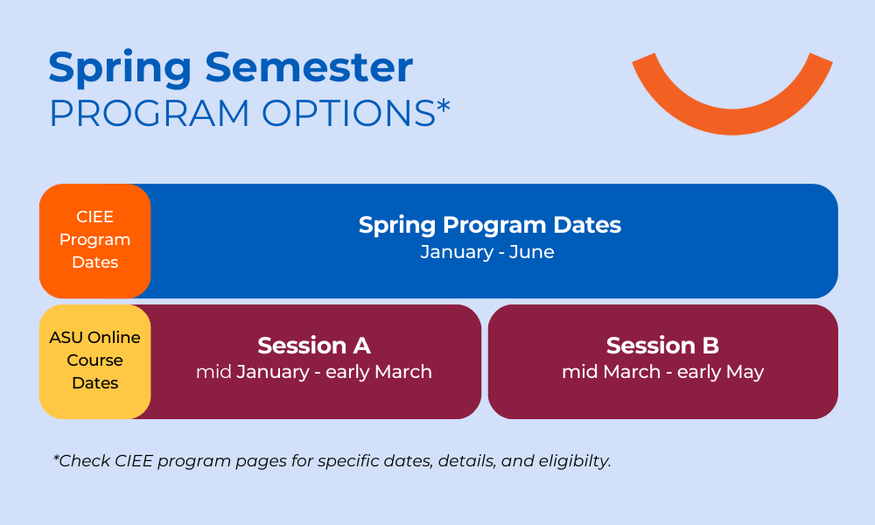
Arizona State University (ASU): Brought to you by CIEE in partnership with ASU, enhance your international coursework with online classes that align with your degree requirements. ASU offers thousands of online courses in asynchronous 7.5-week sessions that fit within the CIEE academic calendar.
Course Information
- Please be aware that final exams at Universidad Carlos III de Madrid (UC3M) may take place after the advertised program end date. Students enrolled in UC3M courses will be required to remain onsite through the full UC3M exam period. CIEE housing will be extended for all students who need to stay onsite in order to complete their UC3M exams. Final exam schedules are determined and confirmed onsite, so students should plan their return travel accordingly.
Academic Projects
Communication, Journalism, and Media
Academic Projects
Communication, Journalism, and Media
Academic Projects
Communication, Journalism, and Media
Universidad Carlos III de Madrid (UC3M)
All UC3M courses are taken on the Getafe campus, final enrollment will occur on site. Please visit the university website for course information.
UC3M GETAFE Departments
Liberal Arts students may only enroll in courses taught in Spanish. Students must enroll in at least one course from the department of their choosing:
- Art History
- Business Administration
- Cultural Studies
- Economics
- Employment and Labor Relations
- Film, Television, and Media
- Finance and Accounting
- History and Politics
- Humanities
- International Studies
- Journalism
- Law
- Management and Technology
- Management of Information and Digital Contents
- Philosophy, Politics and Economics
- Political Science
- Sociology
- Statistics and Business
- Tourism
Required Language Courses
Students are required to enroll in one of the following Spanish language courses during their first semester of participation in the program. These courses become optional as of spring 2024. Language courses are offered through the UC3M International School Spanish-track program on the Getafe campus.
- Spanish Language: Advanced and Spanish Language: Upper Advanced
These courses are aimed at students who have completed advanced grammar at the college level but do not have native oral fluency. Special attention is paid to grammar and vocabulary, in addition to notions, functions, and uses of the language in real speaking situations. Classroom instruction includes film viewing and participatory exercises. - Spanish Language: Upper Intermediate
This course is designed for students who cannot demonstrate advanced grammatical knowledge of Spanish on the placement exam. Through an emphasis on writing, combined with a grammar review, students are expected to acquire functional and useful language skills for daily practice. - Spanish Language: Proficiency
This course is for those students with a proficient Spanish level who wish to deepen their language skills, focusing on conversation skills through the work in a variety of situations. Students will acquire new communication strategies while examining the sociocultural and sociolinguistic aspects of the language.
UC3M International School Spanish Track Courses
Offered in Spanish. More information can be found on the UC3M International School's website.
UC3M International School courses are available to American university students and offered by UC3M Education Abroad. Courses are taken with other American / international students and focus on Spanish language and culture. Unlike traditional UC3M courses, UC3M International School courses do not involve coursework with Spaniards. The following lists are samplings of courses that may be available. Not all courses are offered each semester. The final list of courses will be available upon arrival in Madrid.
- Cine Español
- Cuento en Español: Teoría y Práctica
- El Terrorismo y Sus Víctimas: Un Desafío Global Desde 11-S
- Español en el entorno académico
- Español para Hispanounidenses
- Estudios Culturales
- Historia de España
- Historia del Arte Español
- Historia del Presente: España de Hoy
- Instituciones Españolas y Europeas
- La España Literaria de Cervantes (Siglos XVI – XVII)
- Literatura Española (siglos XIX y XX)
- Literatura Hispanoamericana (siglo XX)
- Religión y Sociedad en España
- Teoría y Práctica del Cuento en Español
Universidad Antonio de Nebrija (UAN)
Estudios Hispánicos Courses
Offered in Spanish. More information can be found on the UAN Estudios Hispánicos website.
UAN Estudios Hispánicos courses are available to study abroad students and taught by the UAN Estudios Hispánicos faculty. Courses are taken with other international students and focus on Spanish language and culture. Unlike traditional UAN courses, Estudios Hispánicos courses do not include local students.
The following lists are sampling of courses that may be available. Not all courses are offered each semester. The final list of courses will be available upon arrival in Madrid.
Universidad Antonio Nebrija (UAN) sample course list:
Nivel A1 (Beginner)
- CH1001 Lengua Española
- Problemas Específicos de Gramática
- Lengua y Conversación
- Lengua Española
- España y los Españoles
Nivel A2 (Low Intermediate)
- CH2010 Lengua Española
- CH1051 Lengua y Conversación
- CH2051 Conversación y Composición
- CH1061 España y los Españoles
- CH2021 Lengua Española
- Español de los Negocios
- CH2061 Lengua Española
- CH2011 Problemas Específicos de Gramática
- CH2031 Conversación y Lectura
- CH2041 Descubrir España
Nivel B1 (Intermediate)
- CH2181 Arte en el Museo del Prado
- CH3671 Español para el Turismo
- Español de los Negocios
Nivel B2.1 (Intermedio Alto)
- CH3001 Lengua Española
- Problemas Específicos de Gramática
- CH3051 Conversación y Composición
- CH3041 España Diversa
- CH3061 Sociedad Española Contemporánea
- CH3131 Panorama de la Literatura Española
- CH3132 Panorama de la Literatura Hispanoamericana
- CH3181 Arte en el Museo del Prado
- CH4421 Español de los Negocios
- CH3171 Cine Español y Sociedad
- CH3071 Arte y Civilización
Niveles B2.2 / C1 / C2 (Advanced and Superior)
- CH4001 Lengua Avanzada I (B2.2)
- CH4101 Lengua Avanzada II (C1)
- CH4011 Lengua Superior (C2)
- CH3211 Problemas Específicos de Gramática (solo B2.2)
- CH4041 Temas Españoles de Actualidad
- CH4051 Conversación y Composición
- CH4191 Estudios de la Lengua Española
- CH3031 Lengua Escrita
- CH4521 Español de los Negocios
- CH4151 Español para la Salud N
- CH3121 El Español en los Medios de Comunicación de Masas
- CH4071 España Contemporánea
- CH3181 Arte en el Museo del Prado
- CH3171 Cine Español y Sociedad
CIEE proudly partners with ASU to deliver asynchronous, 100% online coursework that aligns with your degree requirements from anywhere you study abroad.
CIEE and ASU offer courses online per program eligibility, at no additional charge. Be sure to review online courses with your home school advisor.
Check the CIEE Program Dates and ASU start dates below to maximize course options within your program!
Search ASU Online Courses BROWSE FAQs for more INFO

Note: This course listing is for informational purposes only and does not constitute a contract between CIEE and any applicant, student, institution, or other party. The courses, as described, may be subject to change as a result of ongoing curricular revisions, assignment of lecturers and teaching staff, and program development. Courses may be canceled due to insufficient enrollment.
"(GI)" denotes courses that originated at CIEE's Global Institutes and that are offered at multiple CIEE sites.
Discover Internship Opportunities
We're excited you're considering this program! Next, explore the types of internships you can choose from for an epic internship abroad with CIEE Study Abroad.
Explore Industry Options
Madrid's work scene spans sustainability, NGOs, tourism, and education. Growing coworking spaces cater to freelancers and remote workers. While Spanish dominates, some companies operate in English. The city blends traditional Spanish culture with modern business practices, balancing professionalism and a relaxed vibe.

Education and Training
Experience international teaching methodologies and curriculum development in classrooms around the globe.

Health Science
Immerse yourself in global healthcare systems to study cross-border medical practices and address public health challenges.

Hospitality and Tourism
Polish your hospitality management skills by studying global tourism practices, customer service excellence, and more.
Browse Internship Opportunities
Explore internship placements available through this program to find the right fit for your academic and professional goals.
Disclaimer: Internship placements are subject to availability and host employer hiring discretion. Application and payment of CIEE fees does not guarantee specific placement. This internship listing is for informational purposes only and does not constitute a contract between CIEE and any applicant, student, institution, or other party.
Scholarships & Grants
CIEE offers scholarships and grants annually to help students like you make your study abroad dream a reality.
Students who apply to this program are eligible for the following scholarships and grants:
- Ping Scholarships for Academic Excellence
- Global Access Initiative (GAIN) Travel Grants
- Stohl International Undergraduate Research Scholarships
- CIEE Gilman Go Global Grant
- Global Access Initiative (GAIN) Scholars Grants
To be considered, submit the CIEE Scholarships & Grants application within your CIEE program application.
Dates & Fees
You get more for every dollar when you study abroad with CIEE, because our high-quality programs include everything from excursions to insurance. There are no hidden charges, and no disappointing surprises when you arrive.
Program |
Application Due |
Start Date |
End Date |
Fees & Housing |
|---|---|---|---|---|
| Program Spring 2027 18 weeks | Application Due Deadline Passed | Start Date | End Date | Fees & Housing $22,450 |
| Program Fall 2027 16 weeks | Start Date * | End Date * | Fees & Housing $22,450 | |
| Program Academic year 2027-2028 38 weeks | Start Date * | End Date * | ||
| Program Spring 2028 18 weeks | Start Date * | End Date * | ||
| Program Fall 2026 16 weeks | Application Due Deadline Passed | Start Date | End Date | Fees & Housing $21,950 |
| Program Academic year 2026-2027 38 weeks | Application Due Deadline Passed | Start Date | End Date | Fees & Housing $43,275 |
*Dates for this program are provided as tentative dates. Please consult with your study abroad advisor to confirm dates before purchasing your flights.
To help you budget, keep in mind that students are responsible for the cost of international airfare, local transportation, books and supplies, visas, and personal expenses. In addition, your college or university may charge additional fees for study abroad, or may require you to receive a transcript via CIEE's School of Record, which carries an additional fee of $500.
Program Fees
CIEE offers the most student support of any provider in its program fee, including an airport greeting, full-time leadership and support, orientation, cultural activities, local excursions, pre-departure advising, and CIEE iNext travel protection with benefits.
| Participation Confirmation | $500 * |
| Educational Costs | $16,206 ** |
| Housing | $5,550 *** |
| Insurance | $194 |
| Total Fees | $22,450 |
Optional Housing
CIEE accommodation options are detailed in the Housing section. Based on availability, Select or Select Plus Housing can be chosen during the application process for an additional fee. Housing is assigned on a first-come, first-served basis; however, other factors may also be considered.
| Select Housing Fee | $2,700 |
| Select Plus Housing Fee | $3,600 |
Financial Aid
CIEE offers the most grants and scholarships of any study abroad organization, including $8 million/year in travel grants, merit-based scholarships, institutional grants, and Gilman Go Global Grants.
Estimated Costs
Students are responsible and manage costs related to travel, meals, books, and personal expenses. Below are estimates for consideration.
| Meals not included in program fee | $1,836 † |
| International Airfare | $1,250 †† |
| Local Transportation | $100 ††† |
| Books & Supplies | $50 |
| Visa Fees | $166 †††† |
| Potential travel to consulate for visa | $520 ††††† |
| Personal expenses | $1,023 †††††† |
| Total Costs | $4,945 |
*non-refundable fee
**Direct cost of education charged uniformly to all students
***Housing fees listed are for financial aid purposes only and should not be considered a basis for calculation of refunds.
†The listed estimated cost is for students in homestays and the additional optional cost for dining out once per week ($550). Families provide 2 meals (breakfast and dinner) and students purchase lunch (there isn’t usually access to a kitchen). For students in apartments/residence halls, you should budget approx. $266 per month for groceries if you plan on making your own meals, and more if you plan on eating out regularly.
††Round-trip flight based on U.S. East Coast departure, dependent on carrier
†††Issuance of personalized transportation card and monthly youth passes
††††Students staying a full semester in Madrid require a visa
†††††If no consulate in your home area
††††††Personal expenses may include but are not limited to the following: taxis, social activities and entertainment, toiletries, cell phone (low-cost SIM card with a 30GB-50GB data plan). Does not include personal travel.
Program Fees
CIEE offers the most student support of any provider in its program fee, including an airport greeting, full-time leadership and support, orientation, cultural activities, local excursions, pre-departure advising, and CIEE iNext travel protection with benefits.
| Participation Confirmation | $500 * |
| Educational Costs | $16,206 ** |
| Housing | $5,550 *** |
| Insurance | $194 |
| Total Fees | $22,450 |
Financial Aid
CIEE offers the most grants and scholarships of any study abroad organization, including $8 million/year in travel grants, merit-based scholarships, institutional grants, and Gilman Go Global Grants.
Estimated Costs
Students are responsible and manage costs related to travel, meals, books, and personal expenses. Below are estimates for consideration.
| Meals not included in program fee | $1,632 † |
| International Airfare | $1,250 †† |
| Local Transportation | $165 ††† |
| Books & Supplies | $50 |
| Visa Fees | $166 †††† |
| Potential travel to consulate for visa | $500 ††††† |
| Personal expenses | $1,009 †††††† |
| Total Costs | $4,772 |
*non-refundable fee
**Direct cost of education charged uniformly to all students
***Housing fees listed are for financial aid purposes only and should not be considered a basis for calculation of refunds.
†The listed estimated cost is for students in homestays and the additional optional cost for dining out once per week ($490). Families provide 2 meals (breakfast and dinner) and students purchase lunch (there isn’t usually access to a kitchen). For students in apartments/residence halls, you should budget approx. $266 per month for groceries if you plan on making your own meals, and more if you plan on eating out regularly.
††Round-trip flight based on U.S. East Coast departure, dependent on carrier
†††2 trips per day, 112 days
††††Students staying a full semester in Madrid require a visa
†††††If no consulate in your home area
††††††Personal expenses may include but are not limited to the following: taxis, social activities and entertainment, toiletries, cell phone (low-cost SIM card with a 30GB-50GB data plan). Does not include personal travel.
Program Fees
CIEE offers the most student support of any provider in its program fee, including an airport greeting, full-time leadership and support, orientation, cultural activities, local excursions, pre-departure advising, and CIEE iNext travel protection with benefits.
Financial Aid
CIEE offers the most grants and scholarships of any study abroad organization, including $8 million/year in travel grants, merit-based scholarships, institutional grants, and Gilman Go Global Grants.
Estimated Costs
Students are responsible and manage costs related to travel, meals, books, and personal expenses. Below are estimates for consideration.
Program Fees
CIEE offers the most student support of any provider in its program fee, including an airport greeting, full-time leadership and support, orientation, cultural activities, local excursions, pre-departure advising, and CIEE iNext travel protection with benefits.
Financial Aid
CIEE offers the most grants and scholarships of any study abroad organization, including $8 million/year in travel grants, merit-based scholarships, institutional grants, and Gilman Go Global Grants.
Estimated Costs
Students are responsible and manage costs related to travel, meals, books, and personal expenses. Below are estimates for consideration.
Program Fees
CIEE offers the most student support of any provider in its program fee, including an airport greeting, full-time leadership and support, orientation, cultural activities, local excursions, pre-departure advising, and CIEE iNext travel protection with benefits.
| Participation Confirmation | $300 * |
| Educational Costs | $16,206 ** |
| Housing | $5,250 *** |
| Insurance | $194 |
| Total Fees | $21,950 |
Optional Housing
CIEE accommodation options are detailed in the Housing section. Based on availability, Select or Select Plus Housing can be chosen during the application process for an additional fee. Housing is assigned on a first-come, first-served basis; however, other factors may also be considered.
| Select Housing Fee | $1,700 |
| Select Plus Housing Fee | $2,550 |
Financial Aid
CIEE offers the most grants and scholarships of any study abroad organization, including $8 million/year in travel grants, merit-based scholarships, institutional grants, and Gilman Go Global Grants.
Estimated Costs
Students are responsible and manage costs related to travel, meals, books, and personal expenses. Below are estimates for consideration.
| Meals not included in program fee | $1,214 † |
| International Airfare | $1,224 †† |
| Local Transportation | $100 ††† |
| Books & Supplies | $50 |
| Visa Fees | $166 †††† |
| Potential travel to consulate for visa | $520 ††††† |
| Personal expenses | $220 †††††† |
| Total Costs | $3,494 |
*non-refundable fee
**Direct cost of education charged uniformly to all students
***Housing fees listed are for financial aid purposes only and should not be considered a basis for calculation of refunds.
†The listed estimated cost is for students in homestays. Families provide 2 meals (breakfast and dinner) and students purchase lunch (there isn’t usually access to a kitchen). For students in apartments, you should budget approx. $265 per month for groceries if you plan on making your own meals, and more if you plan on eating out regularly.
††Round-trip flight based on U.S. East Coast departure, dependent on carrier
†††Issuance of personalized transportation card and monthly youth passes
††††Students staying a full semester in Madrid require a visa
†††††If no consulate in your home area
††††††$100 emergency fund + cell phone expense (low-cost SIM card with a 30GB-50GB data plan) + toiletries
Program Fees
CIEE offers the most student support of any provider in its program fee, including an airport greeting, full-time leadership and support, orientation, cultural activities, local excursions, pre-departure advising, and CIEE iNext travel protection with benefits.
| Participation Confirmation | $300 * |
| Educational Costs | $31,981 ** |
| Housing | $10,800 *** |
| Insurance | $194 |
| Total Fees | $43,275 |
Optional Housing
CIEE accommodation options are detailed in the Housing section. Based on availability, Select or Select Plus Housing can be chosen during the application process for an additional fee. Housing is assigned on a first-come, first-served basis; however, other factors may also be considered.
| Select Housing Fee | $1,700 |
| Select Plus Housing Fee | $2,550 |
Financial Aid
CIEE offers the most grants and scholarships of any study abroad organization, including $8 million/year in travel grants, merit-based scholarships, institutional grants, and Gilman Go Global Grants.
Estimated Costs
Students are responsible and manage costs related to travel, meals, books, and personal expenses. Below are estimates for consideration.
| Meals not included in program fee | $1,214 † |
| International Airfare | $1,224 †† |
| Local Transportation | $100 ††† |
| Books & Supplies | $50 |
| Visa Fees | $166 †††† |
| Potential travel to consulate for visa | $520 ††††† |
| Personal expenses | $220 †††††† |
| Total Costs | $3,494 |
*non-refundable fee
**Direct cost of education charged uniformly to all students
***Housing fees listed are for financial aid purposes only and should not be considered a basis for calculation of refunds.
†The listed estimated cost is for students in homestays. Families provide 2 meals (breakfast and dinner) and students purchase lunch (there isn’t usually access to a kitchen). For students in apartments, you should budget approx. $265 per month for groceries if you plan on making your own meals, and more if you plan on eating out regularly.
††Round-trip flight based on U.S. East Coast departure, dependent on carrier
†††Issuance of personalized transportation card and monthly youth passes
††††Students staying a full semester in Madrid require a visa
†††††If no consulate in your home area
††††††$100 emergency fund + cell phone expense (low-cost SIM card with a 30GB-50GB data plan) + toiletries
What's Included
Tuition
Housing
Pre-departure Advising
Advising before you depart to set goals and answer questions
Optional on-site airport meet-and-greet
Orientation
Introduction to your program plus practical information about living in your host city
On-site Staff
Full-time program leadership and support in your city
Cultural and/or Co-curricular Activities
Excursions and/or Study Tours
Travel Protection
CIEE iNext travel protection
24/7 emergency on-site support
Our Staff

Eero Jesurun
Center Director

Laura Turner
Academic Director
Dr. Laura Turner has more than 15 years of experience in bilingual, bicultural, and inclusive education in Madrid, Spain.
Get Started
1
2
Connect With Your Campus Study Abroad Office
Share your plans and confirm you're on track to meet all required steps to go abroad.
3
Contact CIEE
We're here to help! Send us an email if you still have questions or need information about applying to this program.
4
Interested in an optional internship?
After being accepted to this program and submitting the required internship documents, work with CIEE staff on your internship goals and select which positions to interview for. CIEE will reach out to companies that would be a good fit for you, your interests, and your qualifications. Finalize your internship placement upon arrival!
You might also like

- Barcelona, Spain
- Study Program
...for 1, 2, or 3 term blocks!

- Madrid, Spain
- Study Program
- Part-Time Internship
...for 1, 2, or 3 term blocks!

- Seville, Spain
- Study Program
...for 1, 2, or 3 term blocks!