
Language + Culture

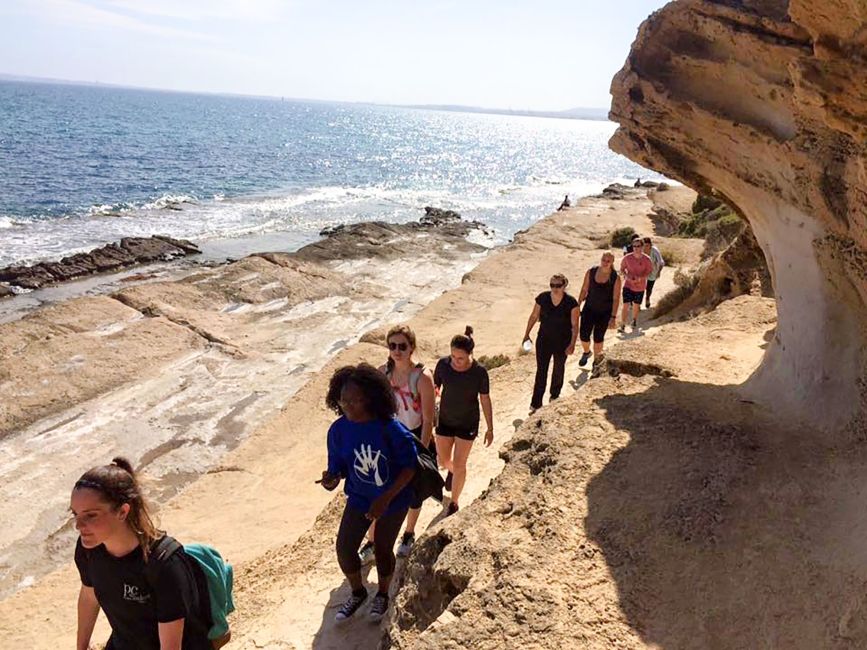
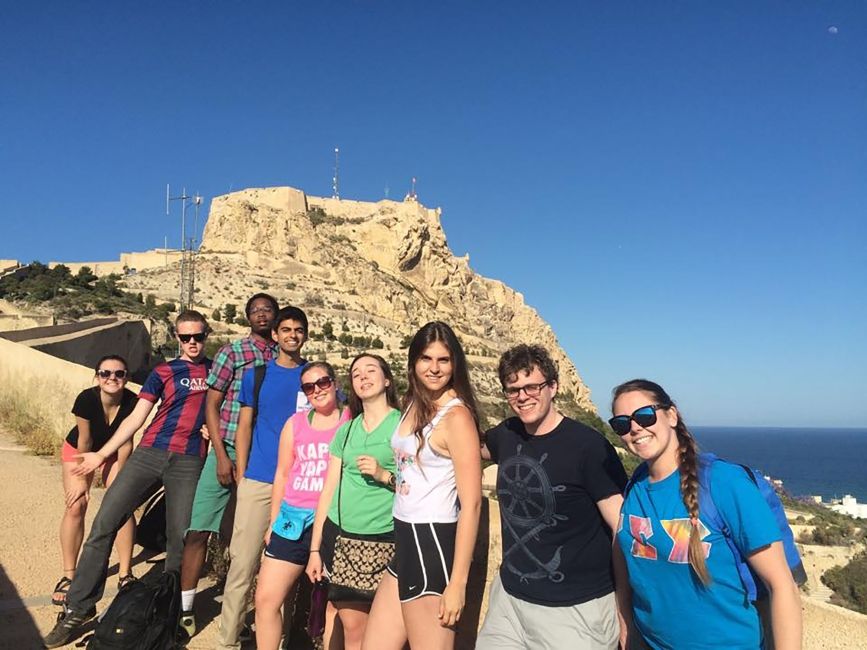
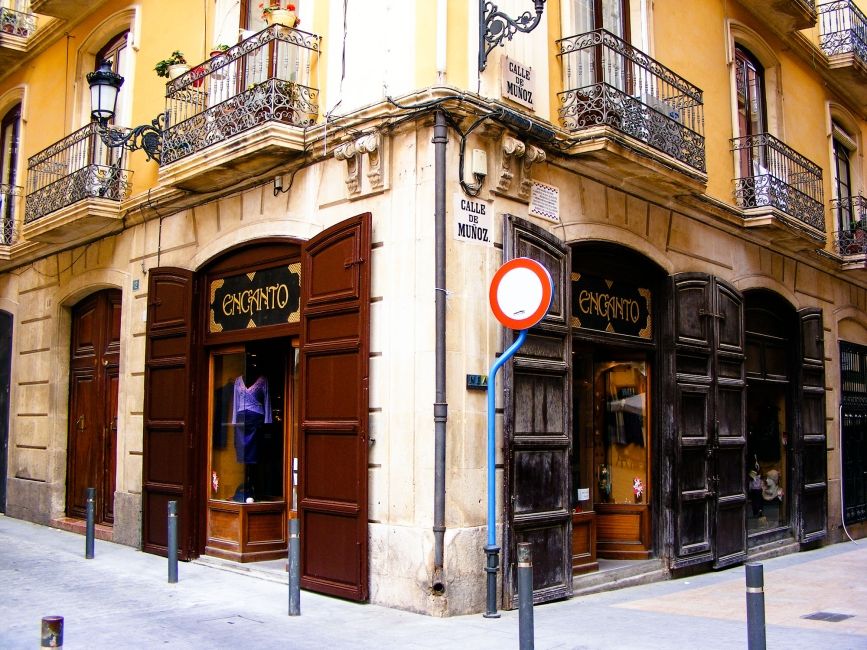
Unique Experiences
Immerse yourself in Spanish life
by living with a local family in Alicante
Join a community of learners
at Universidad de Alicante, a modern university that brings together students from Spain and around the world
Expand your Spanish adventure
by exploring other cities like Madrid, Valencia, Barcelona, Murcia, or Granada

Your Destination
Alicante is Spain’s vibrant, cosmopolitan city, celebrated for its rich history, diverse cultural heritage, and dynamic bilingual community. From the medieval streets of the Castle of Santa Barbara to the stunning beaches and award-winning museums, the city offers endless inspiration for students. Whether exploring the city’s medieval past or engaging with the city's thriving bilingual communities, where Castilian Spanish and Valenciano coexist, Alicante is the perfect place to study language and culture abroad.

Program highlights
- Academic Courses: Choose from CIEE courses, host institution courses, and online courses delivered by CIEE’s global partner, ASU, that align with your academic major.
- Optional Internship Placements: Enhance your program with an optional for-credit internship that aligns with your career aspirations.
- Immersive Experiences: Participate in activities, excursions, study tours, and more that showcase your host city's culture, values, and local art, film, music, cuisine, and sports scenes.
- Cultural Projects: Volunteer with members of the local community, join student clubs to socialize with your peers, and attend local workshops and events to get to know your host city.

Excursions & Activities
CIEE’s excursions and cultural activities in Alicante will open doors for you to explore Spain’s rich diversity, language, culture, history, and timeless beauty in ways that will enhance your time abroad.
Samples of past excursions and activities:
- Discover natural wonders in Alicante Province, from Guadalest Castle and Canelobre Caves to Algar Waterfalls and Altea
- Immerse in local culture through neighborhood tours, tapas cooking, and experiences with Spanish peers
- Take day trips to explore the Alicante Province or the Valencia region
Please note: Activities are based on past programs and subject to change at CIEE's discretion to adapt to local circumstances and participant feedback. Our goal when arranging activities is always to enhance your experience.
Program Blogs
Visit to an organic farm
Our Sustainable Food Systems course visited the Cel y Sòl ("Sky and Sun" in Catalan) Farm to learn more about agriculture in Spain, and how it compares wtih the US... keep reading

Indispensable stop in Alicante: The Central Market
The Central Market of Alicante can stimulate your five senses. It is a compendium of smells and colors. Fish stalls are a good example. It is very nice to walk... keep reading
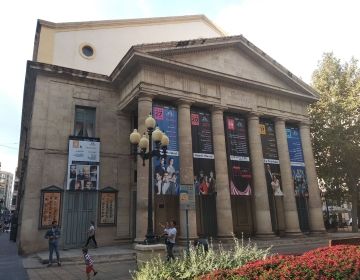
Alicante, city of culture: Teatro Principal
Today I am going to introduce the theater of Alicante, called 'Teatro Principal'. Alicante is a relatively small city, as it has at about 330.000 inhabitants. However, there are many... keep reading
Housing & Meals
Housing
CIEE Alicante offers diverse housing options to ensure that you are comfortable in your home away from home. From homestays to shared apartments or residence halls, we will strive for your accommodation preferences to be met. Additionally, all housing options are located in neighborhoods with convenient access to public transportation, shops, cafés, and eateries.
Standard Housing: Includes a room at a homestay or a shared apartment.
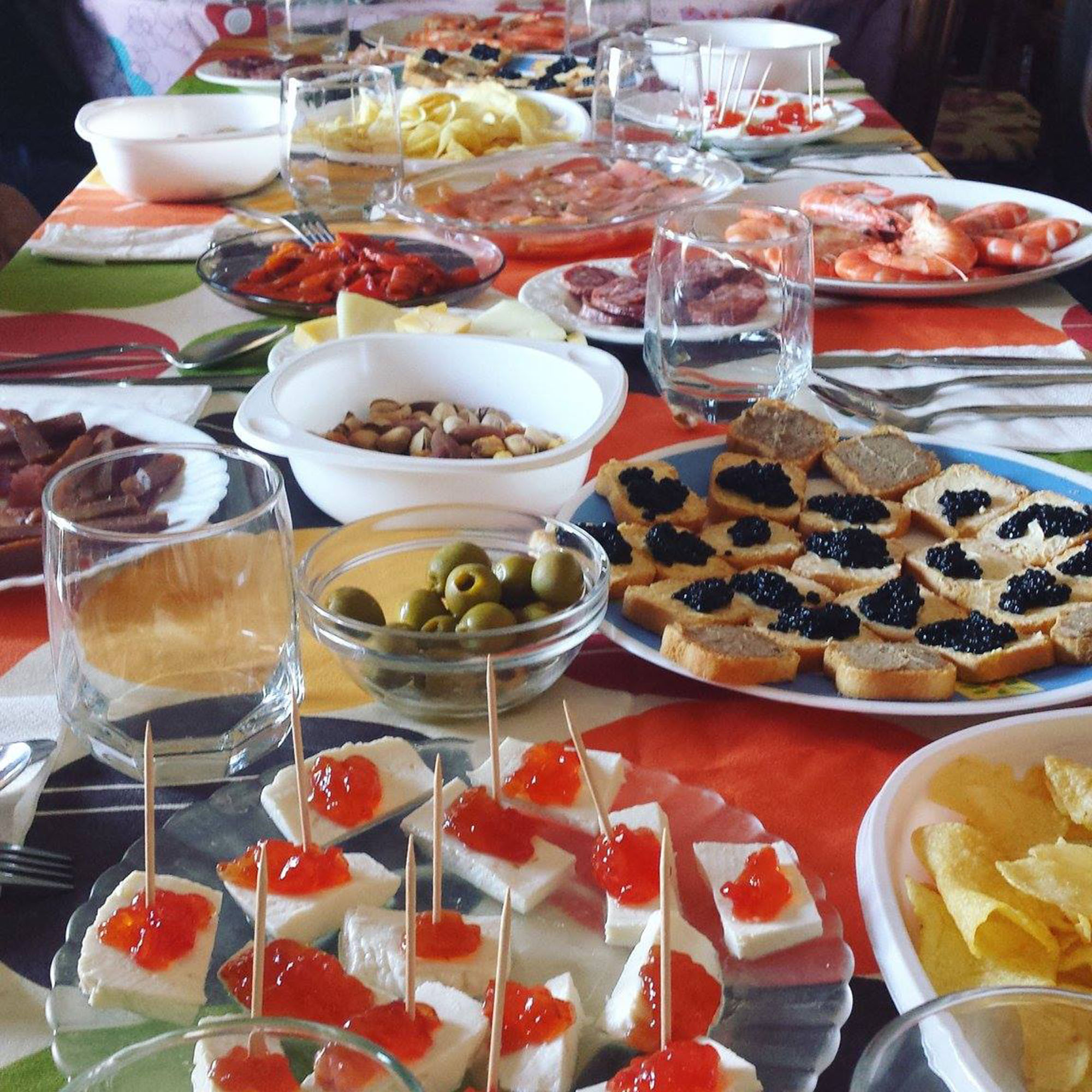
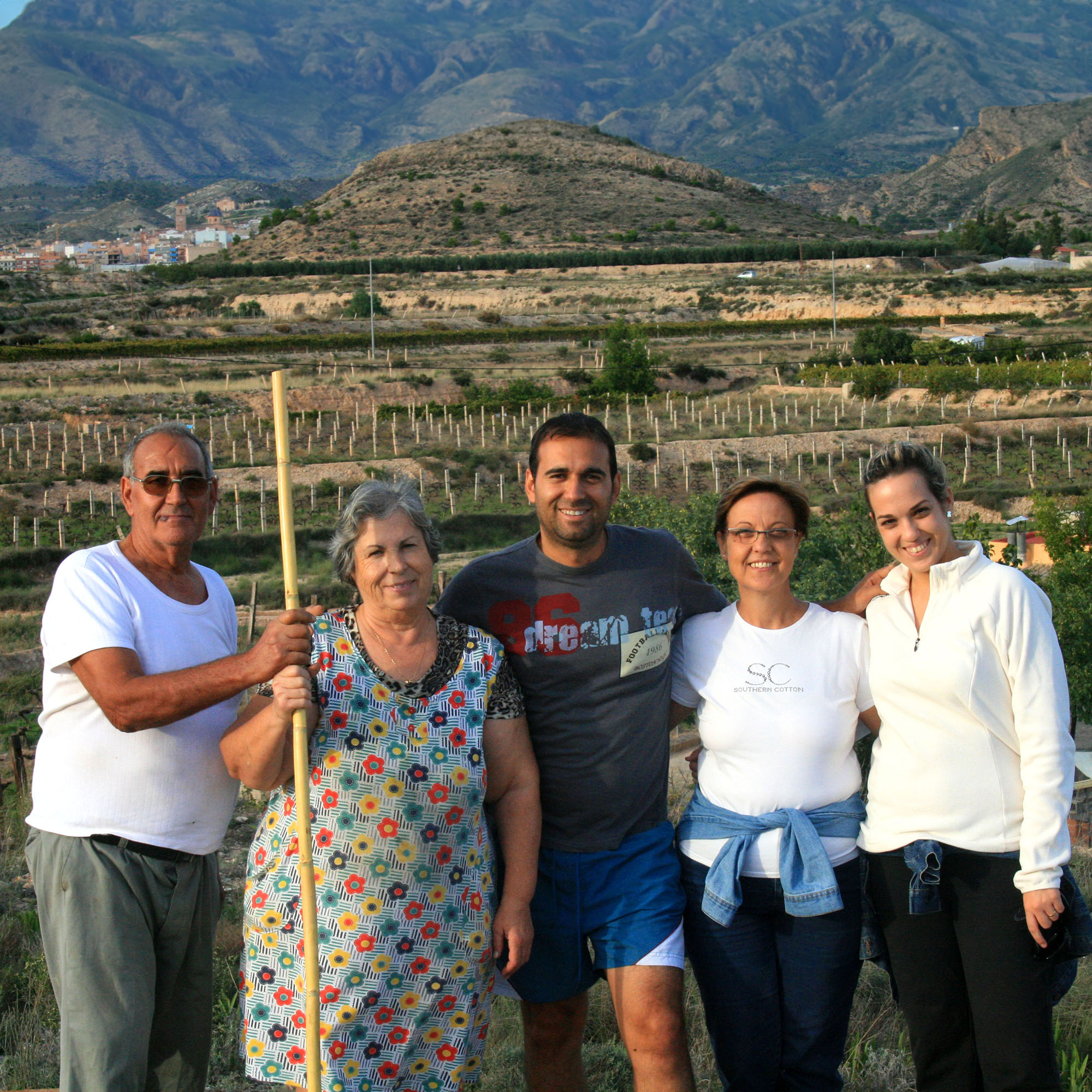
- Homestays: Students live with a Spanish-speaking family, with or without another CIEE student, and immerse themselves in the city’s language and culture. Homestays boast a kitchen, living room, and bathroom shared with a host family, but each student has an individual room, and three meals a day are provided. Host families are located in the city center, under a 30-minute commute from CIEE Alicante and the University Campus.
- Shared apartments: Students share a double room with other CIEE students with access to the kitchen, laundry, and shared common spaces. Apartments are located within 30 minutes of the city center, CIEE Alicante, and the University Campus. Meals are not included.
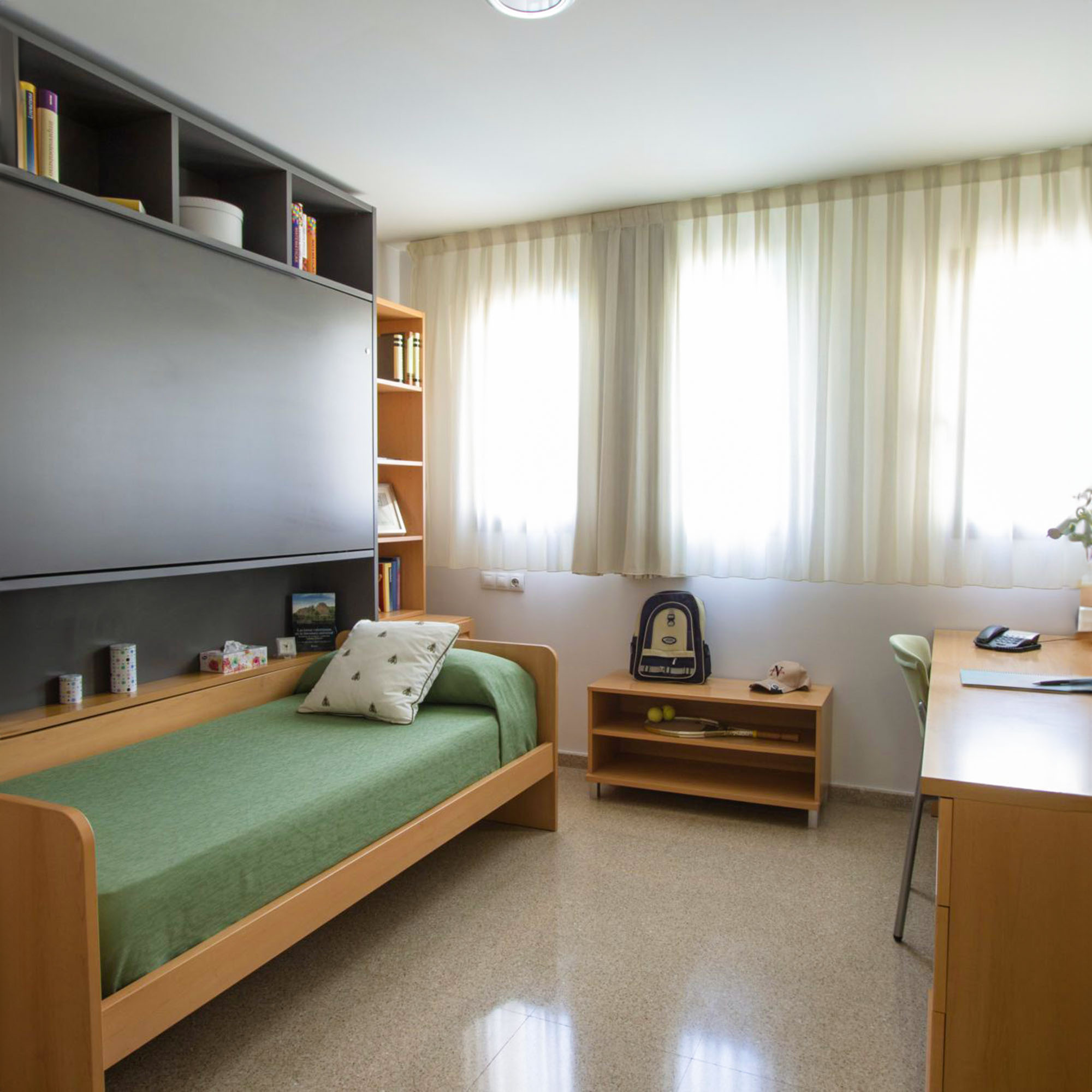
Select Housing: Includes a single room in a residence hall near CIEE Alicante and the University Campus, and about 30 minutes from the city center. Students living in residence halls have kitchen access, and meals are not included. Residence Halls also boast common areas and laundry facilities. Select housing requires an additional fee.
Select Plus Housing: Includes a single room in a shared apartment with other CIEE students with access to a kitchen, laundry facilities, and shared common spaces. Shared apartments are located in the city center, roughly 30 minutes from CIEE Alicante and the University Campus. Meals are not included. Select Plus housing requires an additional fee.
A note: The default criterion to assign housing is first-come, first-served; however, other factors may also be considered. If we cannot accommodate your first housing choice, we'll let you know before you arrive. Non-standard housing options require an additional fee that can be found in the program Dates and Fees.
Meals
- Homestays: Three meals per day are provided by your host
- Apartments: Meals are not included
- Residence Hall: Meals are not included

Academics
CIEE Alicante: Study on the main campus of the University of Alicante (Universidad de Alicante in San Vicente). CIEE Alicante is situated in the northwestern region of the city, roughly 20 minutes from top sites like the Santa Barbara Castle and Parc de l’Ereta.
University of Alicante: The University of Alicante (Universidad de Alicante) is a public university located in San Vicente del Raspeig, near the city of Alicante, Spain. Established in 1979, it offers a wide range of undergraduate and postgraduate programs across disciplines such as humanities, sciences, engineering, health sciences, social sciences, and law. Known for its modern campus, strong international focus, and research initiatives, the university fosters innovation and collaboration in a Mediterranean setting.
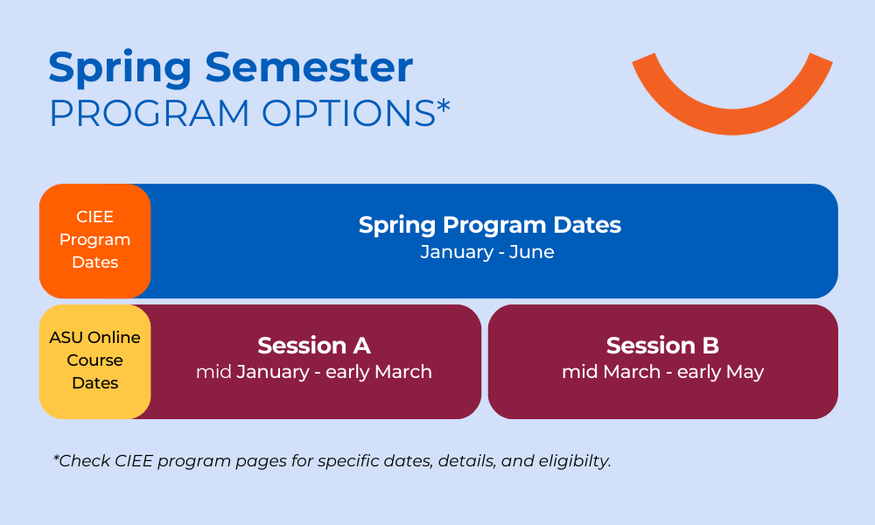
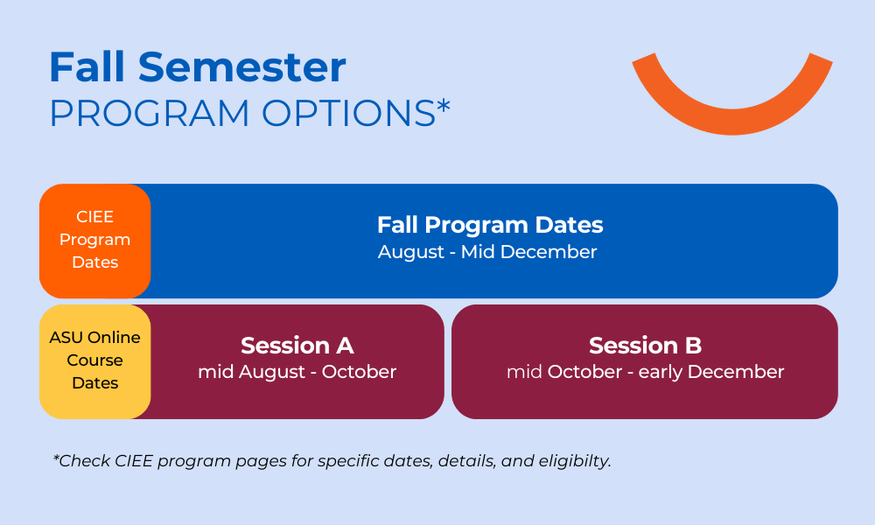
Arizona State University (ASU): Brought to you by CIEE in partnership with ASU, enhance your international coursework with online classes that align with your degree requirements. ASU offers thousands of online courses in asynchronous 7.5-week sessions that fit within the CIEE academic calendar.
Course Information
Spring: Direct enrollment courses at the University of Alicante end one week later than CIEE courses, with exams held after program end dates. Students may either take a proctored exam from the U.S. on the official exam date or arrange with their professor to take the exam before the program ends. This option is determined by each professor and can only be confirmed onsite, so students should plan their return travel accordingly. Housing will be guaranteed until the end of direct enrollment courses.
Academic Projects
Communication, Journalism, and Media
History, Philosophy, Religion
Languages and Cultural Studies
Literature, Linguistics, and Writing
Social Sciences
Visual and Performing Arts
Agriculture
Business, Economics, Management, and Marketing
Academic Projects
Communication, Journalism, and Media
History, Philosophy, Religion
Languages and Cultural Studies
Literature, Linguistics, and Writing
Social Sciences
Visual and Performing Arts
Business, Economics, Management, and Marketing
University of Alicante
Course offerings may vary from semester to semester. Courses are 4 U.S. credits unless otherwise noted.
UA Centro Superior de Idiomas (CSI) language courses:
- Beginner A1 (Equivalent to Novice Low or Novice Mid on the ACTFL scale, or the level of a basic learner who can communicate with simple words and phrases in very familiar situations)
- Intermediate A2 (Equivalent to Novice High or Intermediate Low on the ACTFL scale, or the level of a learner who can handle short, routine interactions and express simple ideas about everyday topics)
- Upper Intermediate B1 (Equivalent to a high-intermediate level in the U.S. system, often called Intermediate High in ACTFL or Level 3–4 in language schools)
- Advanced B2 (Equivalent to an Advanced or Upper Intermediate High level in the U.S., or Intermediate High to Advanced Low on the ACTFL scale)
- Proficiency C1 (Equivalent to Advanced High or Superior on the ACTFL scale, or the level of a fluent non-native speaker in a U.S. university or workplace)
UA Centro Superior de Idiomas (CSI) Spanish culture courses in English:
- Intercultural Communication in Professional Contexts
- Spanish Cultures from an Intercultural Perspective
UA Centro Superior de Idiomas (CSI) Spanish culture courses in Spanish:
- Español de los negocios (in Spanish) (Spanish for business). Pre-requisite: Intermediate 1 (A2).
- Turismo y cultura gastronómica española (in Spanish) (Spanish tourism and gastronomy). Pre-requisite: Intermediate 1 (A2).
- Transformaciones en la españa contemporánea: género, migración y diversidad (in Spanish) (Transformations, in contemporary Spain: gender, migration and diversity) La sociedad española del siglo XX a través de la literatura (in Spanish) (The Spanish society of the 20th century through literature). Pre-requisite: Upper Intermediate (B1).
- Enseñanza del español como L2/LE (in Spanish) (Teaching Spanish as a foreign language). Pre-requisite: Advanced 1 (B2).
The University of Alicante offers a variety of courses in English:
SOCIAL SCIENCES & LAW
Business and Economics
- Spring Semester
- Market Research I
- Art Management
- Business Creation
- English For Advertising And Public Relations
- Human Resources Management
- Intermediate Macroeconomics
- International Corporate Strategy And Management
- Introduction To Statistics
- Mathematics II
- Operations Management
- Organizational Design
- Audiovisual Media Production
- Quality And Environmental Management
- Research In Tourism
- Sociology Of Deviance
- Sociology Of Migration
- Strategic Business Management II
- Strategic Marketing
- Introduction To Macroeconomics (Degree In Business Administration)
- Marketing Research
- Fall Semester
- Fundamentals Of Social Work
- Commercial Distribution
- Contemporary Economic, Social And Political History
- Creative Strategy And Conceptualisation
- Fundamentals Of Business Economics
- Intermediate Microeconomics
- International And Spanish Economic History (19th & 20th Centuries)
- Economic Policy
- Social Change And Communication
- Sociology Of Consumption
- Statistics And Introduction To Econometrics
- Strategic Business Management I
- World Economic History (19th And 20th Centuries)
- History Of Economic Analysis
- Introduction To Microeconomics (Degree In Business Administration)
- Mathematics I (Degree In Business Administration)
- Economics Of Development
Law
- Spring Semester
- Introduction To Political Science
- Research Methods In The Social Sciences
- Introduction To Civil Law And Personal Law
- Introduction To Procedural Law
- Philosophy Of The Law
- Financial And Tax Law II
- Sociology Of International Relations
- Fall Semester
- Introduction To Sociology
- Sociology Of Law
- Quantitative And Qualitative Research Techniques
- History Of Spanish Law And Institutions
- Theory Of Law
- Financial And Tax Law I
- Private International Law
- The Spanish Constitution And Its Sources
- Private International Law In The Multicultural Society
- Design And Management Of International Business
- International Taxation
- Procedural Law
Tourism
- Spring Semester
- Cultural Heritage (*)
- Tourist Territorial Resources (*)
- Human Resource Management And Planning In Tourism Organisations (*)
- Sociology Of Tourism (*)
- Operations And Production Processes In Tourism Companies (*)
- Regional Tourism Planning (*)
- Anthropology Of Tourism (*)
- Computer Science Applied To Tourism (*)
(*) Registration on this course could be subject to the availability of places in the group.
- Fall Semester
- Introduction To Economics (*)
- Introduction To The Geography Of Tourism (*)
- Tourism Market Research (*)
- Civil Legislation For Tourism (*)
- Fundamentals Of Business Economics (*)
- Market Structures (*)
- Accounting (*)
- Global Economics Of Tourism (*)
- Advertising And Public Relations In Tourism
- Typologies Of Tourist Sites (*)
- Cultural Heritage (*)
- Tourist Territorial Resources (*)
- Human Resource Management And Planning In Tourism Organisations (*)
- Sociology Of Tourism (*)
- Operations And Production Processes In Tourism Companies (*)
- Regional Tourism Planning (*)
- Anthropology Of Tourism (*)
- Computer Science Applied To Tourism (*)
(*) Registration on this course could be subject to the availability of places in the group.
SCIENCES
Biology
- Spring Semester
- Biochemistry I
- Cellular Biology
- Introduction To Research In Biology
- Ecology
- Plant Biodiversity
- Plant Physiology: Nutrition, Transport And Metabolism
- Molecular Techniques
- Structural And Functional Techniques
- Modelling Ecological Systems
- Fall Semester
- Chemistry
- Fundamentals Of Mathematics
- Physics
- Botany
- Ecology Of Populations And Communities
- Advanced Microbiology
- Advanced Genetics
Mathematics
- Spring Semester
- Game Theory
- Time Series
Chemistry
- Spring Semester
- Inorganic Solids
- Advanced Organic Chemistry
- Quality In Analytical Laboratories
- Fall Semester
- Organic Chemistry
- Thermodynamic Chemistry
- Advanced Physical Chemistry
- Inorganic Chemistry
ENGINEERING & ARCHITECTURE
Architectural Technology/Fundamentals of Architecture
- Spring Semester
- Applied Physics 1
- Urban Planning 3
- Structures 2
- Urban Planning 5
- Structures 3
- Drawing 2
- Drawing 3
- The Structure In An Architectural Project
- Building Construction Workshop
- Project Management
- Graphic Analysis And Ideation 1
- Mathematics Fundamentals 2
- Advanced Building Systems
- Architecture Design Studio 7
- Fall Semester
- Fundamentals Of Mathematics 1
- Applied Physics 2
- Architecture Design Studio 4
- Architecture Theory 3
- Urban Planning 2
- Urban Planning 1
- Basic Building Systems
- Architecture Design Studio 6
- Urban Planning 4
- Singular Building Systems
- Graphic Analysis And Ideation 12
Civil Engineering
- Spring Semester
- Mechanics For Engineers
- Reinforced And Pre-Stressed Concrete Structures
- Roads And Airports
- Construction Materials II
- Fall Semester
- Fundamentals Of Chemistry In Civil Engineering
- Urban Planning And The Environment
- Metallic Structures
- Port And Coastal Engineering
- Geotechnical Constructions
- Construction Materials I
- Building And Construction Industrialized
Telecommunications
- Spring Semester
- Digital Electronics
- Communication Theory
- Digital Electronic Systems
- Digital Signal Processing
- Video Engineering
- Computers
- Fundamentals Of Engineering Physics II
- Transmission Media
- Fall Semester
- Basic Electronics
- Circuit Analysis
- Fundamentals Of Engineering Physics I
- Basic Mathematics
- Acoustics
- Analog Electronics
- Fundamentals Of Engineering Optics
- Television
- Networks
- Digital Audio Processing
- Digital Image Processing
- Mathematics II
- Advanced Audiovisual Systems
Computer Engineering
- Spring Semester
- Discrete Mathematics
- Mathematics Ii
- Programming Ii
- Computer Structure
- Advanced Software Development
- Computer Architecture
- Software System Design
- Database Fundamentals
- Physical Foundation Of Computer Science
- Fall Semester
- Programming I
- Mathematics I
- Programming Iii
- Operating Systems
- Database Design
- Operating Systems And Computer Networks Administration
- Distributed Systems
- Computer Engineering
Chemical Engineering
- Fall Semester
- Reactor Design I
- Simulation, Optimisation And Design Of Chemical Processes
- Applied Physical Chemistry
HEALTH SCIENCES
Nursing
- Spring Semester
- Psychology
- Fall Semester
- Biostatistics
Optics
- Spring Semester
- New Advances In Contact Lenses
EDUCATION
Education
- Spring Semester
- English: Literacy And Text-Based Teaching Methodology Inprimary Education
- Basic Physiology
- Teaching Intervention In Physical Activity And Sports
- Physical-Recreational Activities In The Natural Environment
- Individual Sports II
- Team Sports II
- Physical-Recreational Activities In The Natural Environment
- Meeting Specific Educational Needs
- Teaching Mathematics: Geometric Sense
- Physical Activity For People With Functional Diversity
- Teaching And Learning Experimental Sciences II
- Teaching Social Sciences: History
- Teaching And Learning Mathematics In Primary Education
- Evaluation In Physical Education
- Independent English User
- English: Reading And Writing And Teaching Methodology Based Text
- Educational Psychology
- Social, Cultural And Educational Changes
- Teaching Mathematics: Number Sense
- English Language Teaching
- Fall Semester
- Psychology Applied Physical Activity And The Sport Science
- Fundamentals For Movement Control And Motor Skills Learning
- Exercise And Training Physiology
- Team Sports
- Sea Sports
- Theory Ans Practice Of Sports Training
- Physical Activity And Quality Of Life
- Prescription Of Physical Activity In Special Populations
- Management And Innovation In Educational Contexts
- Learning Difficulties And Developmental Disorders
- Teaching And Learning Experimental Sciences I
- Teaching Social Sciences: Geography
- Teaching Artistic Expression
- Integrating Communication Skills
- Content And Language Integrated Learning (Clil)
- English Language Teaching In Pre-School Education
ARTS & HUMANITIES
Language and Linguistics
- Spring Semester
- Linguistics Applied To Teaching English
- General Linguistics I
- English Phonetics And Phonology
- English Pronunciation
- English Lexicology
- Stylistic Analysis Of English Texts
- Intercultural Pragmatics In English
- Influence Of English On Modern Languages
- Fall Semester
- General Linguistics II
- Effective Communication In English I
- Effective Communication In English II
- English Pragmatics
- Slang And Colloquialisms In The English Language
- Professional And Academic English
- History Of The English Language
- The English Language Classroom And Ict
- Discourse And Society In English-Speaking Contexts
Literary and Cultural Studies
- Spring Semester
- Literature And Visual And Artistic Culture In The English Language Classroom
- Culture Of English-Speaking Countries
- Theory Of Literature II
- Mediaeval English Literature
- Major Figures In English Literature I
- Major Figures In English Literature II
- Innovation In The History Of English Literature
- North American Literature Up To The End Of The 19th Century
- Contemporary English Literature
- 18th Century English Literature
- English Renaissance Literature
- English Theatre Up To The 17th Century
- Fall Semester
- English For Specific Purposes: Cultural Management
- Theory Of Literature I
- Literature And Cinema In English-Speaking Countries (*)
- Modern English Literature
- 19th Century English Literature
- Modern And Contemporary North American Literature
- Anglo-American Criticism
- Culture And Institutions In English-Speaking Countries
- Theory Of Literature I
Translation & Interpreting
Please know that most courses will require specific level of Spanish
- Spring Semester
- General Reverse Translation A-B: Spanish-English
- General Direct Translation C-A (I): English-Spanish
- Economic, Commercial And Financial Translation: B-A/A-B (II): English-Spanish/Spanish-English
- General Reverse Translation A-C: Spanish-English
- Legal-Administrative Translation B-A/A-B (I): English-Spanish/Spanish-English
- Advanced Legal-Administrative Translation B-A/A-B: English-Spanish Spanish-English
- Interpreting B-A/A-B (III): English-Spanish/Spanish-English (*)
- Audiovisual Translation B-A/A-B: English-Spanish/Spanish-English (*)
- Literary Translation B-A/A-B: English-Spanish/Spanish-English
- Interpreting B-A/A-B (I): English-Spanish/Spanish-English (*)
- Fall Semester
- Linguistics Applied To Translation
- General Direct Translation C-A (II): English-Spanish
- Legal-Administrative Translation B-A/A-B (II): English-Spanish/Spanish-English
- Bilingual Terminology: English
- Scientific And Technical Translation B-A/A-B: English-Spanish/Spanish-English
- Linguistic And Cultural Contrasts In The B Language: English
- Interpreting B-A/A-B (II): English-Spanish/Spanish-English (*)
- Economic, Commercial And Financial Translation: B-A/A-B (I): English-Spanish/Spanish-English
- Advanced Literary Translation B-A/A-B: English-Spanish/Spanish-English
Humanities, History and Geography
- Spring Semester
- Geography Of World Regions
- Fall Semester
- Introduction To Human Geography
UA regular courses in Spanish:
https://web.ua.es/en/official-undergraduate-degrees.html
Language Pre-requisite: It is recommended that students have a minimum of four (preferably five) previous semesters of college-level Spanish.
ARTS & HUMANITIES
- Spanish: Language and Literature
- Arabic & Islamic Studies
- French Studies
- English Studies
- Catalan Studies
- History
- Humanities
- Translation and Interpreting
- Translation and Interpreting (German)
- Translation and Interpreting (English)
- Translation and Interpreting (French)
SCIENCES
- Biology
- Marine Studies
- Physics
- Physics + Mathematics (FISMAT)
(Begin 2024-25) - Geology
- Mathematics
- Chemistry
HEALTH SCIENCES
- Nursing
- Human Nutrition & Dietetics
- Medicine
- Optics and Optometry
- Speech Therapy (Begin 2024-25)
SOCIAL & LEGAL SCIENCES
- Business Administration (ADE)
- Physical Activity and Sports Sciences
- Criminology
- Law
- Law + Business Administration (DADE)
- Law + Criminology (DECRIM)
- Law + International Relations (DERRII)
- Economics
- Geography and Land Use Planning
- Public Management & Administration
- Pre-school Education Speciality
- Primary Education Speciality
- Publicity and Public Relations
- International Relations
- Labour Relations and Human Resources
- Labour Relations and Human Resources (EURLE Elda)
- Sociology
- Social Work
- Tourism
- Tourism + Business Administration (TADE)
- Gastronomy and Culinary arts
- Marketing
ENGINEERING & ARCHITECTURE
- Aerospace Engineering (Begin 2024-25)
- Architectural Technology
- Architecture
- (Enrolment restricted to continuing students. This degree has been replaced by Fundamentals of Architecture)
- Artificial Intelligence Engineering
- Biomedical Engineering
- Chemical Engineering
- Civil Engineering
- Computer Engineering
- Computer Engineering + ADE (I2ADE)
- Fundamentals of Architecture
- Multimedia Engineering
- Robotic Engineering
- Sound and Image in Telecommunication Engineering
CIEE proudly partners with ASU to deliver asynchronous, online coursework that aligns with your degree requirements from anywhere you study abroad.
CIEE and ASU offer courses online per program eligibility, at no additional charge. Be sure to review online courses with your home school advisor.
Check the CIEE Program Dates and ASU start dates below to maximize course options within your program!
Search ASU Online Courses BROWSE FAQs for more INFO
Note: This course listing is for informational purposes only and does not constitute a contract between CIEE and any applicant, student, institution, or other party. The courses, as described, may be subject to change as a result of ongoing curricular revisions, assignment of lecturers and teaching staff, and program development. Courses may be canceled due to insufficient enrollment.
"(GI)" denotes courses that originated at CIEE's Global Institutes and that are offered at multiple CIEE sites.
Scholarships & Grants
CIEE offers scholarships and grants annually to help students like you make your study abroad dream a reality.
Students who apply to this program are eligible for the following scholarships and grants:
- Ping Scholarships for Academic Excellence
- Global Access Initiative (GAIN) Travel Grants
- CIEE Gilman Go Global Grant
- Global Access Initiative (GAIN) Scholars Grants
To be considered, submit the CIEE Scholarships & Grants application within your CIEE program application.
Dates & Fees
You get more for every dollar when you study abroad with CIEE, because our high-quality programs include everything from excursions to insurance. There are no hidden charges, and no disappointing surprises when you arrive.
Program |
Application Due |
Start Date |
End Date |
Fees & Housing |
|---|---|---|---|---|
| Program Spring 2027 17 weeks | Application Due Deadline Passed | Start Date | End Date | Fees & Housing $17,850 |
| Program Spring 2028 17 weeks | Start Date * | End Date * | ||
| Program Fall 2026 16 weeks | Application Due Deadline Passed | Start Date | End Date | Fees & Housing $16,950 |
*Dates for this program are provided as tentative dates. Please consult with your study abroad advisor to confirm dates before purchasing your flights.
To help you budget, keep in mind that students are responsible for the cost of international airfare, local transportation, books and supplies, visas, and personal expenses. In addition, ask your college or university study abroad advisor if your school charges additional fees for study abroad.
Program Fees
CIEE offers the most student support of any provider in its program fee, including an airport greeting, full-time leadership and support, orientation, cultural activities, local excursions, pre-departure advising, and CIEE iNext travel protection with benefits.
| Participation Confirmation | $500 * |
| Educational Costs | $11,406 ** |
| Housing | $5,750 *** |
| Insurance | $194 |
| Total Fees | $17,850 |
Optional Housing
CIEE accommodation options are detailed in the Housing section. Based on availability, Select or Select Plus Housing can be chosen during the application process for an additional fee. Housing is assigned on a first-come, first-served basis; however, other factors may also be considered.
| Select Housing Fee | $1,275 |
| Select Plus Housing Fee | $1,700 |
Financial Aid
CIEE offers the most grants and scholarships of any study abroad organization, including $8 million/year in travel grants, merit-based scholarships, institutional grants, and Gilman Go Global Grants.
Estimated Costs
Students are responsible and manage costs related to travel, meals, books, and personal expenses. Below are estimates for consideration.
| Meals not included in program fee | $505 † |
| International Airfare | $1,250 †† |
| Local Transportation | $150 |
| Books & Supplies | $60 |
| Visa Fees | $160 |
| Potential travel to consulate for visa | $500 |
| Personal expenses | $1,013 ††† |
| Total Costs | $3,638 |
*non-refundable fee
**Direct cost of education charged uniformly to all students
***Housing fees listed are for financial aid purposes only and should not be considered a basis for calculation of refunds.
†For students in homestays, families provide all meals (breakfast, lunch and dinner). The listed estimated cost is optional for dining out once per week ($505). Budget more money if you plan on eating out regularly. For students in residence halls/apartments, you should budget approx. $266 per month for groceries if you plan on making your own meals, and more if you plan on eating out regularly.
††Round-trip based on U.S. East Coast departure
†††Personal expenses may include but are not limited to the following: taxis, social activities and entertainment, toiletries, cell phone (low-cost SIM card with a 30GB-50GB data plan). Does not include personal travel.
Program Fees
CIEE offers the most student support of any provider in its program fee, including an airport greeting, full-time leadership and support, orientation, cultural activities, local excursions, pre-departure advising, and CIEE iNext travel protection with benefits.
Financial Aid
CIEE offers the most grants and scholarships of any study abroad organization, including $8 million/year in travel grants, merit-based scholarships, institutional grants, and Gilman Go Global Grants.
Estimated Costs
Students are responsible and manage costs related to travel, meals, books, and personal expenses. Below are estimates for consideration.
Program Fees
CIEE offers the most student support of any provider in its program fee, including an airport greeting, full-time leadership and support, orientation, cultural activities, local excursions, pre-departure advising, and CIEE iNext travel protection with benefits.
| Participation Confirmation | $300 * |
| Educational Costs | $11,756 ** |
| Housing | $4,700 *** |
| Insurance | $194 |
| Total Fees | $16,950 |
Optional Housing
CIEE accommodation options are detailed in the Housing section. Based on availability, Select or Select Plus Housing can be chosen during the application process for an additional fee. Housing is assigned on a first-come, first-served basis; however, other factors may also be considered.
| Select Housing Fee | $1,200 |
| Select Plus Housing Fee | $1,600 |
Financial Aid
CIEE offers the most grants and scholarships of any study abroad organization, including $8 million/year in travel grants, merit-based scholarships, institutional grants, and Gilman Go Global Grants.
Estimated Costs
Students are responsible and manage costs related to travel, meals, books, and personal expenses. Below are estimates for consideration.
| Meals not included in program fee | $0 † |
| International Airfare | $1,250 †† |
| Local Transportation | $150 |
| Books & Supplies | $60 |
| Visa Fees | $160 |
| Potential travel to consulate for visa | $500 |
| Personal expenses | $210 ††† |
| Total Costs | $2,330 |
*non-refundable fee
**Direct cost of education charged uniformly to all students
***Housing fees listed are for financial aid purposes only and should not be considered a basis for calculation of refunds.
†For students in homestays, families provide all meals (breakfast, lunch and dinner). For students in residence halls/apartments, you should budget approx. $265 per month for groceries if you plan on making your own meals, and more if you plan on eating out regularly.
††Round-trip based on U.S. East Coast departure
†††$100 emergency fund + cell phone expense (low-cost SIM card with a 30GB-50GB data plan) + toiletries
What's Included
Tuition
Housing
Pre-departure Advising
Advising before you depart to set goals and answer questions
Optional on-site airport meet-and-greet
Orientation
Introduction to your program plus practical information about living in your host city
On-site Staff
Full-time program leadership and support in your city
Cultural and/or Co-curricular Activities
Excursions and/or Study Tours
Travel Protection
CIEE iNext travel protection
24/7 emergency on-site support
Our Staff

Rocío Díez
Center Director

Vanesa Ruiz
Program Manager
Vanesa was born and raised in Alicante and earned her BA in English Studies from Universidad de Alicante and a MA in Teaching. She has been working in the field...
Get Started
1
2
Connect With Your Campus Study Abroad Office
Share your plans and confirm you're on track to meet all required steps to go abroad.
3
Contact Us
Send us an email if you still have questions or need information about applying to this program.
You might also like

- Barcelona, Spain
- Study Program
...for 1, 2, or 3 term blocks!

- Madrid, Spain
- Study Program
- Part-Time Internship
...for 1, 2, or 3 term blocks!

- Seville, Spain
- Study Program
...for 1, 2, or 3 term blocks!