
Global Architecture + Design



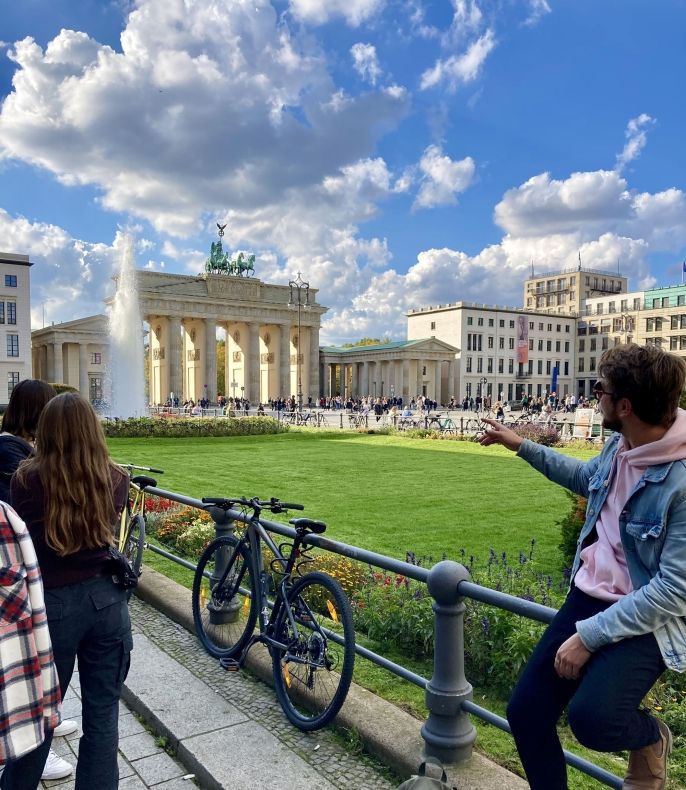
Unique Experiences
Explore sustainable development in Berlin
with guided visits to experimental cooperative housing at Spreefeld
Delve into a range of architectural styles
showcasing the works of international artists on remnants of the Berlin Wall
Participate in a groundbreaking design
to improve city living

Your Destination
Berlin is Germany’s architectural powerhouse, offering an inspiring landscape for students interested in global architecture and design. The city’s iconic blend of neoclassical, Bauhaus, and contemporary styles is most famously embodied in the works of architects like Walter Gropius and makes it a living classroom for design enthusiasts. Whether you are sketching façades in Mitte or studying sustainable design in modern neighborhoods, Berlin is the perfect place to study abroad.

Program Highlights
- Academic Courses: Choose from CIEE courses and online courses delivered by CIEE’s global partner, ASU, that align with your academic major.
- Immersive Experiences: Participate in activities, excursions, study tours, and more that showcase your host city's culture, values, and local art, film, music, cuisine, and sports scenes.

Excursions & Activities
CIEE’s excursions and cultural activities in Berlin will open doors for you to explore Germany's rich diversity, language, culture, history, and timeless beauty in ways that will enhance your time abroad.
Samples of past excursions and activities:
- Soak in artistic inspiration from Europe’s largest street art gallery, Teufelsberg, housing in an abandoned Cold War spy station
- Visit landmarks by celebrated architects, such as the Reichstag Dome by Foster and Partners
- Explore innovative projects such as Spreefeld, an experimental sustainable housing cooperative
Please note: Activities are based on past programs and subject to change at CIEE's discretion to adapt to local circumstances and participant feedback. Our goal when arranging activities is always to enhance your experience.
Program Blogs

German vs. Portuguese: Key Differences & Similarities
German and Portuguese are worlds apart in some ways, yet closer than you might think in others. From German's precise grammar to Portuguese's melodic flow, both languages open doors to... keep reading

What Subjects Can You Study Abroad: Top 16 [2025]
While you excitedly explore CIEE Study Abroad locations and specific program options, don’t forget to look for study abroad courses in specific areas of study, too! Being in the classroom... keep reading

"Studying in Berlin has made us more independent and at the same time adaptable to new experiences"
Lily and Andrew are both High School students from the US living in Berlin since August 2022. They just finished their study abroad program where they were able to live... keep reading
Housing & Meals
Housing
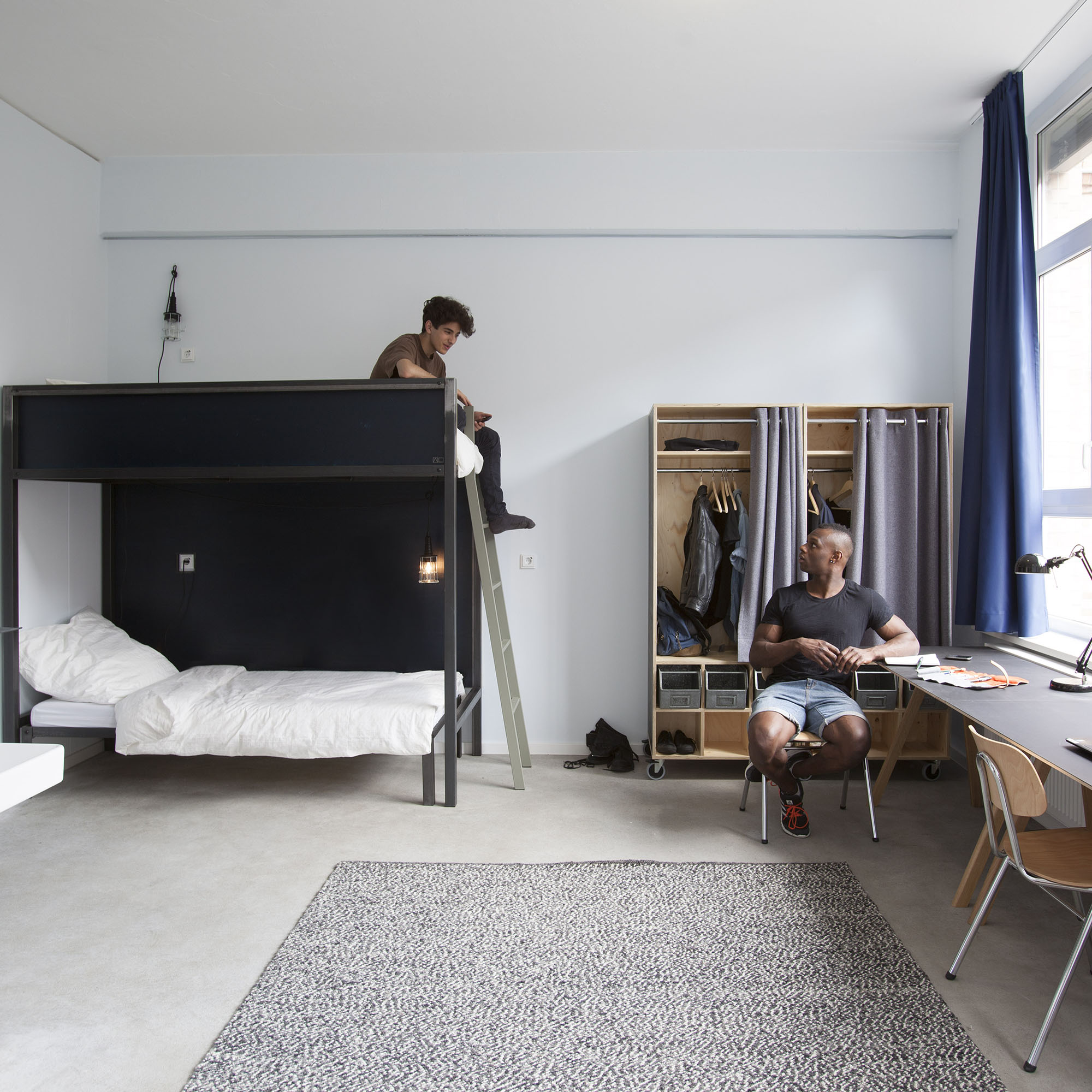
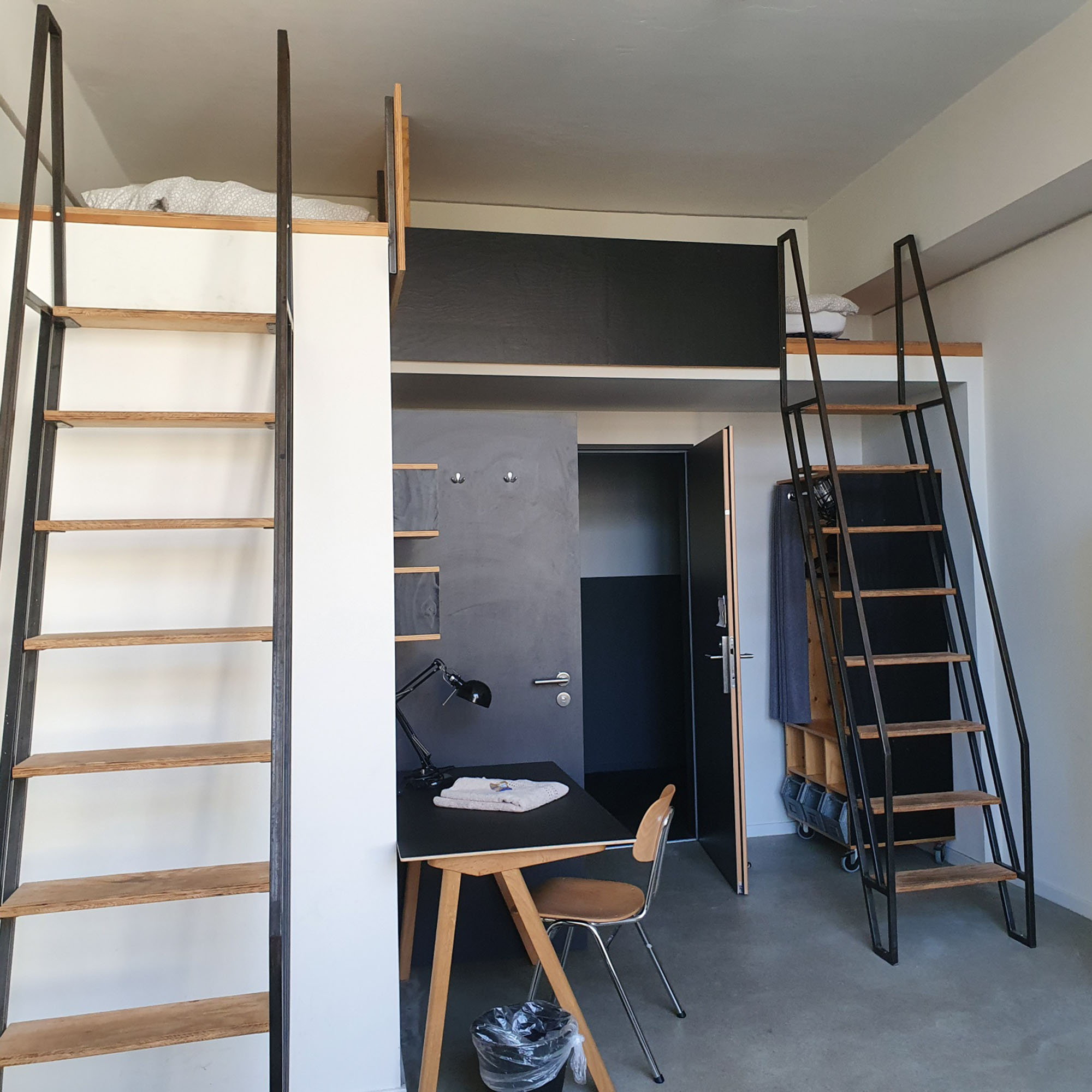
CIEE Berlin offers a variety of housing options to ensure you're comfortable in your home away from home. Your accommodation preferences will be met in the form of residence halls, homestays, and shared apartments. Additionally, all housing options are located in neighborhoods with convenient access to public transportation, shops, and restaurants. Most students live in an on-campus residence hall with a mix of CIEE students and resident assistants.
Standard Housing: Includes one of the following options: (1) a single room at a homestay, or (2) accommodation in a triple or quad room at CIEE Berlin’s G27 residence hall.
- Homestays feature a kitchen, living room, and bathroom shared with a host family.
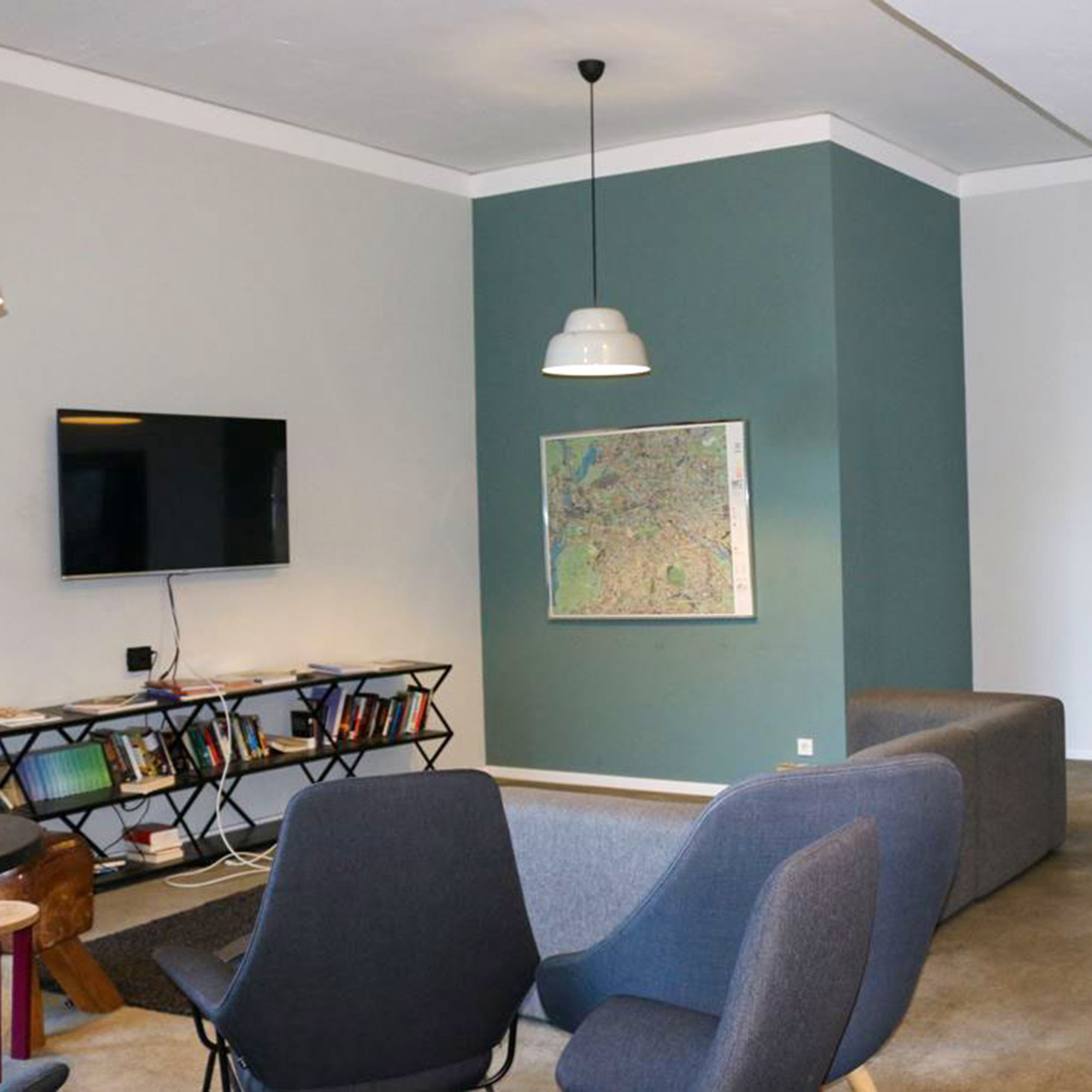
- G27 residence hall boasts kitchens, lounges, and laundry facilities (for a fee) shared with other students. Triple and quad rooms on-campus have en-suite bathrooms and are fully furnished and equipped with a fridge, microwave, and Wi-Fi. The residence hall has four large, shared student kitchens, four student lounges, a lobby with a fireplace and 24/7 reception as well as cafe and a laundry room (service for a fee).
Select Housing: Includes double accommodation at CIEE’s G27 residence hall or shared apartment on-campus. The residence hall rooms have en-suite bathrooms and are fully furnished and equipped with a fridge, microwave, and Wi-Fi. The shared apartments have shared kitchens and bathrooms. The residence hall has four large, shared student kitchens, four student lounges, a lobby with a fireplace and 24/7 reception as well as cafe and a laundry room (service for a fee). Select housing requires an additional fee.
Select Plus Housing: Includes single accommodation at CIEE Berlin residence hall. The on-campus residence hall rooms have en-suite bathrooms and are fully furnished and equipped with a fridge, microwave, and Wi-Fi. The residence hall has four large, shared student kitchens, four student lounges, a lobby with a fireplace and cafe and a laundry room (service for a fee). Select Plus housing requires an additional fee.
A note: The default criterion to assign housing is first-come, first-served; however, other factors may also be considered. If we cannot accommodate your first housing choice, we'll let you know before you arrive. Non-standard housing options require an additional fee that can be found in the Program Dates and Fees.
Meals
- Homestays: Include two meals, usually breakfast and dinner. For non-homestay housing, meals are not included in the program cost.
- Shared apartment/Residence hall: Students can prepare their own meals within the kitchen facilities. CIEE provides basic cooking utensils and cleaning supplies. Students can also explore the myriad of grocery stores and restaurants in our multicultural Kreuzberg neighborhood or throughout the city. Students should be prepared to have a food budget.



Academics
CIEE Berlin: Study in the heart of Berlin's Kreuzberg district, in close proximity to a large public market hall, plenty of restaurants and cafés, and various shops. CIEE Berlin features classrooms, student lounges, a study space, a student life office, an academic advising office, an on-campus café, and a dedicated outdoor space.
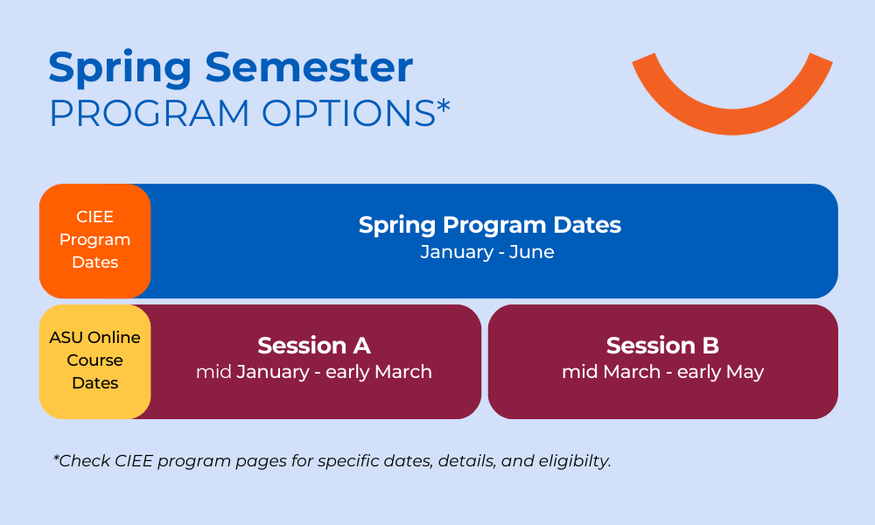
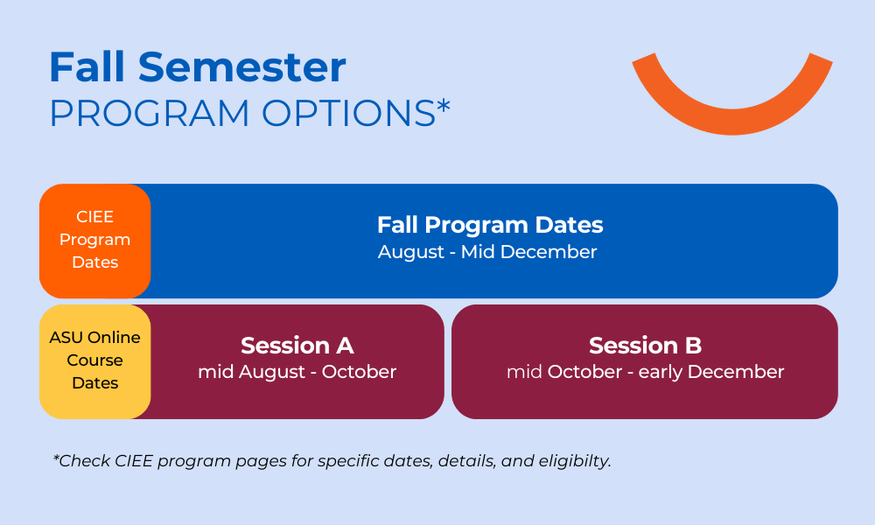
Arizona State University (ASU): Brought to you by CIEE in partnership with ASU, enhance your international coursework with online classes that align with your degree requirements. ASU offers thousands of online courses in asynchronous 7.5-week sessions that fit within the CIEE academic calendar.
Course Information
Course Notes
- Future Cities Design Studio spans the full semester.
- Design and Sustainability Seminar, Science and Technology Workshop, and all CIEE courses run on a block schedule through the Open Campus Block program. Some electives listed may become unavailable to GAD students due to core-courses schedule conflicts. Registration will be finalized onsite.
- Students may not take more than one CIEE elective in a single block.
Language Courses
During course selection, students interested in a non-introductory language course will be required to take a language assessment to determine their proficiency level. Enrollment will be finalized on-site and is based on assessment outcomes.
Architecture
Natural Resources, Conservation, and the Environment
Spring Block II 2027
Business, Economics, Management, and Marketing
Communication, Journalism, and Media
Spring Block II 2027
Health Professions and Related Programs
Social Sciences
Spring Block I 2027
History, Philosophy, Religion
Spring Block II 2027
Spring Block III 2027
Languages and Cultural Studies
Literature, Linguistics, and Writing
Visual and Performing Arts
Spring Block III 2027
Computer and Information Sciences and Support Services
Spring Block II 2027
Architecture
Natural Resources, Conservation, and the Environment
Fall Block III 2027
Business, Economics, Management, and Marketing
Fall Block II 2027
Communication, Journalism, and Media
Fall Block II 2027
Agriculture
Social Sciences
History, Philosophy, Religion
Fall Block III 2027
Languages and Cultural Studies
Literature, Linguistics, and Writing
Visual and Performing Arts
Fall Block III 2027
Architecture
Natural Resources, Conservation, and the Environment
Fall Block III 2026
Business, Economics, Management, and Marketing
Fall Block II 2026
Communication, Journalism, and Media
Fall Block II 2026
Agriculture
Social Sciences
History, Philosophy, Religion
Fall Block III 2026
Languages and Cultural Studies
Literature, Linguistics, and Writing
Visual and Performing Arts
Fall Block III 2026
Architecture
Natural Resources, Conservation, and the Environment
Business, Economics, Management, and Marketing
Communication, Journalism, and Media
Health Professions and Related Programs
Social Sciences
History, Philosophy, Religion
Languages and Cultural Studies
Literature, Linguistics, and Writing
Visual and Performing Arts
Computer and Information Sciences and Support Services
CIEE proudly partners with ASU to deliver asynchronous, online coursework that aligns with your degree requirements from anywhere you study abroad.
CIEE and ASU offer courses online per program eligibility, at no additional charge. Be sure to review online courses with your home school advisor.
Check the CIEE Program Dates and ASU start dates below to maximize course options within your program!
Search ASU Online Courses BROWSE FAQs for more INFO
Note: This course listing is for informational purposes only and does not constitute a contract between CIEE and any applicant, student, institution, or other party. The courses, as described, may be subject to change as a result of ongoing curricular revisions, assignment of lecturers and teaching staff, and program development. Courses may be canceled due to insufficient enrollment.
"(GI)" denotes courses that originated at CIEE's Global Institutes and that are offered at multiple CIEE sites.
Scholarships & Grants
CIEE offers scholarships and grants annually to help students like you make your study abroad dream a reality.
Students who apply to this program are eligible for the following scholarships and grants:
- Ping Scholarships for Academic Excellence
- Global Access Initiative (GAIN) Travel Grants
- Stohl International Undergraduate Research Scholarships
- CIEE Gilman Go Global Grant
- Global Access Initiative (GAIN) Scholars Grants
To be considered, submit the CIEE Scholarships & Grants application within your CIEE program application.
Dates & Fees
You get more for every dollar when you study abroad with CIEE, because our high-quality programs include everything from excursions to insurance. There are no hidden charges, and no disappointing surprises when you arrive.
Program |
Application Due |
Start Date |
End Date |
Fees & Housing |
|---|---|---|---|---|
| Program Spring 2027 18 weeks | Start Date | End Date | Fees & Housing $22,950 | |
| Program Fall 2027 18 weeks | Start Date * | End Date * | Fees & Housing $22,950 | |
| Program Fall 2026 18 weeks | Application Due Deadline Passed | Start Date | End Date | Fees & Housing $22,950 |
*Dates for this program are provided as tentative dates. Please consult with your study abroad advisor to confirm dates before purchasing your flights.
To help you budget, keep in mind that students are responsible for the cost of international airfare, local transportation, books and supplies, visas, and personal expenses. In addition, your college or university may charge additional fees for study abroad, or may require you to receive a transcript via CIEE's School of Record, which carries an additional fee of $500.
Program Fees
CIEE offers the most student support of any provider in its program fee, including an airport greeting, full-time leadership and support, orientation, cultural activities, local excursions, pre-departure advising, and CIEE iNext travel protection with benefits.
| Participation Confirmation | $500 * |
| Educational Costs | $15,756 ** |
| Housing | $6,500 *** |
| Insurance | $194 |
| Total Fees | $22,950 |
Optional Housing
CIEE accommodation options are detailed in the Housing section. Based on availability, Select or Select Plus Housing can be chosen during the application process for an additional fee. Housing is assigned on a first-come, first-served basis; however, other factors may also be considered.
| Select Housing Fee | $1,800 |
| Select Plus Housing Fee | $2,700 |
Financial Aid
CIEE offers the most grants and scholarships of any study abroad organization, including $8 million/year in travel grants, merit-based scholarships, institutional grants, and Gilman Go Global Grants.
Estimated Costs
Students are responsible and manage costs related to travel, meals, books, and personal expenses. Below are estimates for consideration.
| Meals not included in program fee | $1,044 † |
| International Airfare | $1,250 †† |
| Local Transportation | $600 |
| Books & Supplies | $450 |
| Visa Fees | $80 |
| Personal expenses | $1,031 ††† |
| Total Costs | $4,455 |
*non-refundable fee
**Direct cost of education charged uniformly to all students
***Housing fees listed are for financial aid purposes only and should not be considered a basis for calculation of refunds.
†The listed estimated cost is for students in homestays, families provide 2 meals a day and the optional estimated cost for dining out once per week ($540). For students in apartments/residence halls, you should budget approx. $340 per month for groceries if you plan on making your own meals, and more if you plan on eating out regularly.
††round-trip based on U.S. East Coast departure
†††Personal expenses may include but are not limited to the following: taxis, social activities and entertainment, toiletries, cell phone (Includes 20 GB data/month). Does not include personal travel.
Program Fees
CIEE offers the most student support of any provider in its program fee, including an airport greeting, full-time leadership and support, orientation, cultural activities, local excursions, pre-departure advising, and CIEE iNext travel protection with benefits.
| Participation Confirmation | $500 * |
| Educational Costs | $15,756 ** |
| Housing | $6,500 *** |
| Insurance | $194 |
| Total Fees | $22,950 |
Financial Aid
CIEE offers the most grants and scholarships of any study abroad organization, including $8 million/year in travel grants, merit-based scholarships, institutional grants, and Gilman Go Global Grants.
Estimated Costs
Students are responsible and manage costs related to travel, meals, books, and personal expenses. Below are estimates for consideration.
| Meals not included in program fee | $1,044 † |
| International Airfare | $1,250 †† |
| Local Transportation | $600 |
| Books & Supplies | $450 |
| Visa Fees | $80 |
| Personal expenses | $1,031 ††† |
| Total Costs | $4,455 |
*non-refundable fee
**Direct cost of education charged uniformly to all students
***Housing fees listed are for financial aid purposes only and should not be considered a basis for calculation of refunds.
†The listed estimated cost is for students in homestays, families provide 2 meals a day and the optional estimated cost for dining out once per week ($540). For students in apartments/residence halls, you should budget approx. $340 per month for groceries if you plan on making your own meals, and more if you plan on eating out regularly.
††round-trip based on U.S. East Coast departure
†††Personal expenses may include but are not limited to the following: taxis, social activities and entertainment, toiletries, cell phone (Includes 20 GB data/month). Does not include personal travel.
Program Fees
CIEE offers the most student support of any provider in its program fee, including an airport greeting, full-time leadership and support, orientation, cultural activities, local excursions, pre-departure advising, and CIEE iNext travel protection with benefits.
| Participation Confirmation | $300 * |
| Educational Costs | $15,956 ** |
| Housing | $6,500 *** |
| Insurance | $194 |
| Total Fees | $22,950 |
Optional Housing
CIEE accommodation options are detailed in the Housing section. Based on availability, Select or Select Plus Housing can be chosen during the application process for an additional fee. Housing is assigned on a first-come, first-served basis; however, other factors may also be considered.
| Select Housing Fee | $1,800 |
| Select Plus Housing Fee | $2,700 |
Financial Aid
CIEE offers the most grants and scholarships of any study abroad organization, including $8 million/year in travel grants, merit-based scholarships, institutional grants, and Gilman Go Global Grants.
Estimated Costs
Students are responsible and manage costs related to travel, meals, books, and personal expenses. Below are estimates for consideration.
| Meals not included in program fee | $504 † |
| International Airfare | $1,250 †† |
| Local Transportation | $600 |
| Books & Supplies | $450 |
| Visa Fees | $80 |
| Personal expenses | $230 ††† |
| Total Costs | $3,114 |
*non-refundable fee
**Direct cost of education charged uniformly to all students
***Housing fees listed are for financial aid purposes only and should not be considered a basis for calculation of refunds.
†For students in homestays, families provide 2 meals a day. For students in residence halls/apartments, you should budget approx. $340 per month for groceries if you plan on making your own meals, and more if you plan on eating out regularly.
††round-trip based on U.S. East Coast departure
†††$100 emergency fund + cell phone expense + toiletries (Includes 20 GB data/month).
What's Included
Tuition
Housing
Pre-departure Advising
Advising before you depart to set goals and answer questions
Orientation
Introduction to your program plus practical information about living in your host city
On-site Staff
Full-time program leadership and support in your city
Cultural and/or Co-curricular Activities
Excursions and/or Study Tours
Travel Protection
CIEE iNext travel protection
24/7 emergency on-site support
Our Staff

Adina Stoye
Center Director

Eric Ginola
Director of Student Life
Having grown up in the Chicago area and completed his undergraduate degree at Macalester College, Eric went on to complete his graduate work at the University of Washington-Seattle, where he...
Get Started
1
2
Connect With Your Campus Study Abroad Office
Share your plans and confirm you're on track to meet all required steps to go abroad.
3
Contact Us
Send us an email if you still have questions or need information about applying to this program.
You might also like

- Berlin, Germany
- Study Program
- Part-Time Internship
...for 1, 2, or 3 term blocks!

- Berlin, Germany
- Study Program
- Part-Time Internship

- Study Program