
Film Studies



Unique Experiences
Work
with American and international film students
Learn
to shoot, direct, or write with mentoring from European film professionals
Get inspiration
from visits to Prague Barrandov film studios and guest lectures by European directors

Your Destination
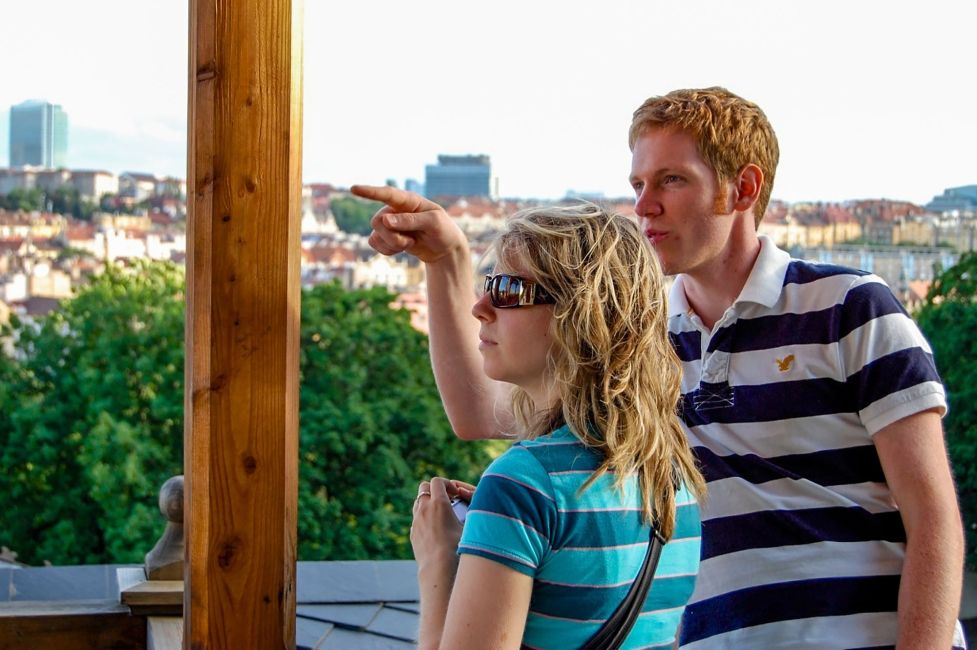
Prague is the Czech Republic’s cinematic capital, offering a visually stunning and culturally rich environment for film students. With its gothic spires, historic squares, and thriving arts scene, the city has long served as a backdrop for international cinema. From exploring the legendary Barrandov Studios to analyzing European film movements, Prague offers endless inspiration. Whether you're studying film theory, production, screenwriting, or media, Prague is the perfect place to study abroad.

Program Highlights
- Academic Course: Choose from CIEE courses and host institution courses.
- Immersive Experiences: Participate in activities, excursions, study tours, and more that showcase your host city's culture, values, and local art, film, music, cuisine, and sports scenes.

Excursions & Activities
CIEE’s excursions and cultural activities in Prague will open doors for you to explore the Czech Republic's rich diversity, language, culture, history, and timeless beauty in ways that will enhance your time abroad.
Samples of past excursions and activities:
- Sample local Moravian wines at a sommelier-led wine tasting
- Bike along the paths along the Vltava River and see another side of Prague
- Watch an opera in one of the amazing baroque opera houses
Please note: Activities are based on past programs and subject to change at CIEE's discretion to adapt to local circumstances and participant feedback. Our goal when arranging activities is always to enhance your experience.
Program Blogs

Lights. Camera. Action! Film Studies in Prague
Are you a wanna-be Spielberg who likes to view life through the lens of a camera? Or a budding writer with ideas for a feature-length screenplay? Then bring your talents... keep reading
Fall 2017 Issue II
TRIP TO SOUTH BOHEMIA In order to get away from a daily rush in Prague, students of CIEE Film Studies have left Prague in October for one weekend. They spent... keep reading
Fall 2017 ISSUE II: Prague
A FRESH START IN PRAGUE! The last August Monday has started the exciting one-semester-ride for students of the Film Studies and Global Architecture and Design Programs. Coming from great distances... keep reading
Housing & Meals
Housing
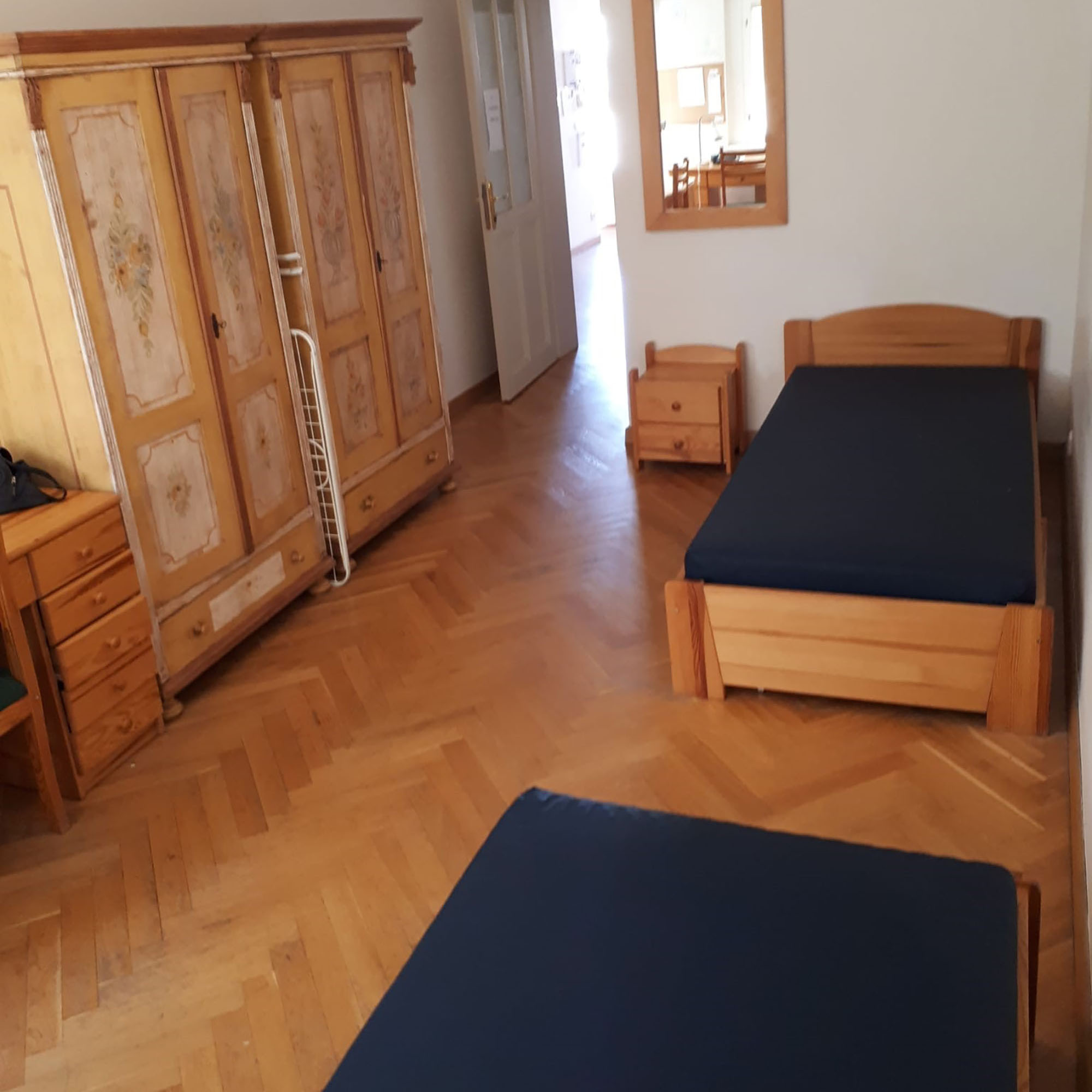
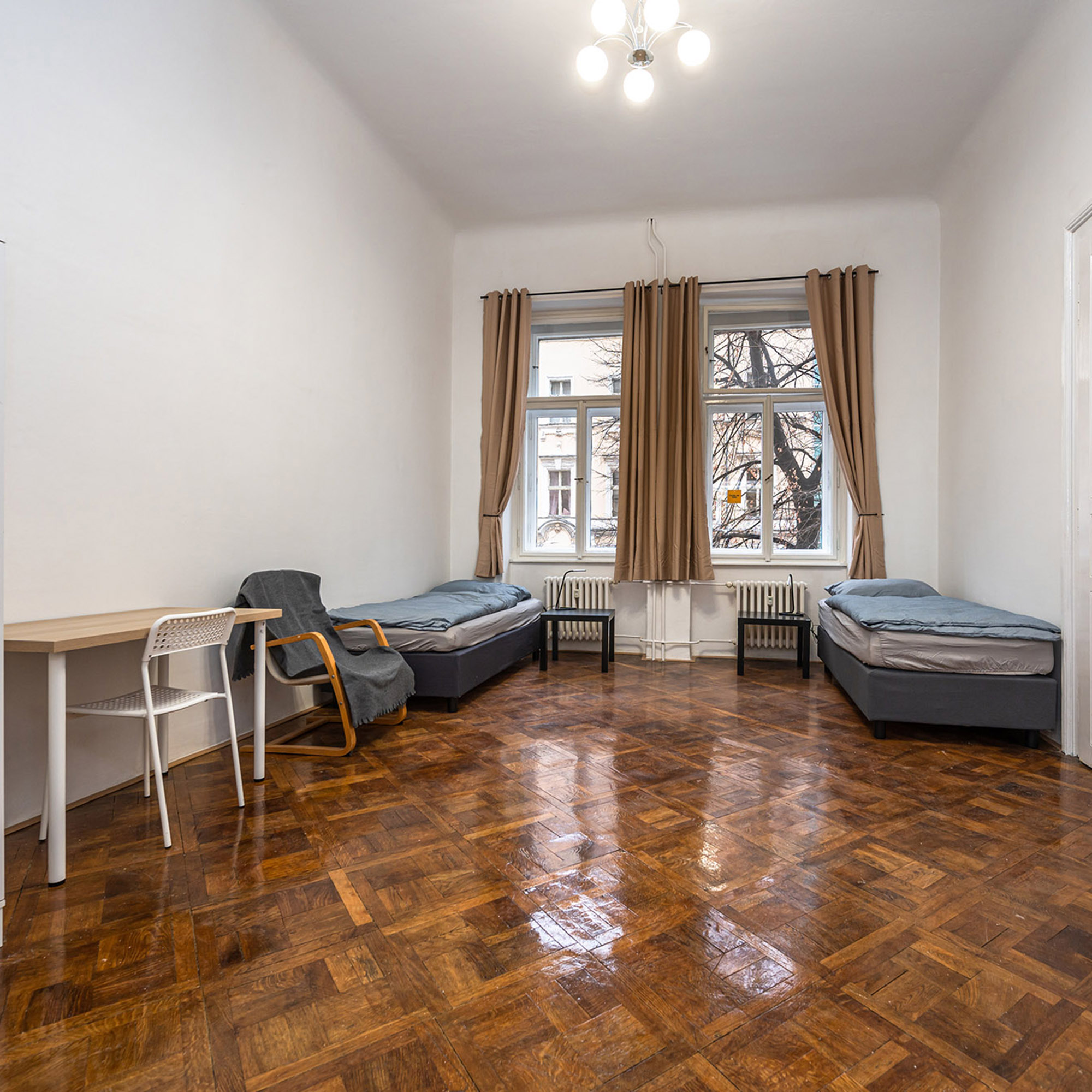
CIEE Prague offers diverse housing options to ensure you're comfortable in your home away from home. All housing options are located in neighborhoods with convenient access to public transportation, shops, cafés, and eateries.
Standard Housing: Includes double or triple accommodation in a residence hall, or a single or double room in a homestay, located within 45 minutes from Prague’s historic city center and CIEE Prague.
- Homestays: Live with a Czech family, with or without another CIEE student, and immerse yourself in the city’s culture. Single and double bedrooms available.
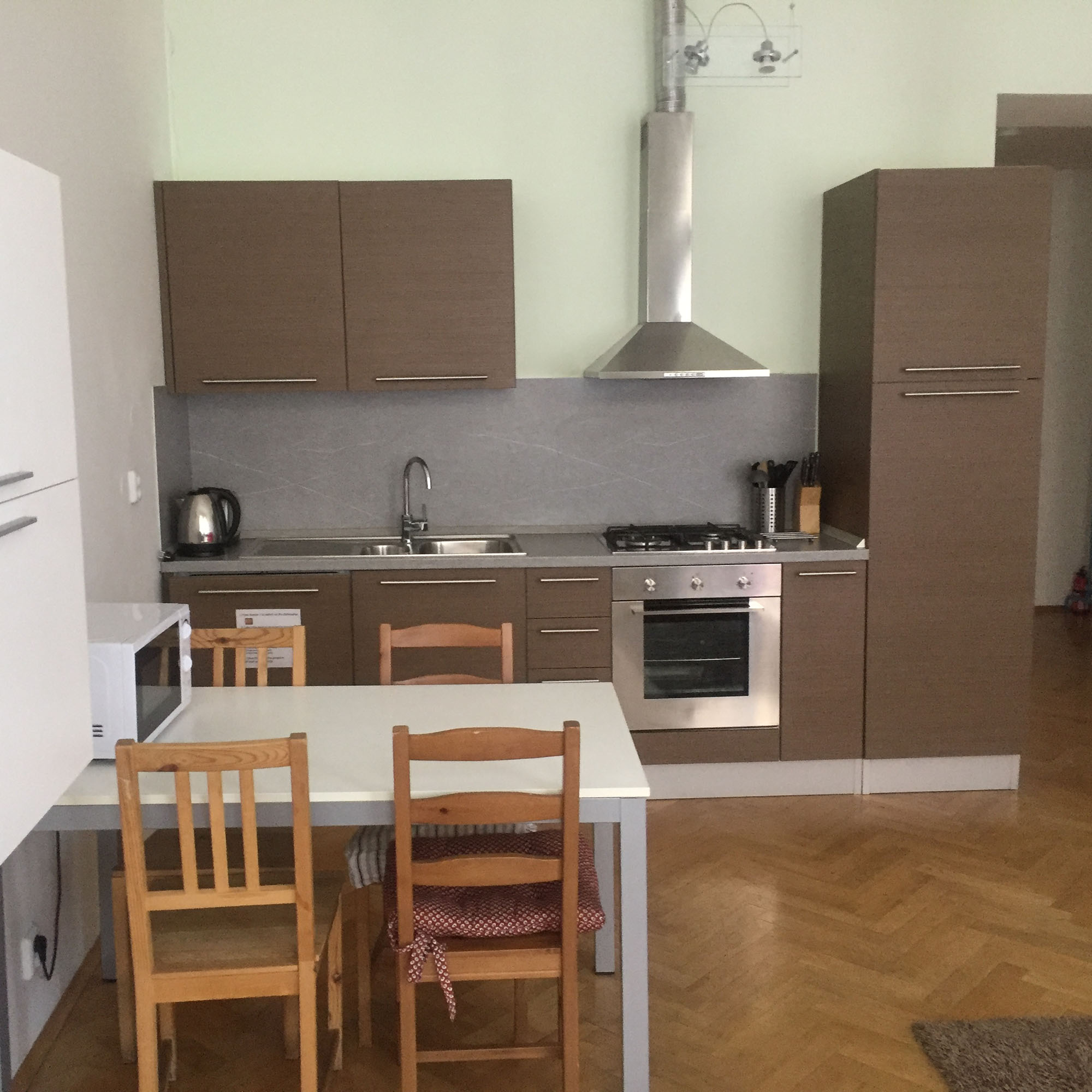
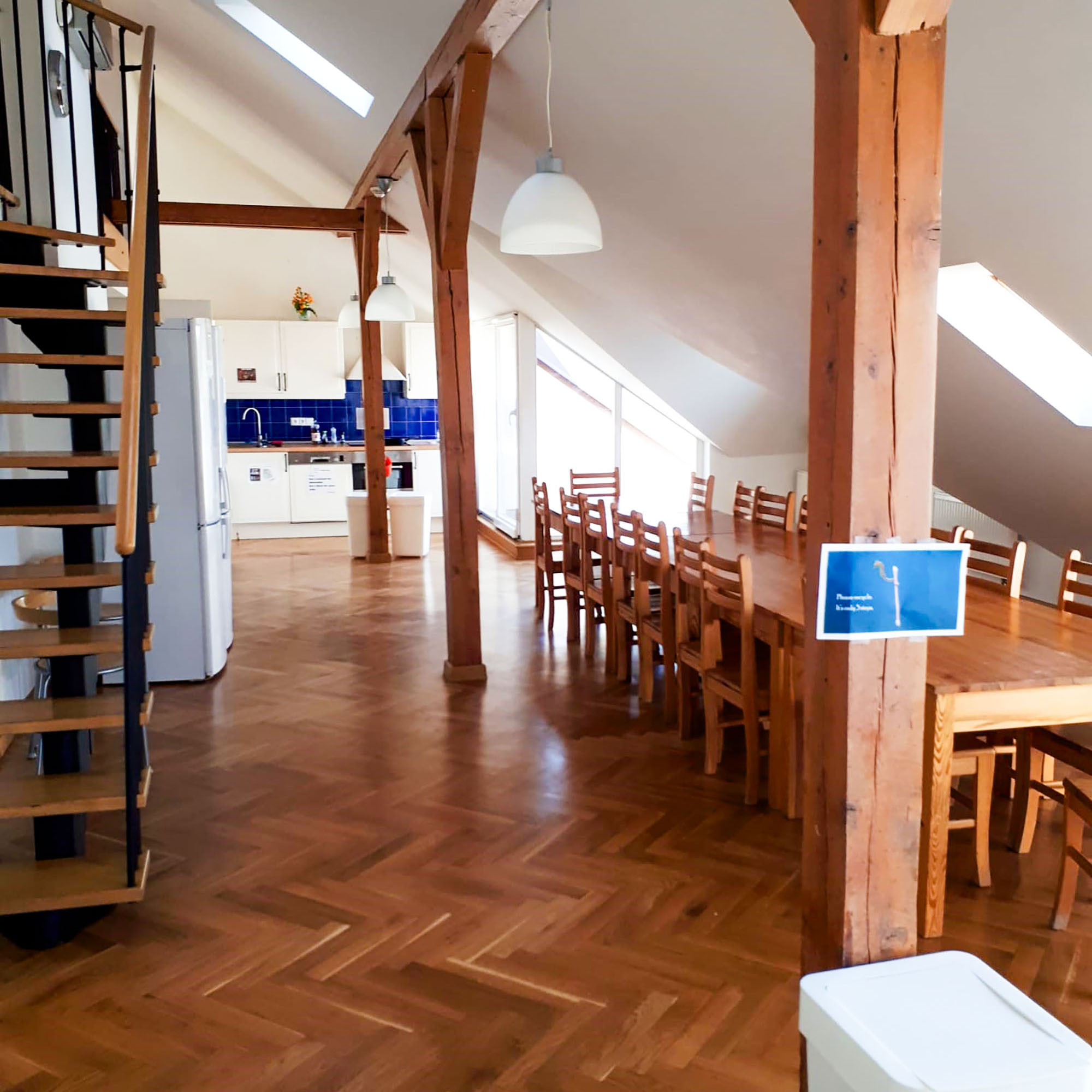
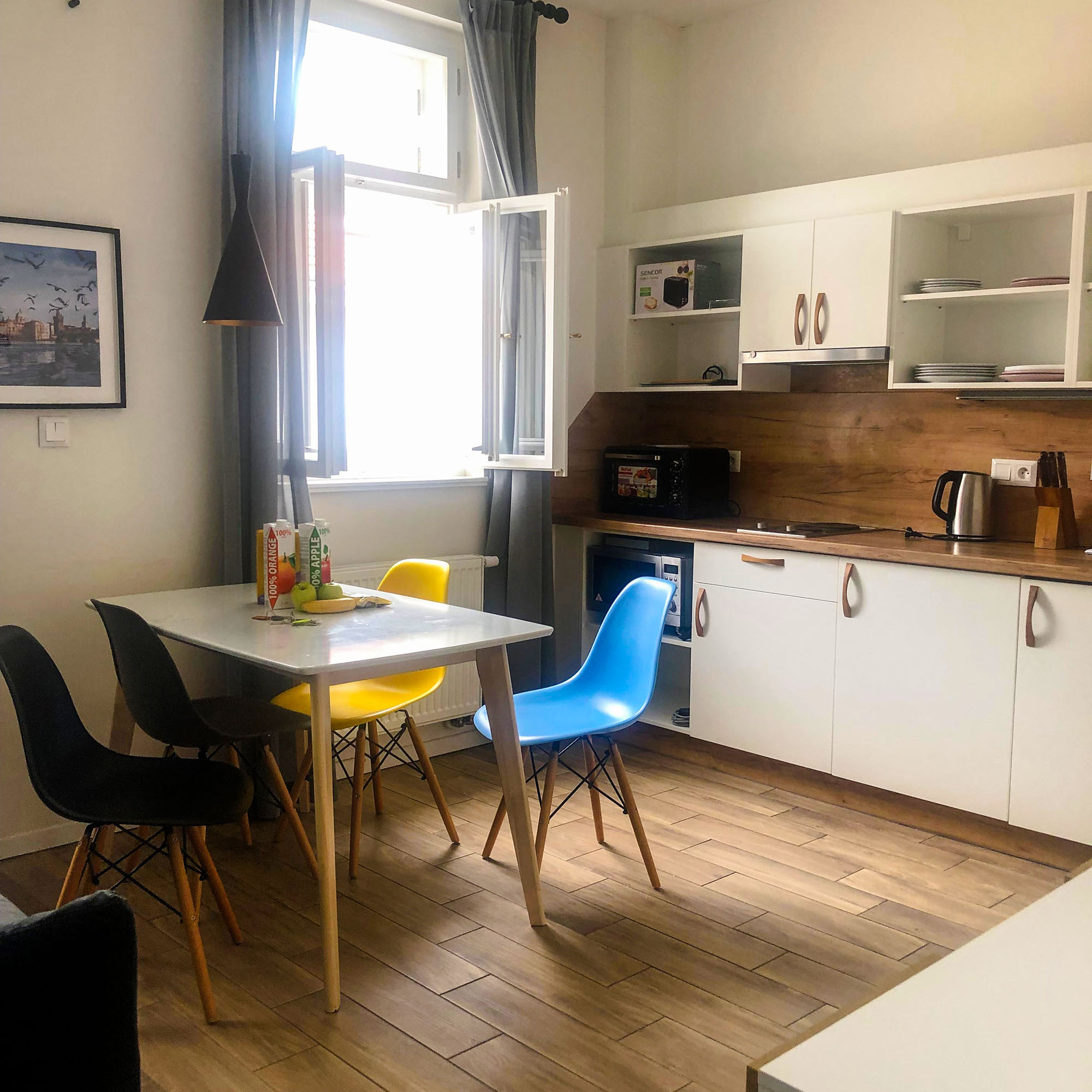
- Residence Halls: Live in a dormitory-like building with communal kitchens and other common spaces.
Select Housing: Includes a double or triple bedroom in a shared apartment located within 45minutes from Prague’s historic center and CIEE Prague. Each apartment has shared common spaces, including a kitchen and bathroom. Apartments may be in student residence buildings or in residential buildings shared with local inhabitants. Select Plus housing requires an additional fee and has limited availability.
Select Plus Housing: Includes a single bedroom in an apartment or residence hall located within 45 minutes from Prague’s historic city center and CIEE Prague. Select Plus housing requires an additional fee and has limited availability.
A note: The default criterion to assign housing is first-come, first-served; however, other factors may also be considered. If we cannot accommodate your first housing choice, we'll let you know before you arrive. Non-standard housing options require an additional fee that can be found in the program Dates and Fees.
Meals
- Homestay: Breakfast and dinner, on the family’s schedule, are included.
- Residence Halls and Apartments: Meals are not included.


Academics
CIEE Prague: Study in the Vyšehrad neighborhood of Prague, situated in a beautiful park-like setting only 25 minutes from the city's famous Old Town Square. CIEE Prague features 10 classrooms, a student lounge, a student life office, a library, a study space, a café, and an outdoor space.
The Film and TV School of the Academy of Performing Arts (FAMU) is the preeminent film school in Central Europe and the 5th oldest film school in the world. Many influential filmmakers and screenwriters are FAMU alumni, including Stanislav Barabas and Oscar-winners Miloš Forman and Agnieszka Holland. FAMU is located in the city center on the banks of the Vltava River.
Course Information
Production Track
All students enroll in Topics in Production and Filmmaking Practicum and Mentorship courses.
Screenwriting Track
All students enroll in Feature Screenwriting and Script Analysis courses.
Languages and Cultural Studies
Visual and Performing Arts
Languages and Cultural Studies
Visual and Performing Arts
Languages and Cultural Studies
Visual and Performing Arts
FAMU ELECTIVE COURSES
Not all courses listed are offered every semester. The following is a representative sample of course offerings though FAMU and is subject to change.
- Acting Theories
- Central European Cinemas within the Context of the World Cinema
- Cinema Dance
- Circulating within the Modern Cinematic Image
- Essential Elements of Film Sound 1Film Style and Form 1
- Filming the Unfilmable
- History, Development and Characteristics of Genres
- Script Analysis 1
- Short Film Practical Analysis: Directing 1
- The Realm of Montage
- Visual Theory
Note: This course listing is for informational purposes only and does not constitute a contract between CIEE and any applicant, student, institution, or other party. The courses, as described, may be subject to change as a result of ongoing curricular revisions, assignment of lecturers and teaching staff, and program development. Courses may be canceled due to insufficient enrollment.
"(GI)" denotes courses that originated at CIEE's Global Institutes and that are offered at multiple CIEE sites.
Scholarships & Grants
CIEE offers scholarships and grants annually to help students like you make your study abroad dream a reality.
Students who apply to this program are eligible for the following scholarships and grants:
- Ping Scholarships for Academic Excellence
- Global Access Initiative (GAIN) Travel Grants
- Stohl International Undergraduate Research Scholarships
- CIEE Gilman Go Global Grant
- Global Access Initiative (GAIN) Scholars Grants
To be considered, submit the CIEE Scholarships & Grants application within your CIEE program application.
Dates & Fees
You get more for every dollar when you study abroad with CIEE, because our high-quality programs include everything from excursions to insurance. There are no hidden charges, and no disappointing surprises when you arrive.
Program |
Application Due |
Start Date |
End Date |
Fees & Housing |
|---|---|---|---|---|
| Program Spring 2027 17 weeks | Application Due Deadline Passed | Start Date | End Date | Fees & Housing $20,650 |
| Program Fall 2027 16 weeks | Start Date * | End Date * | Fees & Housing $20,650 | |
| Program Spring 2028 17 weeks | Start Date * | End Date * | ||
| Program Fall 2026 16 weeks | Application Due Deadline Passed | Start Date | End Date | Fees & Housing $19,950 |
*Dates for this program are provided as tentative dates. Please consult with your study abroad advisor to confirm dates before purchasing your flights.
To help you budget, keep in mind that students are responsible for the cost of international airfare, local transportation, books and supplies, visas, and personal expenses. In addition, your college or university may charge additional fees for study abroad, or may require you to receive a transcript via CIEE's School of Record, which carries an additional fee of $500.
Program Fees
CIEE offers the most student support of any provider in its program fee, including an airport greeting, full-time leadership and support, orientation, cultural activities, local excursions, pre-departure advising, and CIEE iNext travel protection with benefits.
| Participation Confirmation | $500 * |
| Educational Costs | $16,206 ** |
| Housing | $3,750 *** |
| Insurance | $194 |
| Total Fees | $20,650 |
Optional Housing
CIEE accommodation options are detailed in the Housing section. Based on availability, Select or Select Plus Housing can be chosen during the application process for an additional fee. Housing is assigned on a first-come, first-served basis; however, other factors may also be considered.
| Select Housing Fee | $850 |
| Select Plus Housing Fee | $1,700 |
Financial Aid
CIEE offers the most grants and scholarships of any study abroad organization, including $8 million/year in travel grants, merit-based scholarships, institutional grants, and Gilman Go Global Grants.
Estimated Costs
Students are responsible and manage costs related to travel, meals, books, and personal expenses. Below are estimates for consideration.
| Meals not included in program fee | $1,016 † |
| International Airfare | $1,250 †† |
| Local Transportation | $45 ††† |
| Books & Supplies | $45 |
| Visa Fees | $120 |
| Personal expenses | $1,123 †††† |
| Total Costs | $3,599 |
*non-refundable fee
**Direct cost of education charged uniformly to all students
***Housing fees listed are for financial aid purposes only and should not be considered a basis for calculation of refunds.
†The listed estimated cost is for students in homestays, families provide 2 meals a day and the optional estimated cost for dining out once per week ($510). For students in apartments/residence halls, you should budget approx. $309 per month for groceries if you plan on making your own meals, and more if you plan on eating out regularly.
††round-trip based on U.S. East Coast departure
†††cost of taxi to airport on departure; local transportation pass included in program
††††Personal expenses may include but are not limited to the following: taxis, social activities and entertainment, toiletries, cell phone. Does not include personal travel.
Program Fees
CIEE offers the most student support of any provider in its program fee, including an airport greeting, full-time leadership and support, orientation, cultural activities, local excursions, pre-departure advising, and CIEE iNext travel protection with benefits.
| Participation Confirmation | $500 * |
| Educational Costs | $16,206 ** |
| Housing | $3,750 *** |
| Insurance | $194 |
| Total Fees | $20,650 |
Financial Aid
CIEE offers the most grants and scholarships of any study abroad organization, including $8 million/year in travel grants, merit-based scholarships, institutional grants, and Gilman Go Global Grants.
Estimated Costs
Students are responsible and manage costs related to travel, meals, books, and personal expenses. Below are estimates for consideration.
| Meals not included in program fee | $956 † |
| International Airfare | $1,300 †† |
| Local Transportation | $50 ††† |
| Books & Supplies | $50 |
| Visa Fees | $130 |
| Personal expenses | $1,110 †††† |
| Total Costs | $3,596 |
*non-refundable fee
**Direct cost of education charged uniformly to all students
***Housing fees listed are for financial aid purposes only and should not be considered a basis for calculation of refunds.
†The listed estimated cost is for students in homestays, families provide 2 meals a day and the optional estimated cost for dining out once per week ($480). For students in apartments/residence halls, you should budget approx. $309 per month for groceries if you plan on making your own meals, and more if you plan on eating out regularly.
††round-trip based on U.S. East Coast departure
†††cost of taxi to airport on departure; local transportation pass included in program
††††Personal expenses may include but are not limited to the following: taxis, social activities and entertainment, toiletries, cell phone. Does not include personal travel.
Program Fees
CIEE offers the most student support of any provider in its program fee, including an airport greeting, full-time leadership and support, orientation, cultural activities, local excursions, pre-departure advising, and CIEE iNext travel protection with benefits.
Financial Aid
CIEE offers the most grants and scholarships of any study abroad organization, including $8 million/year in travel grants, merit-based scholarships, institutional grants, and Gilman Go Global Grants.
Estimated Costs
Students are responsible and manage costs related to travel, meals, books, and personal expenses. Below are estimates for consideration.
Program Fees
CIEE offers the most student support of any provider in its program fee, including an airport greeting, full-time leadership and support, orientation, cultural activities, local excursions, pre-departure advising, and CIEE iNext travel protection with benefits.
| Participation Confirmation | $300 * |
| Educational Costs | $15,706 ** |
| Housing | $3,750 *** |
| Insurance | $194 |
| Total Fees | $19,950 |
Optional Housing
CIEE accommodation options are detailed in the Housing section. Based on availability, Select or Select Plus Housing can be chosen during the application process for an additional fee. Housing is assigned on a first-come, first-served basis; however, other factors may also be considered.
| Select Housing Fee | $800 |
| Select Plus Housing Fee | $1,600 |
Financial Aid
CIEE offers the most grants and scholarships of any study abroad organization, including $8 million/year in travel grants, merit-based scholarships, institutional grants, and Gilman Go Global Grants.
Estimated Costs
Students are responsible and manage costs related to travel, meals, books, and personal expenses. Below are estimates for consideration.
| Meals not included in program fee | $476 † |
| International Airfare | $1,250 †† |
| Local Transportation | $45 ††† |
| Books & Supplies | $45 |
| Visa Fees | $120 |
| Personal expenses | $310 †††† |
| Total Costs | $2,246 |
*non-refundable fee
**Direct cost of education charged uniformly to all students
***Housing fees listed are for financial aid purposes only and should not be considered a basis for calculation of refunds.
†The listed cost is for students in homestays. For students in homestays, families provide 2 meals a day. For students in residence halls/apartments, you should budget approx. $307 per month for groceries if you plan on making your own meals, and more if you plan on eating out regularly.
††round-trip based on U.S. East Coast departure
†††cost of taxi to airport on departure; local transportation pass included in program
††††$100 emergency fund + cell phone expense + toiletries
What's Included
Tuition
Housing
Pre-departure Advising
Advising before you depart to set goals and answer questions
Optional on-site airport meet-and-greet
Orientation
Introduction to your program plus practical information about living in your host city
On-site Staff
Full-time program leadership and support in your city
Cultural and/or Co-curricular Activities
Excursions and/or Study Tours
Travel Protection
CIEE iNext travel protection
24/7 emergency on-site support
Our Staff

Will Barnard
Center Director

Michaela Neužilová
Senior Program Manager
Michaela has been with CIEE Prague since 2016. She oversees the Prague Program Management Team which provides a wide range of high-quality orientation and onsite support services for all program...

Petra Key
Academic Director
Petra Key oversees the academic programs at CIEE Prague. Her responsibilities include managing the faculty and courses, collaborating with academic partner institutions, and ensuring high-quality academic instruction. She achieves this...
Get Started
1
2
Connect With Your Campus Study Abroad Office
Share your plans and confirm you're on track to meet all required steps to go abroad.
3
Contact Us
Send us an email if you still have questions or need information about applying to this program.
You might also like

- Prague, Czech Republic
- Study Program
...for 1, 2, or 3 term blocks!

- Prague, Czech Republic
- Study Program
- Part-Time Internship

- Prague, Czech Republic
- Study Program
- Part-Time Internship