
Central European Studies




Unique Experiences
Live like a local student
in Prague's vibrant cultural and social scene and learn more about the local customs
Head to class
with a fairy tale castle and hundreds of church spires as your backdrop
Make your visit official
by traversing the Charles Bridge

Your Destination
Prague is at the heart of Central Europe, offering a unique lens through which to explore the region’s history, politics, and culture. From the legacy of the Habsburg Empire to the Velvet Revolution and modern European integration, the city provides rich context for examining shifting national identities and geopolitical change. Whether you're interested in history, international relations, or cultural studies, Prague is the perfect place to study abroad.

Program Highlights
- Academic Courses: Choose from CIEE courses, host institution courses, and online courses delivered by CIEE’s global partner, ASU, that align with your academic major.
- Optional Internship Placements: Enhance your program with an optional for-credit internship that aligns with your career aspirations.
- Immersive Experiences: Participate in activites, excursions, study tours, and more that showcase your host city's culture, values, and local art, film, music, cuisine, and sports scenes.
- Academic Projects: Enroll in an optional for-credit independent research project or service-learning project for increased professional development opportunities.

Excursions & Activities
CIEE’s excursions and cultural activities in Prague will open doors for you to explore the Czech Republic's rich diversity, language, culture, history, and timeless beauty in ways that will enhance your time abroad.
Samples of past excursions and activities:
- Explore Prague Castle, Charles Bridge and the Old Town Square, or Prague’s theaters and opera venues
- Create lifelong memories with new friends as you craft your new signature perfume
- Participate in a wide range of other cultural activities to spark your interest in local art, film, music, sports, or cuisine
Please note: Activities are based on past programs and subject to change at CIEE's discretion to adapt to local circumstances and participant feedback. Our goal when arranging activities is always to enhance your experience.
Program Blogs

EAT, DRINK, EXPLORE: PRAGUE
BEST FOOD TO EAT IN PRAGUE One of my fondest memories of Prague is a meal I had in the Old Town Square. In fact, I was so enthralled, I... keep reading

What It’s Like to Study Abroad in Prague with CIEE
By: Veronica Kaplan I would be lying if I said I was not nervous to go abroad, even more so due to the fact I had never been to Prague... keep reading

Exploring Morocco on Fall Break at CIEE Prague
By: Kendall Stevens My time abroad has been full of fun! One of the nicest things about CIEE Prague is that you are given a week-long fall break which gives... keep reading
Housing & Meals
Housing
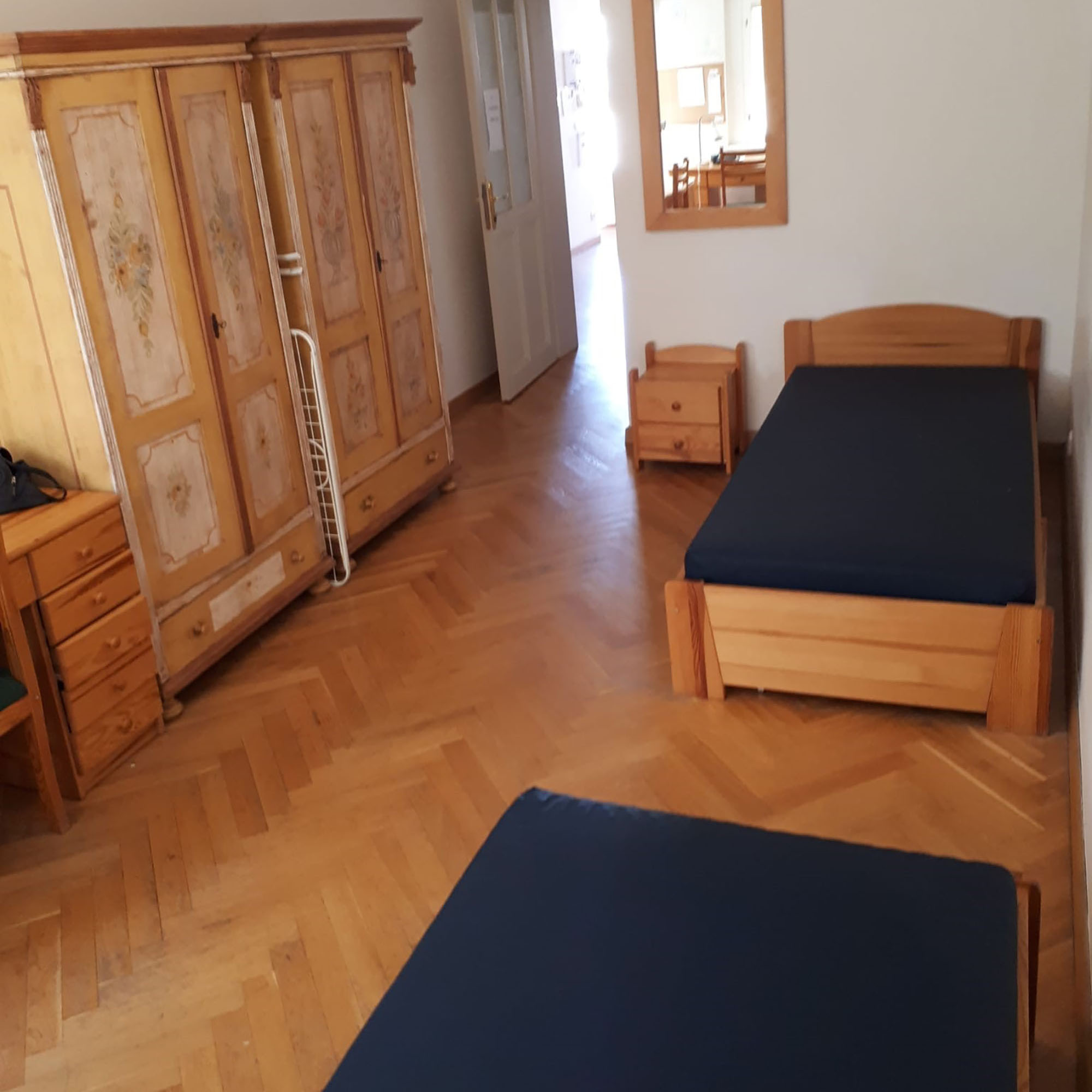
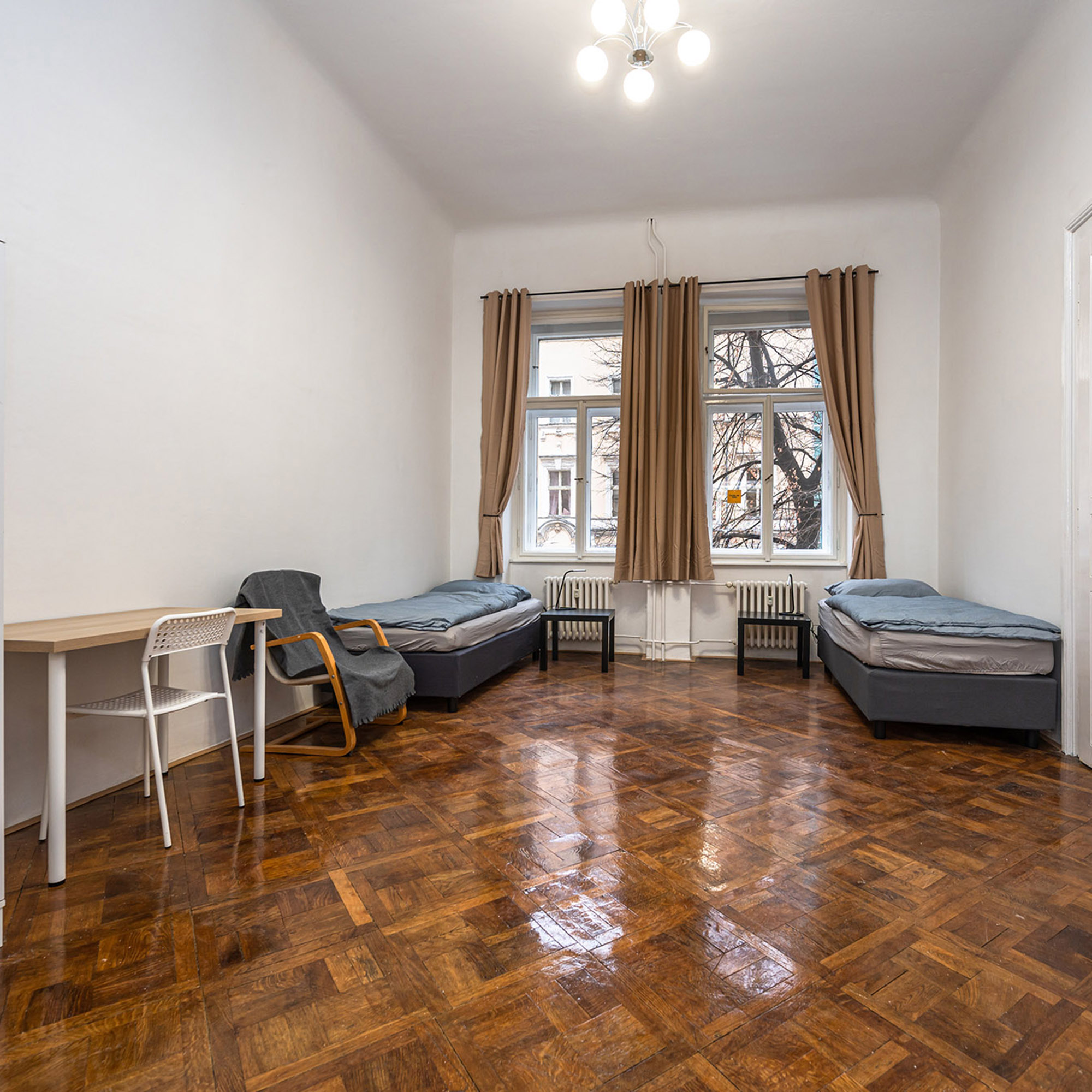
CIEE Prague offers diverse housing options to ensure you're comfortable in your home away from home. All housing options are located in neighborhoods with convenient access to public transportation, shops, cafés, and eateries.
Standard Housing: Includes double or triple accommodation in a residence hall, or a single or double room in a homestay, located within 45 minutes from Prague’s historic city center and CIEE Prague.
- Homestays: Live with a Czech family, with or without another CIEE student, and immerse yourself in the city’s culture. Single and double bedrooms available.
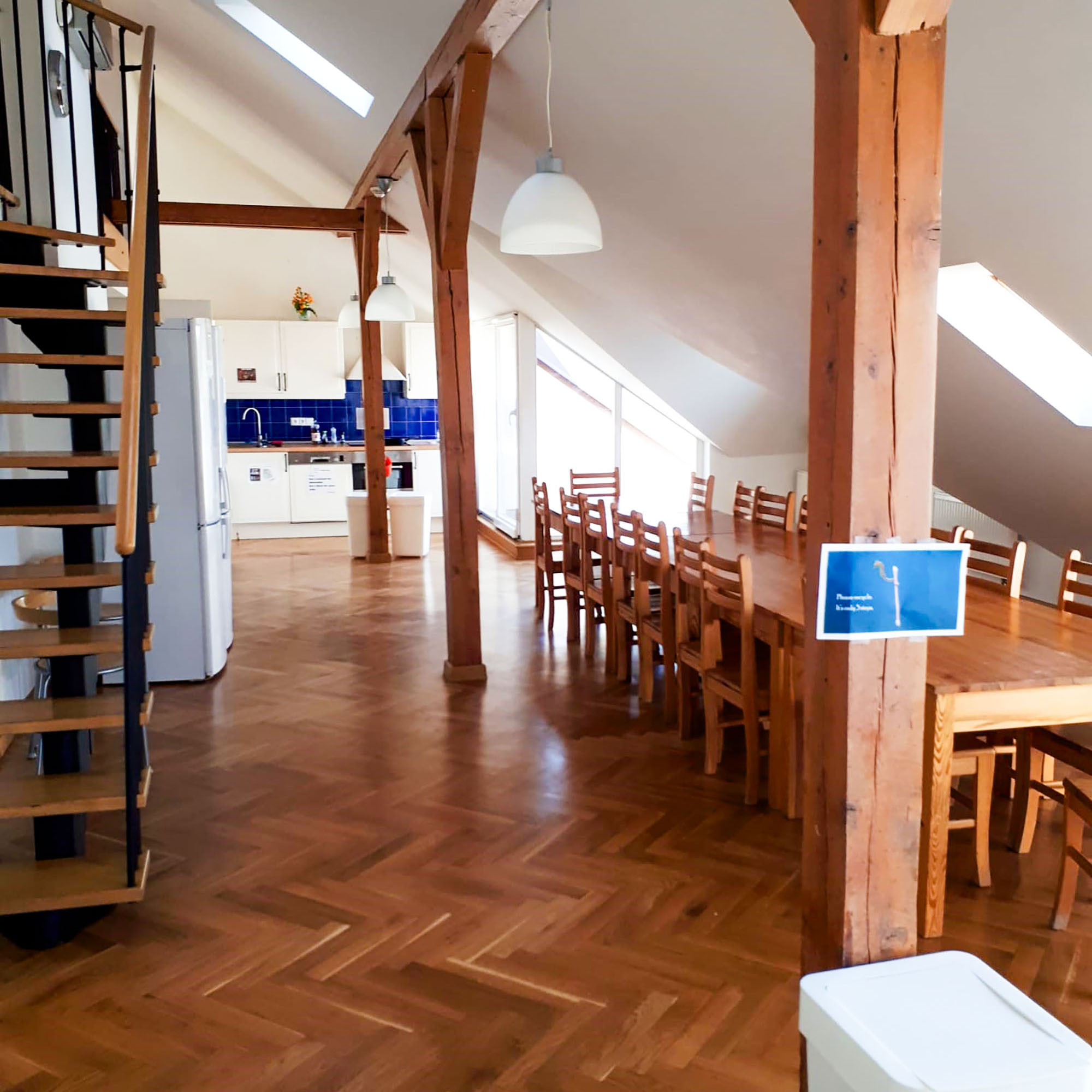
- Residence Halls: Live in a dormitory-like building with communal kitchens and other common spaces.
Select Housing: Includes a double or triple bedroom in a shared apartment located within 45minutes from Prague’s historic center and CIEE Prague. Each apartment has shared common spaces, including a kitchen and bathroom. Apartments may be in student residence buildings or in residential buildings shared with local inhabitants. Select Plus housing requires an additional fee and has limited availability.
Select Plus Housing: Includes a single bedroom in an apartment or residence hall located within 45 minutes from Prague’s historic city center and CIEE Prague. Select Plus housing requires an additional fee and has limited availability.
A note: The default criterion to assign housing is first-come, first-served; however, other factors may also be considered. If we cannot accommodate your first housing choice, we'll let you know before you arrive. Non-standard housing options require an additional fee that can be found in the program Dates and Fees.
Meals
- Homestay: Breakfast and dinner, on the family’s schedule, are included.
- Residence Halls and Apartments: Meals are not included.




Academics
CIEE Prague: Study in the Vyšehrad neighborhood of Prague, situated in a beautiful park-like setting only 25 minutes from the city's famous Old Town Square. CIEE Prague features 10 classrooms, a student lounge, a student life office, a library, a study space, a café, and an outdoor space.
Charles University was founded in 1348 and is the oldest and largest university in the Czech Republic, ranking in the upper 1.5 percent of the world’s universities. The university consists of 17 colleges and enrolls more than 50,000 students. CIEE students can take up to six semester credits in the Eastern and Central European Studies Department (ECES) of the Faculty of Arts or at the Institute of Communication Studies and Journalism of the Faculty of Social Sciences (FSV), both located in Prague’s Old Town.
The Film and TV School of the Academy of Performing Arts (FAMU) is the preeminent film school in Central Europe and the 5th oldest film school in the world. Students with an interest in cinema and performing arts can take up to six semester credits at FAMU, which is located in the historical district by the Vltava River.
The Architectural Institute in Prague (ARCHIP) is the only school of architecture in Central Europe offering bachelor’s and master’s degrees in architecture and urban design taught entirely in English. CIEE students can take up to six semester credits at ARCHIP.
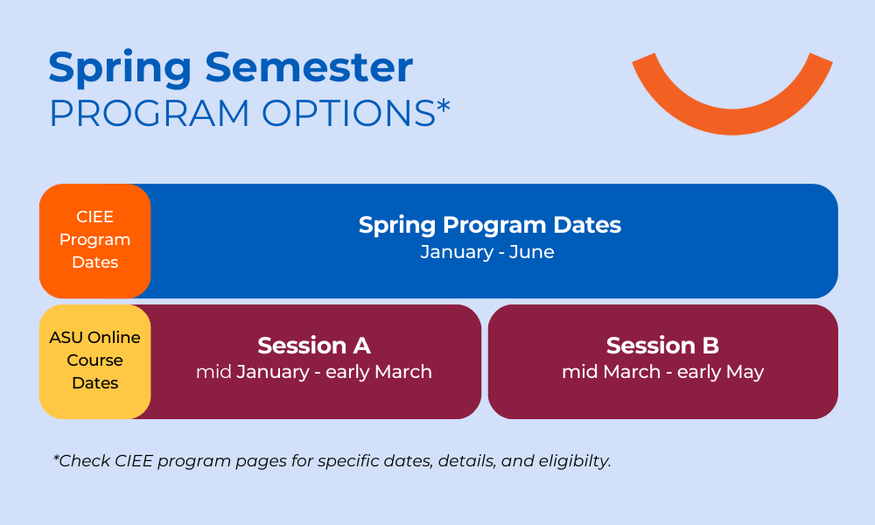
Arizona State University (ASU): Brought to you by CIEE in partnership with ASU, enhance your international coursework with online classes that align with your degree requirements. ASU offers thousands of online courses in asynchronous 7.5-week sessions that fit within the CIEE academic calendar.
Course Information
Course Notes
- All students are strongly encouraged to take an optional Czech language course while studying in Prague.
- CIEE students may take a maximum of six U.S. semester credits from course offerings at host institutions.
- The following host institution course lists are a representative sample of course offerings available to CIEE students through partner institutions and are subject to change. Not all courses listed are offered every semester, and some courses have prerequisites. The final list of courses is made available prior to the start of classes.
- Course content and any final deliverables should be completed prior to the program end date. Final examinations and/or course deliverables for host institution courses will be arranged on a course-by-course basis in consultation with the course instructor and CIEE Prague
Academic Projects
Biological and Physical Sciences
Business, Economics, Management, and Marketing
Communication, Journalism, and Media
History, Philosophy, Religion
Languages and Cultural Studies
Literature, Linguistics, and Writing
Natural Resources, Conservation, and the Environment
Psychology
Social Sciences
Visual and Performing Arts
Agriculture
Health Professions and Related Programs
Computer and Information Sciences and Support Services
Academic Projects
Biological and Physical Sciences
Business, Economics, Management, and Marketing
Communication, Journalism, and Media
History, Philosophy, Religion
Languages and Cultural Studies
Literature, Linguistics, and Writing
Natural Resources, Conservation, and the Environment
Psychology
Social Sciences
Visual and Performing Arts
Agriculture
Health Professions and Related Programs
Computer and Information Sciences and Support Services
Academic Projects
Biological and Physical Sciences
Business, Economics, Management, and Marketing
Communication, Journalism, and Media
History, Philosophy, Religion
Languages and Cultural Studies
Literature, Linguistics, and Writing
Natural Resources, Conservation, and the Environment
Psychology
Social Sciences
Visual and Performing Arts
Agriculture
Health Professions and Related Programs
Computer and Information Sciences and Support Services
CHARLES UNIVERSITY COURSES
Students may choose from selected courses offered by two Charles University faculties, Faculty of Arts (ECES) and Faculty of Social Sciences (FSV). Participation in each course is limited to a few CIEE students. Classes are taught at Charles University and allow CIEE students to study alongside other international students.
Faculty of Arts, East and Central European Studies Department
All courses are worth 3 U.S. semester credits. Syllabi for ECES courses may be found on its website. Please note that the website may only include some of the courses taught and that the list is subject to change. The following list is a sample of courses that may be available to CIEE students. A final list of available courses is distributed during orientation.
- Nationalism: Origins, Theories and Consequences in Central Europe
- Politics of Song: From Folklore to Hip-Hop
- Construction of Czech National Identity and its Symbols
- Kafka in Critical Context
- Economic Decline of European Empires
- Alternative Culture
- Jewish History in Central and Eastern Europe
- Kundera’s Fictions
- Edges of Photography: Techniques, Artistry and Czech Photographers
- From Thoreau to Havel: Chapters in Czech and American Struggle for Social Justice
- Humor and Czech Culture
- Psycholinguistics
- Selected Topics in Social Psychology: Soft Skills
- Sociology of Food
Urban Semiotics: Contemporary Czech Literature, Art and Culture
Faculty of Social Sciences, Institute of Communication Studies and Journalism
Course offerings through FSV are worth typically 1-3 U.S. semester credits (2-6 ECTS credits). The following list is a sample of courses that may be available to CIEE students. A final list of available courses is distributed during orientation.
- Audiovisual Interpretation of Reality
- Comics as a Medium
- Communication and Politics
- Czech Media System in European Comparison
- Emotions in Marketing
- History of Computer and Video Games
- Media and the Children
- Media and Sustainability Communication
- Media Sociology
FAMU COURSES
Participants with an interest in cinema and performing arts can choose from a variety of courses offered by FAMU. The courses are worth typically 1-1.5 U.S. semester credits (2-3 ECTS credits). A final list of FAMU courses is available at the time of enrollment. The following is a representative sample of FAMU courses that have been available in previous semesters.
- Acting Theories
- Central European Cinemas within the Context of the World Cinema
- Cinema Dance
- Circulating within the Modern Cinematic Image
- Essential Elements of Film Sound 1
- Film Style and Form 1
- Filming the Unfilmable
- History, Development and Characteristics of Genres
- Script Analysis 1
- Short Film Practical Analysis: Directing 1
- The Realm of Montage
- Visual Theory
ARCHIP COURSES
Students with an interest in architecture, urbanism, and sustainability can choose from a variety of courses offered by ARCHIP. The courses are typically worth 1-1.5 U.S. semester credits (2-3 ECTS credits). A final list of ARCHIP courses is available at the time of enrollment. The following is a representative sample of ARCHIP courses available to CIEE students.
- Art 1 (DRAWING)
- Art 3 (MODELS)
- Art 5 (PRODUCT DESIGN)
- History of Architecture and Art 1
- History of Architecture and Art 3
- Fundamentals of Urbanism
- Modern Architecture and Art
- Master Planning
- Landscape Design
- Monument Preservation
CIEE proudly partners with ASU to deliver asynchronous, online coursework that aligns with your degree requirements from anywhere you study abroad.
CIEE and ASU offer courses online per program eligibility, at no additional charge. Be sure to review online courses with your home school advisor.
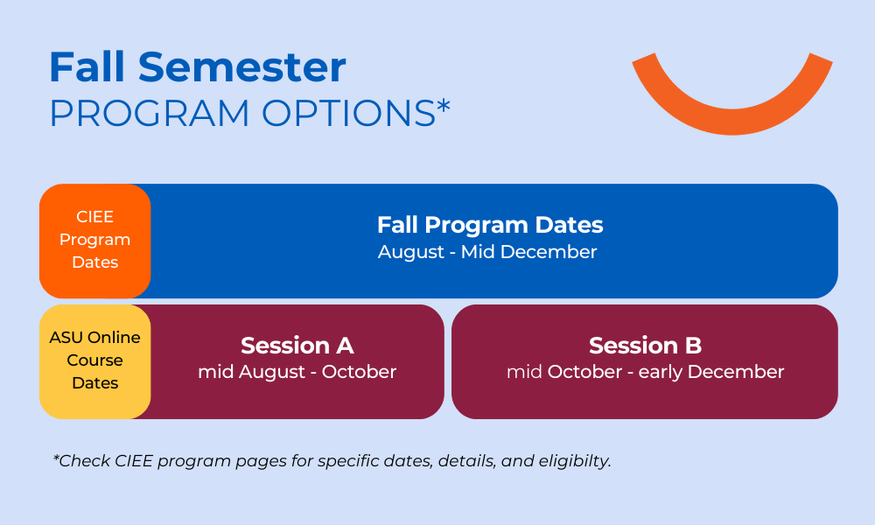
Check the CIEE Program Dates and ASU start dates below to maximize course options within your program!
Search ASU Online Courses BROWSE FAQs for more INFO
Note: This course listing is for informational purposes only and does not constitute a contract between CIEE and any applicant, student, institution, or other party. The courses, as described, may be subject to change as a result of ongoing curricular revisions, assignment of lecturers and teaching staff, and program development. Courses may be canceled due to insufficient enrollment.
"(GI)" denotes courses that originated at CIEE's Global Institutes and that are offered at multiple CIEE sites.
Discover Internship Opportunities
We're excited you're considering this program! Next, explore the types of internships you can choose from for an epic internship abroad with CIEE Study Abroad.
Explore Industry Options
Prague's work scene is focused on growing industries like information technology, shared services, and tourism. Internships are common in startups, small to medium-sized enterprises, and NGOs where interns engage in meaningful roles with substantial responsibility, fostering professional growth and innovation.

Arts, Audio/Video Technology and Communications
Immerse yourself in today's cutting-edge global media by working in film studios, media companies, the theater, and more.

Business Management and Administration
Study international business practices, multicultural leadership, and global market dynamics.
Browse Internship Opportunities
Explore internship placements available through this program to find the right fit for your academic and professional goals.
Disclaimer: Internship placements are subject to availability and host employer hiring discretion. Application and payment of CIEE fees does not guarantee specific placement. This internship listing is for informational purposes only and does not constitute a contract between CIEE and any applicant, student, institution, or other party.
Scholarships & Grants
CIEE offers scholarships and grants annually to help students like you make your study abroad dream a reality.
Students who apply to this program are eligible for the following scholarships and grants:
- Ping Scholarships for Academic Excellence
- Global Access Initiative (GAIN) Travel Grants
- Stohl International Undergraduate Research Scholarships
- CIEE Gilman Go Global Grant
- Global Access Initiative (GAIN) Scholars Grants
To be considered, submit the CIEE Scholarships & Grants application within your CIEE program application.
Dates & Fees
You get more for every dollar when you study abroad with CIEE, because our high-quality programs include everything from excursions to insurance. There are no hidden charges, and no disappointing surprises when you arrive.
Program |
Application Due |
Start Date |
End Date |
Fees & Housing |
|---|---|---|---|---|
| Program Spring 2027 15 weeks | Start Date | End Date | Fees & Housing $20,650 | |
| Program Fall 2027 15 weeks | Start Date * | End Date * | Fees & Housing $20,650 | |
| Program Academic year 2027-2028 35 weeks | Start Date * | End Date * | ||
| Program Spring 2028 15 weeks | Start Date * | End Date * | ||
| Program Fall 2026 15 weeks | Application Due Deadline Passed | Start Date | End Date | Fees & Housing $19,950 |
| Program Academic year 2026-2027 35 weeks | Application Due Deadline Passed | Start Date | End Date | Fees & Housing $39,565 |
*Dates for this program are provided as tentative dates. Please consult with your study abroad advisor to confirm dates before purchasing your flights.
To help you budget, keep in mind that students are responsible for the cost of international airfare, local transportation, books and supplies, visas, and personal expenses. In addition, your college or university may charge additional fees for study abroad, or may require you to receive a transcript via CIEE's School of Record, which carries an additional fee of $500.
Program Fees
CIEE offers the most student support of any provider in its program fee, including an airport greeting, full-time leadership and support, orientation, cultural activities, local excursions, pre-departure advising, and CIEE iNext travel protection with benefits.
| Participation Confirmation | $500 * |
| Educational Costs | $16,206 ** |
| Housing | $3,750 *** |
| Insurance | $194 |
| Total Fees | $20,650 |
Optional Housing
CIEE accommodation options are detailed in the Housing section. Based on availability, Select or Select Plus Housing can be chosen during the application process for an additional fee. Housing is assigned on a first-come, first-served basis; however, other factors may also be considered.
| Select Housing Fee | $750 |
| Select Plus Housing Fee | $1,500 |
Financial Aid
CIEE offers the most grants and scholarships of any study abroad organization, including $8 million/year in travel grants, merit-based scholarships, institutional grants, and Gilman Go Global Grants.
Estimated Costs
Students are responsible and manage costs related to travel, meals, books, and personal expenses. Below are estimates for consideration.
| Meals not included in program fee | $896 † |
| International Airfare | $1,250 †† |
| Local Transportation | $45 ††† |
| Books & Supplies | $45 |
| Visa Fees | $120 |
| Personal expenses | $1,097 †††† |
| Total Costs | $3,453 |
*non-refundable fee
**Direct cost of education charged uniformly to all students
***Housing fees listed are for financial aid purposes only and should not be considered a basis for calculation of refunds.
†The listed estimated cost is for students in homestays, families provide 2 meals a day and the optional estimated cost for dining out once per week ($450). For students in apartments/residence halls, you should budget approx. $309 per month for groceries if you plan on making your own meals, and more if you plan on eating out regularly.
††round-trip based on U.S. East Coast departure
†††cost of taxi to airport on departure; local transportation pass included in program
††††Personal expenses may include but are not limited to the following: taxis, social activities and entertainment, toiletries, cell phone. Does not include personal travel.
Program Fees
CIEE offers the most student support of any provider in its program fee, including an airport greeting, full-time leadership and support, orientation, cultural activities, local excursions, pre-departure advising, and CIEE iNext travel protection with benefits.
| Participation Confirmation | $500 * |
| Educational Costs | $16,206 ** |
| Housing | $3,750 *** |
| Insurance | $194 |
| Total Fees | $20,650 |
Financial Aid
CIEE offers the most grants and scholarships of any study abroad organization, including $8 million/year in travel grants, merit-based scholarships, institutional grants, and Gilman Go Global Grants.
Estimated Costs
Students are responsible and manage costs related to travel, meals, books, and personal expenses. Below are estimates for consideration.
| Meals not included in program fee | $896 † |
| International Airfare | $1,300 †† |
| Local Transportation | $50 ††† |
| Books & Supplies | $50 |
| Visa Fees | $130 |
| Personal expenses | $1,097 †††† |
| Total Costs | $3,523 |
*non-refundable fee
**Direct cost of education charged uniformly to all students
***Housing fees listed are for financial aid purposes only and should not be considered a basis for calculation of refunds.
†The listed estimated cost is for students in homestays, families provide 2 meals a day and the optional estimated cost for dining out once per week ($450). For students in apartments/residence halls, you should budget approx. $309 per month for groceries if you plan on making your own meals, and more if you plan on eating out regularly.
††round-trip based on U.S. East Coast departure
†††cost of taxi to airport on departure; local transportation pass included in program
††††Personal expenses may include but are not limited to the following: taxis, social activities and entertainment, toiletries, cell phone. Does not include personal travel.
Program Fees
CIEE offers the most student support of any provider in its program fee, including an airport greeting, full-time leadership and support, orientation, cultural activities, local excursions, pre-departure advising, and CIEE iNext travel protection with benefits.
Financial Aid
CIEE offers the most grants and scholarships of any study abroad organization, including $8 million/year in travel grants, merit-based scholarships, institutional grants, and Gilman Go Global Grants.
Estimated Costs
Students are responsible and manage costs related to travel, meals, books, and personal expenses. Below are estimates for consideration.
Program Fees
CIEE offers the most student support of any provider in its program fee, including an airport greeting, full-time leadership and support, orientation, cultural activities, local excursions, pre-departure advising, and CIEE iNext travel protection with benefits.
Financial Aid
CIEE offers the most grants and scholarships of any study abroad organization, including $8 million/year in travel grants, merit-based scholarships, institutional grants, and Gilman Go Global Grants.
Estimated Costs
Students are responsible and manage costs related to travel, meals, books, and personal expenses. Below are estimates for consideration.
Program Fees
CIEE offers the most student support of any provider in its program fee, including an airport greeting, full-time leadership and support, orientation, cultural activities, local excursions, pre-departure advising, and CIEE iNext travel protection with benefits.
| Participation Confirmation | $300 * |
| Educational Costs | $15,706 ** |
| Housing | $3,750 *** |
| Insurance | $194 |
| Total Fees | $19,950 |
Optional Housing
CIEE accommodation options are detailed in the Housing section. Based on availability, Select or Select Plus Housing can be chosen during the application process for an additional fee. Housing is assigned on a first-come, first-served basis; however, other factors may also be considered.
| Select Housing Fee | $750 |
| Select Plus Housing Fee | $1,500 |
Financial Aid
CIEE offers the most grants and scholarships of any study abroad organization, including $8 million/year in travel grants, merit-based scholarships, institutional grants, and Gilman Go Global Grants.
Estimated Costs
Students are responsible and manage costs related to travel, meals, books, and personal expenses. Below are estimates for consideration.
| Meals not included in program fee | $446 † |
| International Airfare | $1,250 †† |
| Local Transportation | $45 ††† |
| Books & Supplies | $45 |
| Visa Fees | $120 |
| Personal expenses | $300 †††† |
| Total Costs | $2,206 |
*non-refundable fee
**Direct cost of education charged uniformly to all students
***Housing fees listed are for financial aid purposes only and should not be considered a basis for calculation of refunds.
†The listed cost is for students in homestays. For students in homestays, families provide 2 meals a day. For students in residence halls/apartments, you should budget approx. $307 per month for groceries if you plan on making your own meals, and more if you plan on eating out regularly.
††round-trip based on U.S. East Coast departure
†††cost of taxi to airport on departure; local transportation pass included in program
††††$100 emergency fund + cell phone expense + toiletries
Program Fees
CIEE offers the most student support of any provider in its program fee, including an airport greeting, full-time leadership and support, orientation, cultural activities, local excursions, pre-departure advising, and CIEE iNext travel protection with benefits.
| Participation Confirmation | $300 * |
| Educational Costs | $31,571 ** |
| Housing | $7,500 *** |
| Insurance | $194 |
| Total Fees | $39,565 |
Optional Housing
CIEE accommodation options are detailed in the Housing section. Based on availability, Select or Select Plus Housing can be chosen during the application process for an additional fee. Housing is assigned on a first-come, first-served basis; however, other factors may also be considered.
| Select Housing Fee | $750 |
| Select Plus Housing Fee | $1,500 |
Financial Aid
CIEE offers the most grants and scholarships of any study abroad organization, including $8 million/year in travel grants, merit-based scholarships, institutional grants, and Gilman Go Global Grants.
Estimated Costs
Students are responsible and manage costs related to travel, meals, books, and personal expenses. Below are estimates for consideration.
| Meals not included in program fee | $446 † |
| International Airfare | $1,250 †† |
| Local Transportation | $45 ††† |
| Books & Supplies | $45 |
| Visa Fees | $120 |
| Personal expenses | $300 †††† |
| Total Costs | $2,206 |
*non-refundable fee
**Direct cost of education charged uniformly to all students
***Housing fees listed are for financial aid purposes only and should not be considered a basis for calculation of refunds.
†The listed cost is for students in homestays. For students in homestays, families provide 2 meals a day. For students in residence halls/apartments, you should budget approx. $307 per month for groceries if you plan on making your own meals, and more if you plan on eating out regularly.
††round-trip based on U.S. East Coast departure
†††cost of taxi to airport on departure; local transportation pass included in program
††††$100 emergency fund + cell phone expense + toiletries
What's Included
Tuition
Housing
Pre-departure Advising
Advising before you depart to set goals and answer questions
Optional on-site airport meet-and-greet
Orientation
Introduction to your program plus practical information about living in your host city
On-site Staff
Full-time program leadership and support in your city
Cultural and/or Co-curricular Activities
Excursions and/or Study Tours
Travel Protection
CIEE iNext travel protection
24/7 emergency on-site support
Our Staff

Will Barnard
Center Director

Petra Key
Academic Director
Petra Key oversees the academic programs at CIEE Prague. Her responsibilities include managing the faculty and courses, collaborating with academic partner institutions, and ensuring high-quality academic instruction. She achieves this...

Michaela Neužilová
Senior Program Manager
Michaela has been with CIEE Prague since 2016. She oversees the Prague Program Management Team which provides a wide range of high-quality orientation and onsite support services for all program...
Get Started
1
2
Connect With Your Campus Study Abroad Office
Share your plans and confirm you're on track to meet all required steps to go abroad.
3
Contact CIEE
We're here to help! Send us an email if you still have questions or need information about applying to this program.
4
Interested in an optional internship?
After being accepted to this program and submitting the required internship documents, work with CIEE staff on your internship goals and select which positions to interview for. CIEE will reach out to companies that would be a good fit for you, your interests, and your qualifications. Finalize your internship placement upon arrival!
You might also like

- Prague, Czech Republic
- Study Program
...for 1, 2, or 3 term blocks!

- Prague, Czech Republic
- Study Program
- Part-Time Internship

- Prague, Czech Republic
- Study Program
- Part-Time Internship