Program Overview
Program Overview
The Outdoor Leadership and Environmental Education study abroad program in Australia provides a supportive environment in which you will develop leadership skills through personal independence and intellectual insight into Australasia’s contemporary society and natural beauty.
In Australia you’ll enjoy skills courses in various outdoor activities; opportunities to gain knowledge and experience in environmental awareness through practical, hands-on conservation projects; and the chance to put these newly developed skills into practice.
In Australia you will:
- Explore specific topics in outdoor recreation including risk management in the outdoor environment, introductions to the technical skills involved in outdoor pursuits, decision making, and facilitation techniques
- Bush walk in the Blue Mountains, canoe in the Kangaroo Valley, dive on the Great Barrier Reef, and climb in Nowra
- Design and develop an excursion to New Zealand in the final third of the program
The program provides formal learning opportunities in experiential and environmental education, and Australasian culture and sport including Aboriginal and Maori histories and perspectives. The capstone of the Outdoor Leadership and Environmental Education study abroad program is a student designed and developed expedition to New Zealand, which utilizes the skills and knowledge gained from the program. This expedition will combine adventure activities, conservation projects, travel and a rural homestay experience on a sheep and cattle farm.
The CIEE Difference
The CIEE Difference
Coursework
You'll study abroad with professors and experts in outdoor education in a curriculum that explores experiential and environmental education, Aboriginal culture, and the unique role of sport within Australian society.
Capstone
Put your studies into practice. The capstone activity of study abroad in Australia is a student-designed and developed expedition to New Zealand, which utilizes the skills and knowledge gained from the first two thirds of the program. This facilitated process is designed to give you the experience of developing and leading a major international expedition on your own, while drawing on the support of expert supervision.
Service Learning Project
Key components of the Outdoor Leadership and Environmental Education program include a two-week service learning project in Australia and one-week conservation project in New Zealand. These practical components will allow you to engage in authentic learning experiences while developing an enhanced sense of place as a globally engaged citizen. The nature of the projects vary depending on your interests. Sites offered include, but are not limited to, working on organic farms, forest and bush restoration, and involvement in the monitoring of kiwis. The conservation project in New Zealand will be specifically aligned with the Department of Conservation which has partnerships with hundreds of community preservation projects.
Cultural Activities
The incredibly rich and dynamic culture of both Australia and New Zealand is imbedded in the study abroad program with formal trips to museums, sporting events, theatre, and places of significant cultural and historical importance. These experiences are complimented with prescribed teachings and readings.
Dates, Deadlines & Fees
We want to make sure you get the most out of your experience when you study abroad with CIEE, which is why we offer the most inclusions in our fees.
- Tuition and housing
- Pre-departure advising and optional on-site airport meet and greet
- Full-time program leadership and support
- Field trips and cultural activities
- CIEE iNext travel card which provides insurance and other travel benefits
Please note, program dates are subject to change. Please contact your CIEE Study Abroad Advisor before purchasing airfare. Click the

button to view more detailed information about dates and fees.
Application Due
Start Date
End Date
Costs
Fall 2013 (18 wks)
Extended to: 05/01/2013
07/21/2013
11/21/2013
$18,850
Program Date Notes
Program Fees
In addition to the items outlined below, the CIEE program fee includes an optional on-site airport meet and greet, full-time leadership and support, orientation, cultural activities, local excursions, pre-departure advising, and a CIEE iNext travel card which provides insurance and other travel benefits.
Participation Confirmation *
$300
Educational Costs **
$12,398
This breakdown has been prepared from the program budget for the purpose of calculating eligibility for financial aid. During the course of program operations, actual figures may vary. It should not, therefore, be used as a basis for calculation of refunds. CIEE reserves the right to adjust fees at any time.
Students required to study on CIEE programs through a School of Record will be charged a $340 administrative fee in addition to the Program Fees listed.
* non-refundable
** direct cost of education charged uniformly to all students
Estimated Additional Costs
Meals not included in program fee
$2,500
International Airfare *
$2,400
The estimated additional costs indicated are intended to assist students and parents in budgeting for those additional living and discretionary expenses not included in the program fee. Actual expenses will vary according to student interests and spending habits.
* round-trip based on U.S. East Coast departure
Spring 2013 (15 wks)
11/15/2012
02/24/2013
06/09/2013
$18,850
Program Date Notes
Program Fees
In addition to the items outlined below, the CIEE program fee includes an optional on-site airport meet and greet, full-time leadership and support, orientation, cultural activities, local excursions, pre-departure advising, and a CIEE iNext travel card which provides insurance and other travel benefits.
Participation Confirmation *
$300
Educational Costs **
$12,398
This breakdown has been prepared from the program budget for the purpose of calculating eligibility for financial aid. During the course of program operations, actual figures may vary. It should not, therefore, be used as a basis for calculation of refunds. CIEE reserves the right to adjust fees at any time.
Students required to study on CIEE programs through a School of Record will be charged a $340 administrative fee in addition to the Program Fees listed.
* non-refundable
** direct cost of education charged uniformly to all students
Estimated Additional Costs
Meals not included in program fee
$2,500
International Airfare *
$2,400
The estimated additional costs indicated are intended to assist students and parents in budgeting for those additional living and discretionary expenses not included in the program fee. Actual expenses will vary according to student interests and spending habits.
* round-trip based on U.S. East Coast departure

Eligibility
Eligibility
- Overall GPA 2.75
- Previous experience in outdoor pursuits or sport recommended.
- Graduate students may enroll.
Recommended Credit
Recommended Credit
Total recommended credit for the semester is 15 semester/22.5 quarter hours.
Program Requirements
All students are required to take all five courses in the semester.
About the City
Meet The Staff
Meet The Staff
Tonia Gray
Dr. Tonia Gray has a wealth of experience leading students in various capacities, particularly in relation to outdoor education. Her degrees include a B.Ed. (with Distinction) in health and physical education, an M.A. in community health, and a Ph.D. in outdoor/experiential education. Dr. Gray has focused on different aspects of education, including burnout in the teaching profession and differential gender outcomes in experiential programs. In addition to her role as Resident Director, she is an Associate Professor in the Faculty of Education at the University of Wollongong. In 2009, Dr. Tonia Gray received the highest teaching award at the University of Wollongong: The Vice-Chancellor’s Award for Outstanding Contribution to Teaching and Learning. She was also awarded a Citation for Contribution to Student Learning by the Australian Learning and Teaching Council for "Engaging students in life-altering learning experiences, providing an enduring role model for scholarly activity in Outdoor Education, and building an internationally recognized innovative program." Dr. Gray is an ideal facilitator for study abroad students with sporting and outdoor interests.
Read More
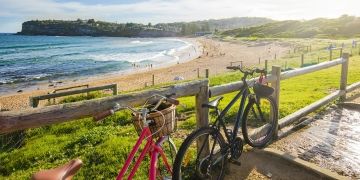
Wollongong is close to everything. Sydney is just over an hour away by train; the Blue Mountains are three hours away; and Canberra, the nation’s capital, is a two and a half hour drive. The beautiful campus, set between the mountains and the sea, allow students easy access to surfing and hiking year-round.
The real appeal, however, is the friendly nature of the campus. It has a regional feel with approximately 20,000 students maintaining a multicultural flavor. A well respected institution, The University of Wollongong received the honor of being placed in the top two percent of universities in the world in the 2009 Times Higher Education Supplement, Quacquarelli Symonds World University Rankings. It is also one of only four universities in Australia to score in the Band A across all four discipline groupings in the Federal Government’s 2009 Learning and Teaching Performance Fund.
So, in a nutshell, for those who like the out-of-doors and like the idea of living on the east coast, close to excellent surf beaches and a thriving local community, Wollongong is the ideal place to study.
— Tonia Gray, Resident Director
“”
Wayne Cotton
Dr. Wayne Cotton, the Assistant Resident Director, also has an extensive background in Experiential Education, along with a Ph.D. in information and communication technologies. He has travelled widely and has been working with international exchange students for nearly 10 years. In his spare time Wayne enjoys mountain biking and kayaking.
Read More
Where You'll Study
Where You'll Study
Sydney
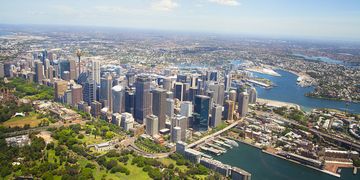
Sydney is located on the South East Coast of Australia and is the most populous city in the country. Sydney consistently ranks among the top 10 world centers and regularly hosts major national and international events. It is a lively city lined with gorgeous beaches on one side and the World Heritage Listed Blue Mountains on the other.
Wollongong
Wollongong, 80 km south of Sydney in New South Wales, is Australia’s 10th largest city. The Illawarra region, including the City of Wollongong, has a population of around 400,000. An industrial town with roots in the mining and steel industries, Wollongong, meaning “the sound of the waves,” lies nestled between the ocean and the Illawarra escarpment. The Illawarra is known for some of the finest natural beauty in Australia. Wollongong is a cosmopolitan city with theaters, cinemas, shopping, art galleries, libraries, cafes, and clubs.
The North Island of New Zealand
The North Island of New Zealand is where the main population of New Zealand lives. It is the world’s 14th largest island and is renowned for its natural beauty and Maori heritage. It has a mountainous volcanic centre, natural lake, and pristine rivers and is easily accessible from Sydney via a 2.5 hour flight.
Housing & Meals
Housing & Meals
Housing is included in the program fee. Students will be staying together in a variety of houses or apartments located in and around Wollongong and Sydney. A range of houses, apartments and cabins will also be used in New Zealand. Students are responsible for all meals while on the program. This will involve purchasing groceries and cooking meals.
Orientations
Orientations
Orientation takes place in Sydney during the first week of the program. Additional orientations will occur in Wollongong and in New Zealand.
Academics
Academics
The Outdoor Leadership and Environmental Education study abroad program is open to students interested in outdoor pursuits and environmental education. Most students in the program will have taken classes in one or more of the following disciplines: education, parks, recreation and leisure studies, environmental studies, sociology, kinesiology, and physical education. The program is offered both semesters and consists of a four-week module based in Sydney and the Blue Mountains, one week of independent travel, a five-week module based in Wollongong and its surrounds, and a four-week module centered around an expedition to New Zealand.
Academic Culture
The observational and experiential-based courses are designed specifically for CIEE study abroad students. Tuition includes in-class discussions as well as extensive experiential and field-based learning components. CIEE faculty are responsible for the theoretical classroom delivery of courses. In addition, CIEE accompanies the participants on educational field trips in and around Sydney, Wollongong, and various locations in New Zealand. The “mobile classrooms” are located in spaces leased by CIEE and on-site at various organizations. Though classroom time is spent only with other CIEE study abroad students, housing in Sydney and Wollongong provide ample opportunity for students to interact with both international and Australian students on an informal basis. Students will also have deep interaction with local Australians and New Zealanders during their service-learning projects.
Language of Instruction
English
Faculty
All theoretical courses will be taught by CIEE staff. Guest lecturers will be included—from outdoor education professionals to staff at host organizations and local universities.
Course Description
Course Description
All Courses
Note: This course listing is for informational purposes only and does not constitute a contract between CIEE and any applicant, student, institution, or other party. The courses, as described, may be subject to change as a result of ongoing curricular revisions, assignment of lecturers and teaching staff, and program development. Courses may be cancelled due to insufficient enrollment.
CIEE Study Center Syllabi
To view the most recent syllabi for courses taught by CIEE at our Study Centers, visit our syllabi site.
Courses
EDUC 3001 CNSW / RECR 3001 CNSW
Theoretical Aspects of Outdoor Leadership and Outdoor Pursuits
This course focuses on preparing students for the practical aspects of participating and leading groups in a variety of outdoor situations and pursuits. The course is aligned with the Australia national qualification framework and will cover specific topics in outdoor recreation including risk management in the outdoor environment, introductions to the technical skills involved in outdoor pursuits, decision making, and facilitation techniques. Contact hours: 45. Recommended credit: 3 semester/4.5 quarter hours. Instructor: Dr. Wayne Cotton
SOCI 3001 CNSW / SPMG 3001 CNSW
Australasian Culture and Sport
Australian Culture and Sport provides students with a deeper understanding of Australian culture and the unique nature of sport within the Australian society. The course covers a range of Australia sports from introductory level to professional, and achieves this by integrating both practical and theoretical components allowing for a facilitated firsthand experience of Australian society. Contact hours: 45. Recommended credit: 3 semester/4.5 quarter hours. Instructor: Dr Tonia Gray
XXXX 3002 CNSW
Indigenous Australia
Aboriginals in Australia have the oldest living culture on Earth, yet little is known about their customs and histories. This course provides foundational knowledge about the indigenous people of Australia, along with the effects of colonization and current issues this population is facing, and achieves this by integrating both practical and theoretical components. This course takes place in Wollongong and other parts of the Illawara region, a region steeped in over 20,000 years of Aboriginal history and culture.
Contact hours: 45. Recommended credit: 3 semester/4.5 quarter hours. Instructor: Dr. Tonia Gray
EDUC 3002 CNSW / RECR 3002 CNSW
The Theory and Application of Experiential Education
This course implements a complementary blend of theory and practice to highlight the various leadership and management skills which underpin experiential education. Facilitation and processing techniques incorporated into outdoor experiences in a variety of pedagogical contexts will be examined. A wide range of learning experiences will be presented, which will enable students to gain an insight into how experiential education is used as a catalyst for social and personal growth. Contact hours: 45. Recommended credit: 3 semester/4.5 quarter hours. Instructor: Dr. Tonia Gray
ENVI 3003 CNSW / EDUC 3003 CNSW
Environmental Education in Action
In this course we will design environmental education curricula and community service learning projects for use in educational settings such as nature centers, recreation programs, and schools. Students will carry out volunteer work in order to foster both an enhanced sense of place and a broader perspective on environmental issues. Students will study the evolution, goals, and public attitudes towards environmental education. Guidelines from the North American Association for Environmental Education will be used to analyze, evaluate, and design environmental education curricula/projects. Recommended credit: 3 semester/4.5 quarter hours (30 class hours + 2 week service learning project). Instructor: Dr. Wayne Cotton
Program Blog
Videos
Photos
Top