By Discipline

By Region

  • Africa
  • Asia-Pacific
  • Caribbean
  • Europe
  • Latin America
  • Middle East
  • Northern America

Featured

close
Quick Info

Quick Info

By Term

  • Fall 2014
  • Spring 2014
  • Spring 2015
close
Dates:
TBA
Deadlines:
04/01/2014
Credit:
15 - 18 semester / 22.5 - 27 quarter hours
Eligibility:
3.0 Overall GPA
Courses:
See descriptions below

*Please see the detailed information available below for an important note about program dates.

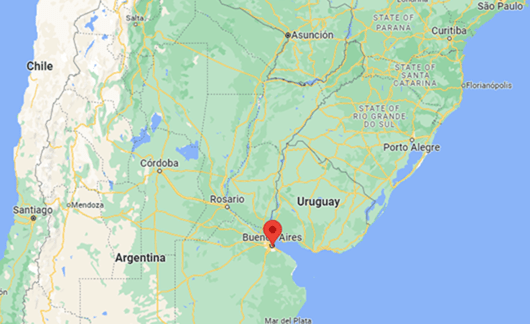
Map:
View Map
Dates:
03/06/2014 - 07/19/2014 *
Deadlines:
11/01/2013
Credit:
15 - 18 semester / 22.5 - 27 quarter hours
Eligibility:
3.0 Overall GPA
Courses:
See descriptions below

*Please see the detailed information available below for an important note about program dates.

Map:
View Map
Dates:
TBA
Deadlines:
11/01/2014
Credit:
15 - 18 semester / 22.5 - 27 quarter hours
Eligibility:
3.0 Overall GPA
Courses:
See descriptions below

*Please see the detailed information available below for an important note about program dates.

Map:
View Map
Close
Loading

Places to Visit

Get Started

Compare ProgramsCompare Programs
Print Program OverviewPrint Overview
Share

Program Blog RSS

Photos
Video
open slider navigation
close slider navigation
  • argentina,desert,study,abroad,student,research,main
  • argentina,desert,study,abroad,student,research,main
  • argentina,desert,study,abroad,student,research,main
  • argentina,desert,study,abroad,student,research,main
  • argentina,desert,study,abroad,student,research,main
Study Abroad in Buenos Aires
open slider navigation
close slider navigation
Loading
Program Overview

Program Overview

Study. Investigate. Report. In Argentina you’ll work with educators and local sources to create an academically rigorous, methodologically sound, and advanced-level piece of research on the myriad issues of development and globalization facing the country.

Through language study, coursework, and cultural immersion, the study abroad program will help you build the conceptual and methodological tools necessary for conducting academic research, allowing you to explore the processes of development and globalization from a Latin American perspective

In Argentina you will:

  • Improve your Spanish by working with a team of research methodologists and language instructors who connect and relate the content of courses with research design, independent studies, and out-of-classroom experiences
  • Develop an individual research proposal and project examining some facet or theme of development or globalization drawn from the coursework
  • Use the community for research, engaging with social and political actors relevant to issues being examined in your research
Close
The CIEE Difference

The CIEE Difference

Coursework

Experience a team teaching model and research mentorship that bring together course content, research methodology, and language:

  • Investigate specific topics within the selected content courses to develop an individual research project. This project will include thorough approach to a topic related to current Argentina or the region; analysis towards development and globalization through meetings with local communities; interviews, hard data, sources, and documentary analysis.
  • Explore and analyze economic issues and human rights grounds as they pertain to development and socio-political phenomena in Argentina and Latin America
  • Use organizational and community visits, civic events, lectures, and interviews with political and nongovernmental representatives to bolster your research

Excursions

study abroad in Argentina

Day trips and extended over-night visits through the country and surrounding regions provide you with both insight and context:

  • Spend a day in ‘El Tigre,’ a town rich with culture and history, just a short ride outside the city of Buenos Aires. The trip takes place at the beginning of the program with the objective of facilitating integration and comfort between students, program staff members, and instructors
  • Meet with academic counterparts and compare and contextualize key topics and issues explored in the course of the study abroad program with a trip to neighboring Uruguay

Cultural Immersion

Embrace the opportunity to live with an Argentine host family, and/or partake in one of many cultural activity clubs and special interest groups—Fútbol and Conversation Club—to meet and interact with other young Argentines.

Close
Dates, Deadlines & Fees

Dates, Deadlines & Fees

We want to make sure you get the most out of your experience when you study abroad with CIEE, which is why we offer the most inclusions in our fees.

  • Tuition and housing
  • Pre-departure advising and optional on-site airport meet and greet
  • Full-time program leadership and support
  • Field trips and cultural activities
  • CIEE iNext travel card which provides insurance and other travel benefits
Please note, program dates are subject to change. Please contact your CIEE Study Abroad Advisor before purchasing airfare. Click the button to view more detailed information about dates and fees as well as estimated additional costs. Please talk with your University Study Abroad Advisor about additional fees that may be charged by your home institution when participating in a program abroad.
Program
Application Due
Start Date
End Date
Costs
Fall 2014
04/01/2014
TBA
TBA
$16,450

Program Date Notes

Program Fees

In addition to the items outlined below, the CIEE program fee includes an optional on-site airport meet and greet, full-time leadership and support, orientation, language partners, cultural activities, local excursions, pre-departure advising, and a CIEE iNext travel card which provides insurance and other travel benefits.
Participation Confirmation *
$300
Educational Costs **
$11,148
Housing ***
$4,900
Insurance
$102

This breakdown has been prepared from the program budget for the purpose of calculating eligibility for financial aid. During the course of program operations, actual figures may vary. It should not, therefore, be used as a basis for calculation of refunds. CIEE reserves the right to adjust fees at any time.

Students required to study on CIEE programs through a School of Record will be charged a $340 administrative fee in addition to the Program Fees listed.

* non-refundable

** direct cost of education charged uniformly to all students

*** Includes two meals daily

Estimated Additional Costs

Meals not included in program fee
$1,200
International Airfare *
$1,450
Local Transportation
$200
Books & Supplies
$300
Visa Fees **
$260
Personal expenses
$1,000

The estimated additional costs indicated are intended to assist students and parents in budgeting for those additional living and discretionary expenses not included in the program fee. Actual expenses will vary according to student interests and spending habits.

* round-trip based on U.S. East Coast departure

** for Reciprocity Fee and Onsite Residence Permit Fee

More Information
Spring 2014 (19 wks)
11/01/2013
03/06/2014
07/19/2014
$16,450

Program Date Notes

Dates for this program are provided as tentative dates. Please consult with your study abroad advisor to confirm dates before purchasing your flights.

Program Fees

In addition to the items outlined below, the CIEE program fee includes an optional on-site airport meet and greet, full-time leadership and support, orientation, language partners, cultural activities, local excursions, pre-departure advising, and a CIEE iNext travel card which provides insurance and other travel benefits.
Participation Confirmation *
$300
Educational Costs **
$11,148
Housing ***
$4,900
Insurance
$102

This breakdown has been prepared from the program budget for the purpose of calculating eligibility for financial aid. During the course of program operations, actual figures may vary. It should not, therefore, be used as a basis for calculation of refunds. CIEE reserves the right to adjust fees at any time.

Students required to study on CIEE programs through a School of Record will be charged a $340 administrative fee in addition to the Program Fees listed.

* non-refundable

** direct cost of education charged uniformly to all students

*** Includes two meals daily

Estimated Additional Costs

Meals not included in program fee
$1,200
International Airfare *
$1,450
Local Transportation
$200
Books & Supplies
$300
Visa Fees **
$260
Personal expenses
$1,000

The estimated additional costs indicated are intended to assist students and parents in budgeting for those additional living and discretionary expenses not included in the program fee. Actual expenses will vary according to student interests and spending habits.

* round-trip based on U.S. East Coast departure

** for Reciprocity Fee and Onsite Residence Permit Fee

More Information
Spring 2015
11/01/2014
TBA
TBA

Program Date Notes

Program Fees

This breakdown has been prepared from the program budget for the purpose of calculating eligibility for financial aid. During the course of program operations, actual figures may vary. It should not, therefore, be used as a basis for calculation of refunds. CIEE reserves the right to adjust fees at any time.

Students required to study on CIEE programs through a School of Record will be charged a $340 administrative fee in addition to the Program Fees listed.

Estimated Additional Costs

The estimated additional costs indicated are intended to assist students and parents in budgeting for those additional living and discretionary expenses not included in the program fee. Actual expenses will vary according to student interests and spending habits.

More Information
Close
Eligibility
3.0 Overall GPA

Eligibility

  • Overall GPA 3.0
  • Spanish Language GPA 3.0
  • 6 semesters of college-level Spanish
  • 2 semesters of college-level Latin American Studies, International Affairs, Political Economy, Economics, Social Justice, Development Studies, or Human Rights
Close
Recommended Credit

Recommended Credit

Each content course and the required research methods course consist of 45 contact hours, and a recommended credit of 3 semester / 4.5 quarter credit hours. The Directed Independent Research Capstone is 135 contact hours and 6 semester / 9 quarter credit hours. Total recommended credits for the semester program are 15-18 semester / 22.5-27 quarter credits, as follows (in semester credits):

  • 3 credits - Research Methods Course
  • 9 credits - CIEE content courses
  • 4 credits - Directed Independent Research Capstone
  • 16 credits - TOTAL
Close
Program Requirements

Program Requirements

  • Research Methods Core Course: mandatory course to facilitate students the necessary tools to fulfill an individual research project. This course will include the Faculty Team Teaching (FTT) composed by Spanish language and methodology instructors, in addition to follow-up and personalized tutorials for final research projects. Duration: 17 weeks, 45 hours (Appendix I)
  • CIEE content courses: Three CIEE content courses: (see course descriptions below and syllabi in Appendices). Duration: 17 weeks, 45 hours. (Appendices II, III, IV)
  • Directed Independent Research Capstone: study abroad students will design and complete a directed independent research capstone project during the semester under the guidance of a faculty mentor or team of instructors/researchers. Duration: 16 weeks, 150 hours (Appendix V)
Close
About the City

About The City

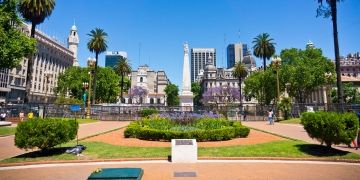
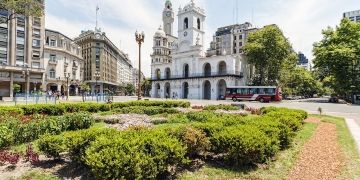
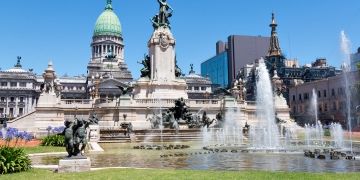
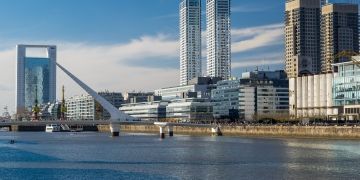
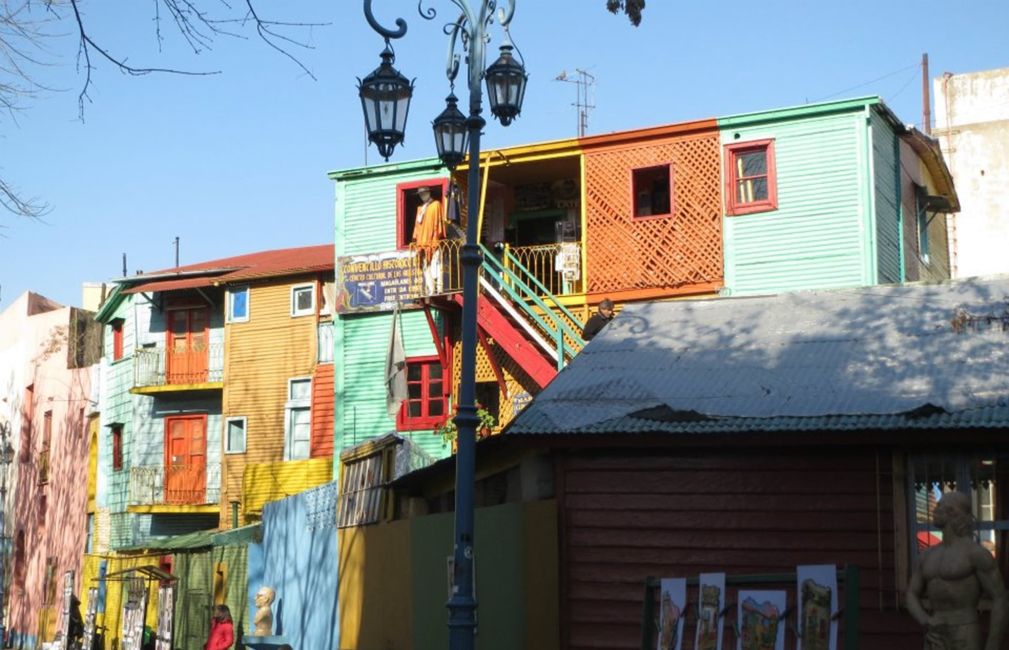
Founded in 1536, Argentina’s capital of Buenos Aires is often referred to as “the Paris of Latin America.” Within this immense, yet surprisingly navigable Latin American metropolis, elegant 19th century buildings and café life offer glimpses of Europe and the Middle East. A vibrant port city, Buenos Aires is also the world’s leading Spanish language publishing center. With a population of 13 million, Buenos Aires offers study abroad students the chance to experience the perpetual cultural intrigue that can only be found in a city of this size and prestige.

Close
Meet The Staff

Meet The Staff

Staff Image

Carolina Alba Merlo

Carolina Alba Merlo, Associate Director, has worked with CIEE since 1996. Carolina works with the Resident Director to design, develop, and manage the study abroad program. She earned a B.A. in Communications and Social Psychology at the Pichón Riviere Institute, and is currently obtaining a Masters in Cognitive Psychology and Education, with her research interests focused on international education and adaptation processes.

Read More
Staff Image

Vera Cerqueiras

Vera Cerqueiras, Spanish Language Academic Coordinator, earned her B.A. in Literature and Linguistics from UBA and an M.A. from the Universidad de Barcelona in Teaching Spanish as a Second Language. She is currently pursuing her doctorate. Before joining CIEE, Vera worked as the Academic Coordinator of the Spanish as a Foreign Language Department at UBA.

Read More
Staff Image

Andrea Rizzotti

Andrea Rizzotti, Resident Director, supervises the administrative and academic aspects of the study abroad program. She has a Masters degree in Sociology from Universidad de Buenos Aires (UBA) and a Masters degree from FLACSO in Social Sciences and Public Health. Andrea’s academic interests include public health, gender and women, adolescents, children, and family. She has done consulting work and binational research between Argentina and Uruguay, focusing on community empowerment and social participation in dengue prevention and mosquito eradication in the region. Andrea has worked with CIEE since 1994.

Read More
Close
Where You'll Study

Where You'll Study

The Argentine branch of the Facultad Latinoamericana de Ciencias Sociales (FLACSO) hosts the CIEE Study Center in Buenos Aires. Founded in 1957 by UNESCO, the UN agency dedicated to education, culture, and science, FLACSO sponsors Latin America’s largest and most prestigious postgraduate teaching and research program in the social sciences. FLACSO-Argentina was established in 1974, and its faculty is associated with several local universities.

Close
Housing & Meals

Housing & Meals

Housing, breakfast, and one additional meal per day are included in the study abroad program fee. Students live in private homes. Homestay hosts come from various lifestyles, and students are matched with local homestays based on the student preferred living environment. Other meals may be eaten in the wide variety of restaurants and/or cafés throughout the city, or even prepared at home.

Close
Orientations

Orientations

A three-day orientation session will introduce you to Buenos Aires, Argentine culture, and the program. The orientation includes specially-designed sessions on health and safety, local living logistics, language immersion, and cultural opportunities in the city. These practical orientation sessions conclude with an intensive orientation session on the academic aspects of the program.

Close
Internet

Internet

You are encouraged to bring a wireless-enabled laptop. You can access the Internet at the CIEE Study Center as well as at numerous cafés around the city. Computers with e-mail access are available for your use, free of charge, in the CIEE Study Center.

Close
Culture

Culture

Day Excursion to the Delta of Tigre, Province of Buenos Aires

study abroad in Argentina

Tigre is one of the most beautiful places near Buenos Aires. “El Tigre” is in the north of the Province of Buenos Aires, just 32 km. away from the city, and it is undoubtedly a piece of living history. The Delta of Tigre is the result of the confluence of the Paraná Rivers—it comes from Brazil, across northeastern Argentina, all the way down to the Rio de la Plata. Catamaran excursions leave daily from the port of Tigre, which lodges the open market with streets full of the colors of rustic fabric, furniture, and accessories made in cane and willow, delicious jam and honey, brilliant flowers, and of course, all the variety of native fruit co-existing in absolute harmony. This day-trip takes place at the beginning of the study abroad program with the objective of facilitating integration and comfort between you, program staff members, and instructors.

Two-Night Field Trip to Montevideo, Uruguay

This trip is possible due to the agreement between FLACSO and the Centro Latinoamericano de Economía Humana - http://www.claeh.org.uy/html. During the first day you will be introduced to the Uruguayan reality in order to establish comparisons with the Argentinean, focusing on the key topics of the study abroad program. During the visit you'll enjoy, learn about, and appreciate the Uruguayan side of the Rio de la Plata region via educational tours around the city of Montevideo and the colonial town Colonia del Sacramento. You will also learn about the academic and research landscape of Uruguay through meetings with academic counterparts during the visit.

During the semester, a multitude of diverse cultural and immersion activities is offered in and around the city of Buenos Aires.

Close
Academics

Academics

The Advanced Undergraduate Research Program will be based at the CIEE Study Center in Buenos Aires, at FLACSO Argentina. The program’s main feature is an integrated academic offering designed to provide participants with interdisciplinary social science knowledge, research skills, and experience.

Study abroad program courses will be linked via content planning and sequencing, using a team teaching method that will bring together instructors of content, methodology, and language, as well as research project facilitators and mentors. All courses and tutorials are taught by local Argentinean faculty, most of whom have faculty appointments at FLACSO or other Argentinean universities. Courses typically meet every morning or afternoon, Monday through Friday, for a minimum of three hours a week each. Required tutorial meetings for individual research projects will take place outside of, and in addition to, classes.

Students will select two to three CIEE content courses depending on their academic backgrounds and interests. Each student will choose a thematic focus and research question based on their coursework, and will develop an associated individual research proposal and project.

Throughout the program, instructors will jointly provide support and feedback to study abroad students in assessing, approving, and supervising research topics, and facilitating access to appropriate research sources. The mandatory research methods course will provide the academic, linguistic, and theoretical background necessary to develop and carry out individual research projects, and will include individual tutorials in which students will receive one on one mentoring on their research topics and projects.

Under the guidance of CIEE and FLACSO faculty and researchers, students will have access to the people, knowledge, tools, and resources necessary to design and complete individual methodologically rigorous, graduate quality research projects.

Academic Culture

Courses are designed to offer opportunities for students to draw connections between the theory, content, methodology, and research that form the pillars of their academic study abroad experience. Courses will also weave in reflection on, and analysis of, student’s research-based and extracurricular cultural experiences that will take place outside of the classroom. Each course will conduct several out-of-class activities in which students will be able to observe and interact with individuals and organizations representing the main topics covered by each course, including organizational visits, civic events, and lectures and interviews with political and nongovernmental representatives. Through these activities, students will meet social and political actors that are relevant to the issues being examined in each course and in the research students undertake.

Content courses aim to integrate a theoretical frame with the topics that will become the basis of students’ individual research projects. Each research project will allow students to explore in a deeper way one or more local manifestations of development and/or globalization, and undertake research that explores local trends and phenomena and reflects on the local geographical and cultural context, as well as on the context of students’ chosen research subjects.

During the program orientation, students will have a formal introduction to each course’s content and academic objectives and expectations. Students will select those courses that best align with their academic and research interests through individual meetings with the program RD and course teachers.

Study abroad courses will typically be offered in the morning, with afternoon reserved for field visits, cultural events, and research activities.

Grading System

Final grades in content courses are based on a combination of attendance, participation, papers, midterm exams and presentations. The Directed Independent Research Project final grade will be based on a combination of research project proposal, weekly research reports, final paper, and final colloquium. CIEE reports Argentinean numerical grades (One to 10 scale, with four as a ‘D’ or passing grade).

Evaluation process

Each individual course offered in the program will have regular opportunities for evaluation, assessment, and feedback on student work and performance. In content courses, a mix of course assignments related to the course themes and program research objectives will be combined with exams to assess student learning. Evaluation and assessment in the methodology course will be based on assignments that measure student learning in research methodology concepts and skills, and that facilitate progressive development of student research proposals and execution of independent projects. Evaluation of the research capstone course will be based on research proposal and project milestones, appropriate use of research methods, research production, and final presentation.

See individual course syllabi for course outlines, objectives, assignments, and evaluation criteria.

Language of Instruction

Spanish

Faculty

All courses are taught by local Argentinean faculty who hold appointments at FLACSO or other respected local Argentinean universities.

Daniel Giorgetti, currently serves as Academic Secretary of the School of Labor Relations at the Universidad de Buenos Aires (UBA), and is professor at the School of Social Sciences (UBA) and Master of School Human Resources Economic Sciences (UBA). A trainer for High Education Service Learning at the Latin American Center for Service Learning (CLAYSS), he has a degree in History (UNS), a Master in Social Sciences (FLACSO), and has recently finished his PhD in Social Sciences (UBA). He is member of the research team at the Center for Studies on Youth (Universidad de La Plata). He has published books on education, history, and social sciences, has personal experience as a volunteer in NGOs, and has worked as a consultant at the Ministry of Education of Argentina, in the field of teacher training and relations with NGOs. Since 2006, he has been a professor at the Service & Learning Seminar at the CIEE-FLACSO Liberal Arts Program.

Dalia Szulik, graduated in Sociology at UBA and Master in Political Sciences at Universidad Nacional de Gral. San Martín, has been teaching the methodology course at the Public Health CIEE Summer Program since it started. She is currently pursuing her doctorate at the School of Social Sciences at UBA, where she has been a professor of Public Opinion and Market Research Techniques since 1992. There, she directs prestigious UBACYT research projects. In addition, she is a researcher at the National Scientific and Technical Research Council (CONICET), hosted by FLACSO, with a focus on public health, gender, and public policy issues. She is also part of the pedagogical team at the Family and Community Health Masters Program at Universidad Nacional de Entre Ríos.

Elsa Llenderrozas, Master in International Relations and Negotiations (FLACSO - Universidad de San Andrés) and Master in Economic International Relations (Universidad de Barcelona, Spain), professor of Theory of International Affairs and Seminar of Foreign Policy of Latin American Countries in early 19th century at the School of Social Sciences (UBA) and Political Science at the Ciclo Básico Común (UBA), professor of Latin America in International Relations at the International Relations Masters Program at Universidad Nacional de La Plata, director of an UBACYT research project (School of Social Sciences - UBA. 2011-2013), she has been awarded many grants and recognitions, including a scholarship at UBA’s External Grants Program, hosted in 2011 by the Instituto Barcelona de Estudios Internacionales (IBEI - Spain). She has taken part in different national and international conferences and congresses, both as a participant or a speaker and has published several books and articles in specialized magazines. Since 1995, she has been the professor of the International Relations course at the CIEE-FLACSO Liberal Arts Semester Program.

Hernán Soltz, Master in Economy (School of Business – UBA), former member (2007-2010) of the Direction of the Foreign Trade National Commission (National Ministry of Industry), professor-researcher at Universidad Nacional de Quilmes and professor of International Economy at the School of Business – UBA, professor at the Strategic Management of Design Postgraduate Program at FADU/UBA, professor at the Economic Relations Masters Program at the School of Business - UBA and at the Economy and Industry Development Masters Program at Universidad Nacional Gral. Sarmiento, he is an expert on foreign trade and trade policy. He has been part of the research team at the Globalization Studies Program at FLACSO, with an academic and consultancy focus on foreign trade, regional integration, and argentine economy. He currently directs a research project at Universidad Nacional de Quilmes as well. A professor for the CIEE-FLACSO Liberal Arts Semester Program since 1995, he now teaches Current Issues in Argentine Economy.

Close
Course Description

Course Description

All Courses

Note: This course listing is for informational purposes only and does not constitute a contract between CIEE and any applicant, student, institution, or other party. The courses, as described, may be subject to change as a result of ongoing curricular revisions, assignment of lecturers and teaching staff, and program development. Courses may be cancelled due to insufficient enrollment.

CIEE Study Center Syllabi

To view the most recent syllabi for courses taught by CIEE at our Study Centers, visit our syllabi site.

CIEE Required Courses:

SOCI 3001 BAUR

Social Science Research Methods
(45 hours / 3 credits)
This required core course provides students with the methodological knowledge and skills needed to undertake qualitative and quantitative research within the general social science arena. The course provides the foundation for the design and development of independent research projects, and serves as a forum for the project monitoring and student. (See Appendix I)

INDR 3003 BAUR

Directed Independent Research Capstone
(150 hours/ 4 credits)
The Directed Individual Research Project will take place tied with the research method course and the content courses. Each student will study and analyze a specific topic within the selected content courses to develop an individual research project. This project will include a thorough approach to a topic related to current Argentina or the region; analysis towards development and globalization through meetings with local communities; interviews, hard data, sources and documentary analysis; personalized tutorials and follow-up. (Appendix V)

DEVE 3001 BAUR/SOCI 3002 BAUR

Human Rights and Social Justice for Development in Argentina and Latin America
(45 hours / 3 credits)
This course explores and analyzes human rights grounds, their political and social tradition, and characteristics in Argentina and Latin America within the global context to think over its contributions to development. (See Appendix II)

DEVE 3002 BAUR/POLI 3001 BAUR

Political Development and International Affairs in Argentina and Latin America
(45 hours / 3 credits)
This course will examine the regional and international integration processes and models in Latin America through analysis of new and old regional and hemispheric institutions and how they relate to the political and social development in the region. (Appendix III)

DEVE 3003 BAUR/POLI 3002 BAUR

Political Economy and Economic Development in Argentina and Latin America
(45 hours / 3 credits)
This course analyzes Latin American economies and the particular case of Argentina, through a deep understanding of the relationship between economic and socio-political phenomena. (Appendix IV)

Other Academic Components:

Library Access and Research Resources
Specialized libraries, both in international affairs and social sciences, are available at FLACSO premises. Study abroad students also have access to libraries at other local public/private universities and to multiple databases, journals, and papers. The program will facilitate each student’s access to specific sources needed in order to develop individual research projects, whether obtained through local NGO’s, governmental offices, or local contacts, networks, and partnerships.

Tutorials
Tutoring will be available to students, both as a part of the content and research methods courses and for the research capstone as well. The main goals for tutoring are to provide support, follow up, and monitoring in identifying and developing their research problem and design in accessing the resources needed to undertake their independent research projects, guide and mentor students in their approaches to field work, and monitor and ensure students’ progress in their course work and research projects. Tutorials are taught by local Argentinean faculty, most of whom have faculty appointments at FLACSO or other Argentinean universities.

Teaching Team
Throughout the program, a team teaching methodology will be implemented. Both methodology and Spanish instructors, in teams, assist students in connecting and relating the content of their study abroad courses with out-of-classroom experiences, facilitating the linguistic and technical components of their research, and supporting the linguistic needs of the participants throughout their semesters. This team teaching strategy has been designed based on the success that it has enjoyed as an integral part of the CIEE Public Health summer study abroad program in Argentina.

Teaching teams provide the academic, linguistic, and theoretical coordination required for students to produce dynamic, integrated, high-quality research projects that clearly demonstrate the learning outcomes of their coursework as well as their prior linguistic expertise.

Spanish language instructors have specific goals:

  • To advise methodology professors during the selection of reading material in order to adequate it to student’s language proficiency
  • To assist students in the acquisition and use of technical vocabulary and language needed to conduct research, and in the integration of methodological tools with technical and theoretical concepts and the local language. For example, when students elaborate their interview guidelines and role-play those situations.
  • To help students develop the academic writing skills needed to write a research paper and the oral skills to conduct research interviews within the local context.

Methodology professors are in charge of:

  • Providing students conceptual, theoretical, and practical tools to define and develop a proper research problem/question within their chosen subject
  • Helping students choose among the available research methods and strategies
  • Guiding and adjusting the research process and approach, discussing with students their progress, and assessing the outcomes of their work as it proceeds
  • Close
    Program Blog

    Program Blog RSS

    Close
    Videos

    Videos

    • CIEE Study AbroadDiscover the world
    Close
    Photos

    Photos

    • argentina,desert,study,abroad,student,research,main
    • argentina,desert,study,abroad,student,research,main
    • argentina,desert,study,abroad,student,research,main
    • argentina,desert,study,abroad,student,research,main
    • argentina,desert,study,abroad,student,research,main
    Close
    Compare ProgramsCompare Programs
    Share
    Top